

 USA TODAY National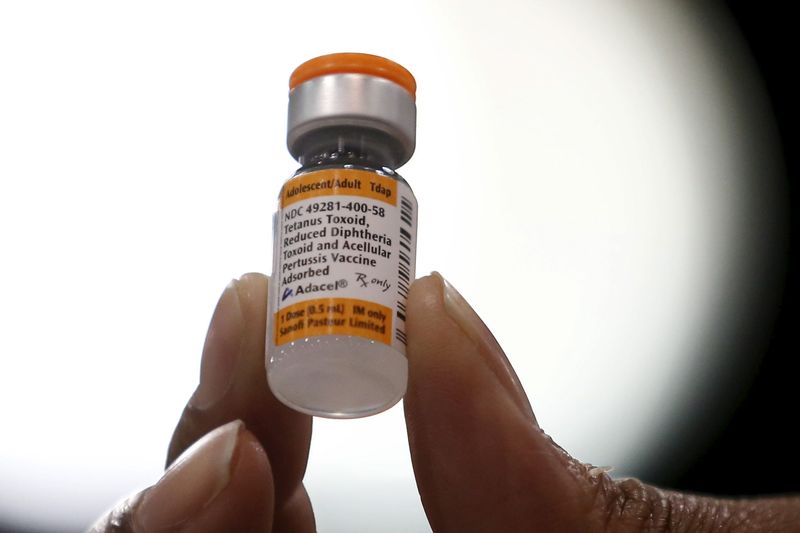
Whooping cough cases are on the rise, with Kentucky reporting its third infant death since the start of the year.
The Kentucky Department for Public Health reported in a Nov. 24 notice that the "highly contagious" respiratory infection, also known as pertussis, has become more prevalent in communities across the U.S. "in part due to declining vaccination rates."
"KDPH confirmed none of the infants who died of pertussis in Kentucky over the past 12 months had been vaccinated, nor had their mothers," the department said in a statement. "Kentucky’s three infant deaths from whooping cough are the commonwealth’s first whooping cough deaths reported since 2018."
A report from the Centers for Disease Control & Prevention found that "vaccination coverage" among kindergartners during the 2024-2025 school year decreased for all reported vaccines from the year before, including 92.1% for the DTaP, or Tdap vaccine, which provides protection against pertussis.
While the number of reported cases nationwide has been trending down since a peak in November 2024, the CDC reports that pertussis cases "remain elevated" in 2025, compared to immediately before the pandemic.
Since Nov. 19, Kentucky health officials have recorded 566 cases of pertussis (whooping cough), the largest spike in cases reported in the commonwealth since 2012. In its notice, the department anticipates more cases will be reported by year's end.
“We continue to urge Kentuckians to get their whooping cough vaccine and to make sure they are up to date on all other recommended immunizations," Dr. Steven Stack, secretary of the state's Cabinet for Health and Family Services, said in the Nov. 24 notice. "Many illnesses can be prevented through vaccination, which helps protect not only the individual but also those around them."
Here's what to know about pertussis, or whooping cough, as cases continue to rise.
What is whooping cough or pertussis?
Commonly known and referred to as "whooping cough," pertussis is a common and "very contagious" respiratory illness characterized by breathing difficulties and sometimes, coughing fits, according to the CDC.
While anyone, at any age, can "catch" pertussis, infants, particularly those younger than 12 months, are at "greatest risk for getting whooping cough and having severe complications from it," the CDC says.
Infants are at the greatest risk for the illness because their immune systems are still developing, the CDC says. They cannot be vaccinated until at least two months of age and may be exposed by family, friends and caretakers, the agency says.
According to Kentucky Department of Public Health, the best way to prevent whooping cough "is by receiving the Tdap or DTaP vaccine, which protects against three bacterial infections – diphtheria, tetanus and pertussis."
Whooping cough symptoms
Symptoms vary based on the stage of infection, age and vaccination status. The course of the illness is often milder in individuals who have been vaccinated, and the characteristic cough and "whoop" may be absent.
Symptoms usually appear between 5 to 10 days after exposure, though the incubation phase of the illness, can last up to 21 days, according to the CDC. A typical infection can take up to 12 weeks to resolve from the time of symptom onset and a full recovery could take additional weeks, or months.
Pertussis (whooping cough) symptoms include, according to the CDC:
- Cold-like symptoms i.e., runny nose, sneezing, coughing, and congestion
- Low-grade fever
- A mild, occasional cough that gradually becomes more severe
- Apnea, or sudden interruption in breathing, at least in infants, is common
- Sudden fits or attacks, known as paroxysms, of rapid coughs
- Difficulty "catching your breath," or inhaling combined with a high-pitched "whoop" at the end of coughing fits
- Cyanosis, or a blueish tint to the skin and mucus membranes, caused by inadequate oxygen in the blood
- Exhaustion
- Vomiting
How to treat, prevent whooping cough (pertussis)
Washing your hands often, covering your face when you cough or sneeze, and staying home when you are sick are some other ways you can prevent the spread of pertussis (whooping cough) and other infectious illnesses, the KDPH recommends.
According to the CDC, most effective protection against pertussis (whooping cough) is vaccination. Vaccines for pertussis, of which there are two, are chosen and administered based on age group.
The DTaP vaccine (Diphtheria, Tetanus, Pertussis) is designed for children under the age of 7 while the Tetanus, Diphtheria, Pertussis vaccine, known as Tdap, is designed to be given to adults, teens and children over the age of 7.
The DTaP vaccine is usually administered in five doses, as part of a typical immunization routine. Doses are typically administered at:
- 2 months
- 4 months
- 6 months
- 15–18 months
- 4–6 years
Contributing: Mary Walrath-Holdridge and Janet Loehrke, USA TODAY; Caroline Neal, Louisville Courier Journal
This article originally appeared on USA TODAY: Whooping cough cases 'elevated' in US; third Kentucky infant dies
Reporting by Amaris Encinas, USA TODAY / USA TODAY
USA TODAY Network via Reuters Connect

 The Conversation
 48 Hills
 AlterNet
 The Daily Beast
 Raw Story
 Plano Star Courier Sports
 CNN Video