

 USA TODAY National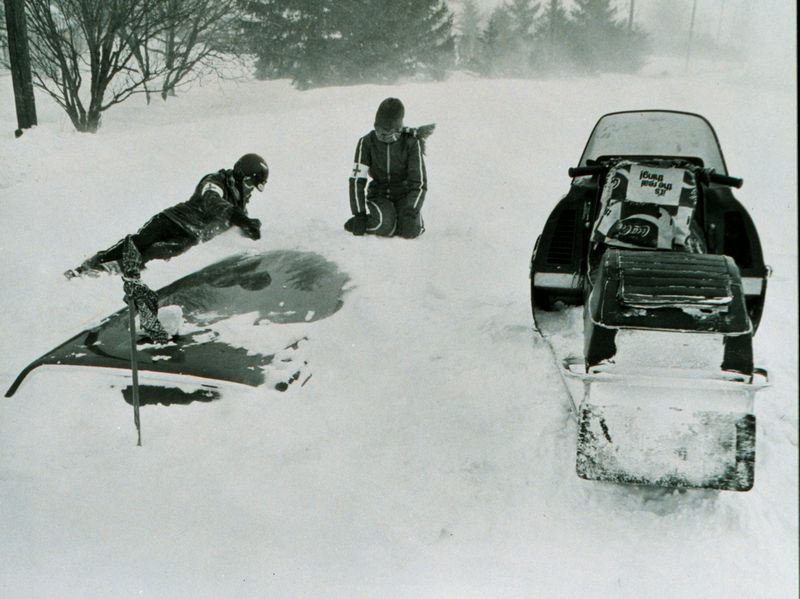
Fifty years ago a fascinating weather anomaly blanketed the United States in arctic, snowy weather and temporarily spawned fears of a new ice age. Call it the "snowy '70s."
It was so wintry that the cold wave of January 1977 produced the only known trace of snow in the greater Miami area of Florida ever reported.
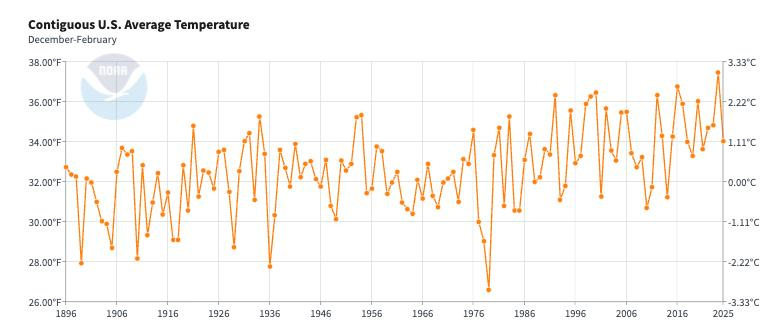
"The 1970s were indeed a cold decade by historical standards, especially the late 1970s," meteorologist Robert Henson of Yale Climate Connections said in an email. "Over the last century (from 1925 through 2024), two of the three coldest U.S. years were 1978 and 1979. The coldest U.S. winter on record (going back to 1895) was 1978-79."
Some of the worst blizzards in modern U.S. history occurred in the 1970s, Henson said. And three of the nine most severe U.S. winters for snow and cold between 1950 and 2013 occurred in the late 1970s.
Here's what happened:
The 1970s were historically cold
The 1970s were a chilly period indeed, not just in the United States but across the Northern Hemisphere, Henson said.
During the ’70s in the United States, there were actually about 25% more record daily lows than record daily highs set in the United States. But since then, the last 50 years have seen an increasing proportion of daily record highs to record lows, as reflected in data from about 1,800 weather stations, according to the American Meteorological Society.
Why was it so cold? Was there 'global cooling'?
On the global level, there's quite a bit of evidence that the slight global cooling from the 1940s to 1970s was largely induced by the boom in industry after World War II, especially in the United States and Europe, according to Henson. "Before we had environmental controls, the postwar factories and power plants spewed so much sun-blocking pollution into the air that it appears to have cooled the regional and global atmosphere."
Starting in the 1970s, pollution controls have given us cleaner air, but we're also blocking less sunlight. That reduced sun blockage has teamed up with human-produced greenhouse gases to warm the global climate, especially in places like the United States and Europe, where the mid-century air pollution was especially bad.
Weatherwise, Rutgers University distinguished professor and snow expert David Robinson said via email, the cold winters in the ’70s "were associated with a jet stream that was often found further south than normal. This permitted Arctic/Polar air to flow into the lower 48. Extensive North American snow cover in the ’78 and ’79 winters (but not in ’77) likely played a role in keeping temperatures cold.
"Of course, it goes both ways, with snow falling because it is cold, but also snow cover keeping the region cold (high albedo, energy required to melt snow thus not available to warm the air, association with more southerly storm tracks, thus opening the door for more polar air)."
Fears of an oncoming ice age
There were articles in the ‘70s, mostly in popular magazines, that spoke of an impending ice age, according to Robinson. "Paleoclimate studies at that time were showing that interglacials over the past million years were generally about 10,000 years in length and the one we are in has gone on for about 10,000 years. Thus, it seemed possible that over coming millennia (note, tens of thousands of years), that the earth might transition into another glacial maximum in 100,000 years (or) so."
However, he said "this certainly wasn’t a sign of an immediately impending ice age! At this time, it was also beginning to be better recognized that humans were having an impact on climate that should begin to show a global warming in decades ahead.
"So, you had a lot of info out there that could be interpreted (or misinterpreted!) in several ways. Though it is safe to say that no serious climatologist at that time was afraid of an ice age emerging for upcoming generations and well beyond."
This article originally appeared on USA TODAY: Snow in Miami? Nearly 5 decades since a shocking weather anomaly
Reporting by Doyle Rice, USA TODAY / USA TODAY
USA TODAY Network via Reuters Connect

 News4JAX
 WCTV
WCTV WWSB
WWSB WCJB-TV20
 WISC-TV Channel 3000
 Bozeman Daily Chronicle Sports
 New York Post