

 Daily Voice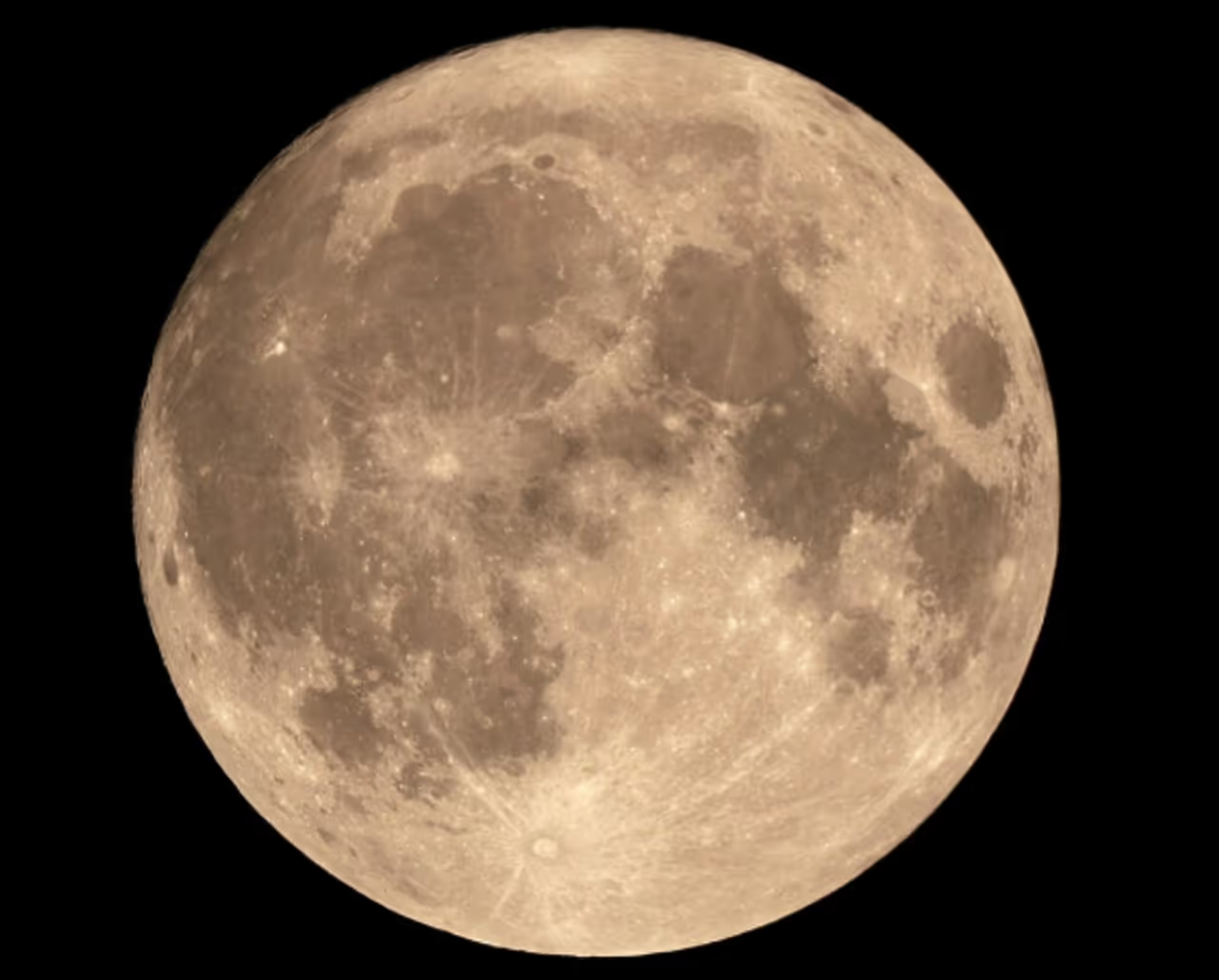
By Joe Lombardi From Daily Voice
Stargazers are in for a treat as the final supermoon of the year, known as the “Cold Moon,” is set to light up the night sky this week.
It will appear bigger and brighter than any other full moon this year.
The last full moon of 2025 will reach its peak illumination on Thursday, Dec. 4, at around 8:20 a.m. EST, according to AccuWeather.
The best time for most viewers to see it will be on Thursday night and especially Friday, Dec. 5, when the moon will rise about 25 minutes after sunset and appear high in the sky. In the New York area, moonrise will be at 4:56 p.m. EST on Friday, just after sunset at 4:29 p.m.
The Cold Moon gets its name from its timing with the arrival of cold winter weather in the Northern Hemisphere.
This supermoon will appear about 7.9 percent larger and 15 percent brighter than an average full moon, thanks to its close distance to Earth — approximately 221,000 miles away.
It will also be the highest full moon of the year for Northern Hemisphere viewers, reaching a prominent spot in the night sky near the time of the winter solstice.
What makes this event even more special is that it coincides with the start of the Geminid meteor shower.
The shower begins on Thursday, Dec. 4, and will peak around Saturday, Dec. 13, and Sunday, Dec. 14.
"Unlike most meteor showers, the Geminids start early in the evening, making them easier to see for families and casual observers," AccuWeather said. The best viewing is after 10 p.m. local time until about 2 a.m. when the moon rises higher and brightens the sky.
For the best view of the Cold Moon, head to a spot with a clear eastern horizon. The supermoon will appear full and bright for about three nights around its peak, giving skywatchers multiple chances to catch the spectacle.

 USA TODAY National
 CNET
CNET WTOP
WTOP Vogue Fashion
 Page Six
 Oh No They Didn't
 Raw Story
 NBC News Crime
 AlterNet
 Breitbart News
 ABC News