

 The Conversation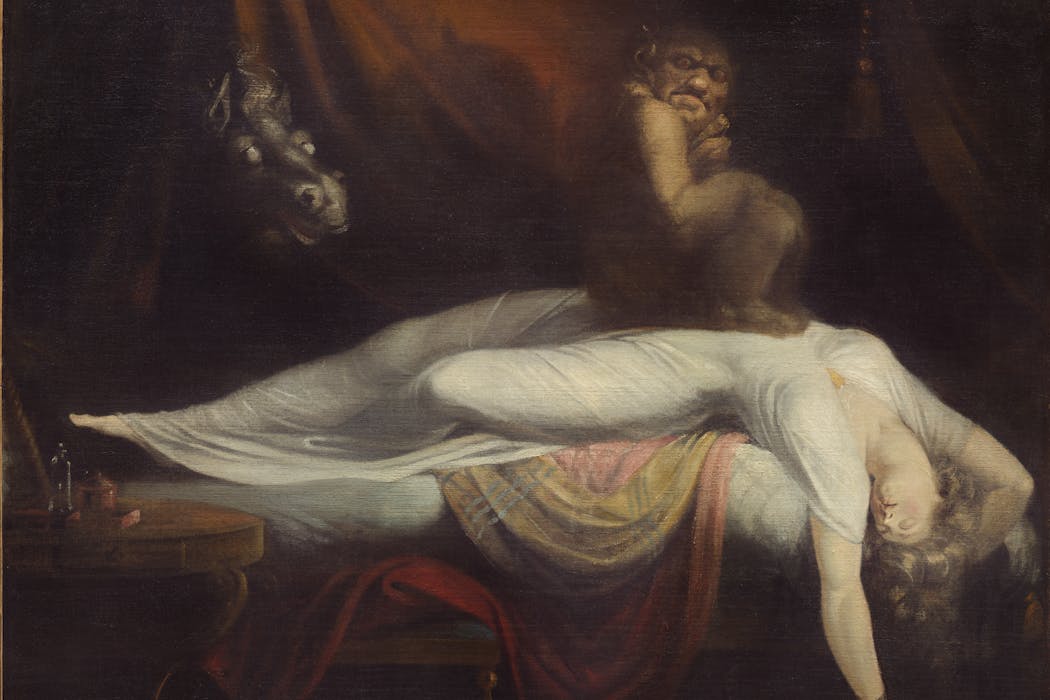
On Feb. 22, 2020, “Mad” Mike Hughes towed a homemade rocket to the Mojave Desert and launched himself into the sky. His goal? To view the flatness of the Earth from space. This was his third attempt, and tragically it was fatal. Hughes crashed shortly after takeoff and died.
Hughes’ nickname – Mad Mike – might strike you as apt. Is it not crazy to risk your life fighting for a theory that was disproven in ancient Greece?
But Hughes’ conviction, though striking, is not unique. Across all recorded cultures, people have held strong beliefs that seemed to lack evidence in their favor – one might refer to them as “extraordinary beliefs.”
For evolutionary anthropologists like me, the ubiquity of these kinds of beliefs is a puzzle. Human brains evolved to form accurate models of the world. Most of the time, we do a pretty good job. So why do people also often adopt and develop beliefs that lack strong supporting evidence?
In a new review in the journal Trends in Cognitive Sciences, I propose a simple answer. People come to believe in flat Earth, spirits and microchipped vaccines for the same reasons they come to believe in anything else. Their experiences lead them to think those beliefs are true.
Theories of extraordinary belief
Most social scientists have taken a different view on this subject. Supernatural beliefs, conspiracy theories and pseudoscience have struck researchers as totally impervious to contrary evidence. Consequently, they have assumed that experience is not relevant to the formation of those beliefs. Instead, they’ve focused on two other explanatory factors.
The first common explanation is cognitive biases. Many psychologists argue that humans possess mental shortcuts for reasoning about how the world works. For instance, people are quite prone to seeing intentions and intelligence behind random events. A bias of this kind might explain why people often believe that deities control phenomena such as weather or illness.
The second factor is social dynamics: People adopt certain beliefs not because they’re sure that they’re true but because other people hold those beliefs, or they want to signal something about themselves to others. For example, some conspiracy theorists may adopt strange beliefs because those beliefs come with a community of loyal and supportive co-believers.
Both of these approaches can partly explain how people come to hold extraordinary beliefs. But they discount three ways that experience, in tandem with the other two factors, can shape extraordinary beliefs.

1. Experience as a filter
First, I propose that experience can act as a filter. It determines which extraordinary beliefs can successfully spread throughout a population.
Take the flat Earth theory as an example. We know with absolute certainty that it’s false, but it’s no more or less wrong than a theory that the Earth is shaped like a cone. So what makes flat Earth so much more successful than this equally incorrect alternative?
The answer is as obvious as it seems – the Earth looks flat when you’re standing on it, not cone-shaped. Visual evidence favors one extraordinary belief over the others. Of course, scientific evidence clearly shows that the Earth is round; but it’s not surprising that some people prefer to trust what their eyes are telling them.
2. Experience as a spark
My second argument is that experience acts as a spark for extraordinary beliefs. Strange experiences, such as auditory hallucinations, are difficult to explain and understand. So people do their best to explain them – and in doing so, they come up with beliefs that seem fittingly strange.
For this pathway, sleep paralysis is a good case study. Sleep paralysis happens in the space between sleeping and waking – you feel like you’re awake, but you can’t move or speak. It’s terrifying and quite common. And interestingly, sufferers usually feel like there’s a threatening agent sitting on their chest.
As a scientist, I interpret sleep paralysis as the result of neural confusion. But it’s not difficult to picture how someone without a scientific background – that is, nearly every human being in history – might interpret the experience as evidence of supernatural beings.
3. Experience as a tool
To me, the third potential route to extraordinary beliefs is especially intriguing. In many cases, people don’t just develop extraordinary beliefs; they develop immersive practices that make those beliefs feel true.
For instance, imagine that you’re a farmer living in the highlands of Lesotho in southern Africa, where I conduct ethnographic fieldwork. You suffer a series of miscarriages, and you want to know why. So you go to a traditional healer – she tells you that you can learn the answer from your ancestors by drinking a hallucinogenic brew. You drink the brew. Soon after, you begin to see spirits; they speak to you and explain your misfortune.

Clearly, an experience like this one might reinforce your belief in the existence of spirits. Such immersive practices – such as prayer, ritualistic dance and the religious use of psychoactive substances – create evidence that makes the associated beliefs feel true.
What’s next?
Extraordinary beliefs are not inherently good or bad. In particular, religious beliefs provide meaning, security and a sense of community for billions of people.
But some extraordinary beliefs are sources of serious concern: Misinformation about science and politics is rampant and immensely dangerous. By recognizing how those beliefs are shaped by experience, researchers can find better ways to combat their spread.
Just as importantly, though, my suggested perspective might encourage more compassion and kinship toward people who hold beliefs that seem very different from yours. They are not “mad” or insincere. Like any other human being, they think the evidence is on their side.
This article is republished from The Conversation, a nonprofit, independent news organization bringing you facts and trustworthy analysis to help you make sense of our complex world. It was written by: Eli Elster, University of California, Davis
Read more:
- Why the chemtrail conspiracy theory lingers and grows – and why Tucker Carlson is talking about it
- Why does everything look flat even though the Earth is round?
- Cognitive biases and brain biology help explain why facts don’t change minds
Eli Elster does not work for, consult, own shares in or receive funding from any company or organization that would benefit from this article, and has disclosed no relevant affiliations beyond their academic appointment.


 Local News in D.C.
 People Top Story
 Daily Voice
 CBS News
 AlterNet
 Local News in New York
 Cover Media
 CBS Sacramento Dixon News
 Screen Rant