

 Reuters US Business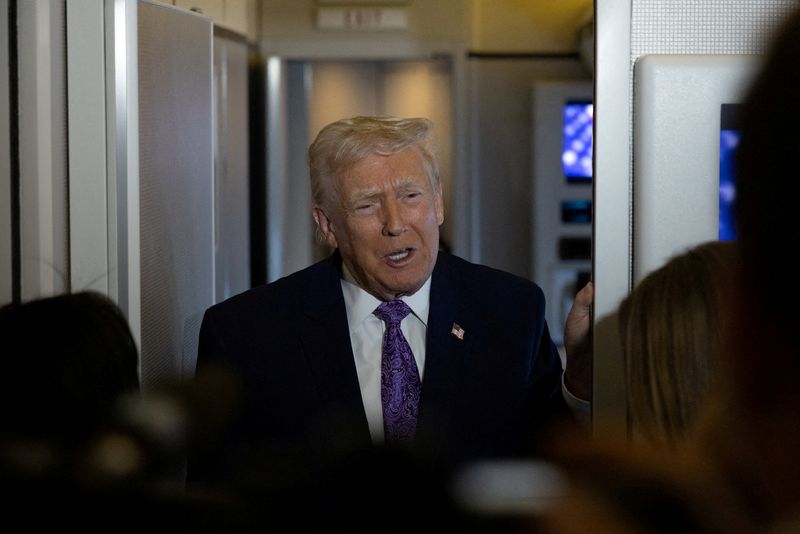
By Jeff Mason, Howard Schneider and Katharine Jackson
WASHINGTON, Dec 2 (Reuters) - President Donald Trump said on Tuesday he would be announcing his choice to succeed Jerome Powell as head of the Federal Reserve early next year, further teasing out a months-long audition process despite having said he already knows who he will pick to lead the world's most important central bank.
In remarks at a cabinet meeting, Trump also said Treasury Secretary Scott Bessent - who has led the search process - does not want the top Fed job, and the president did not indicate who his preference may be.
Trump told reporters on Sunday he knows who he plans to pick as the successor to Powell, whose run as Fed chief comes to an end in May, but wouldn't answer when asked if that choice was Kevin Hassett, his top economic adviser and the favorite in online wagering markets.
Hassett, 63, who chaired the White House's Council of Economic Advisers during Trump's first term, has proven his loyalty to the president through regular, if not weekly, television appearances on CNBC, Fox News and other channels, where he has endorsed Trump's sweeping import tariffs and calls for lower interest rates.
Trump, an avid television watcher, likely sees Hassett often, as opposed to most of the other candidates. Hassett, whose office is in the West Wing, also has direct access to the president and has helped shape his views on trade and economic issues, as well as monetary policy.
ADVOCATES OF LOWER INTEREST RATES
The others in the mix to succeed Powell include two sitting Fed governors - Michelle Bowman and Christopher Waller - former Fed Governor Kevin Warsh and BlackRock's Rick Rieder. Bessent has said he has completed two rounds of interviews with each of them and was planning to present a narrowed list of finalists to Trump and other White House officials this month.
Trump has made no secret of his preference for someone who favors lower rates, and Hassett and the others have been vocal advocates for exactly that, a preference that could be challenged by a buoyant economy that has made many Fed officials wary of easier policy.
With an end to the process approaching, economists and financial markets have turned to what Trump's choice will mean for the monetary policy outlook under a new leader likely to be welcomed by an economy regaining momentum next year but struggling to create jobs and still throwing off elevated inflation.
"Regardless of who leads the Fed, in the first order monetary policy is determined by economic conditions," James Egelhof, chief U.S. economist for BNP Paribas, said in a conference call about the bank's 2026 outlook.
That outlook included the expectation that resilient growth and persistent inflation would allow for just one rate cut next year following the one anticipated at the U.S. central bank's December 9-10 meeting, with Trump's new Fed chief left holding borrowing costs steady amid sticky 3% inflation.
The Fed has a 2% inflation target.
"The data will suggest little need for aggressive rate cuts beyond those we expect to be delivered," Egelhof said.
(Reporting by Katharine Jackson, Jeff Mason and Howard Schneider; additional reporting by Andrea Shalal; writing by Dan Burns; editing by Paul Simao)

 The Week
 GV Wire
 Bloomberg TV
 America News
 Raw Story
 Local News in New Jersey
 AlterNet
 Associated Press US News