

 The Conversation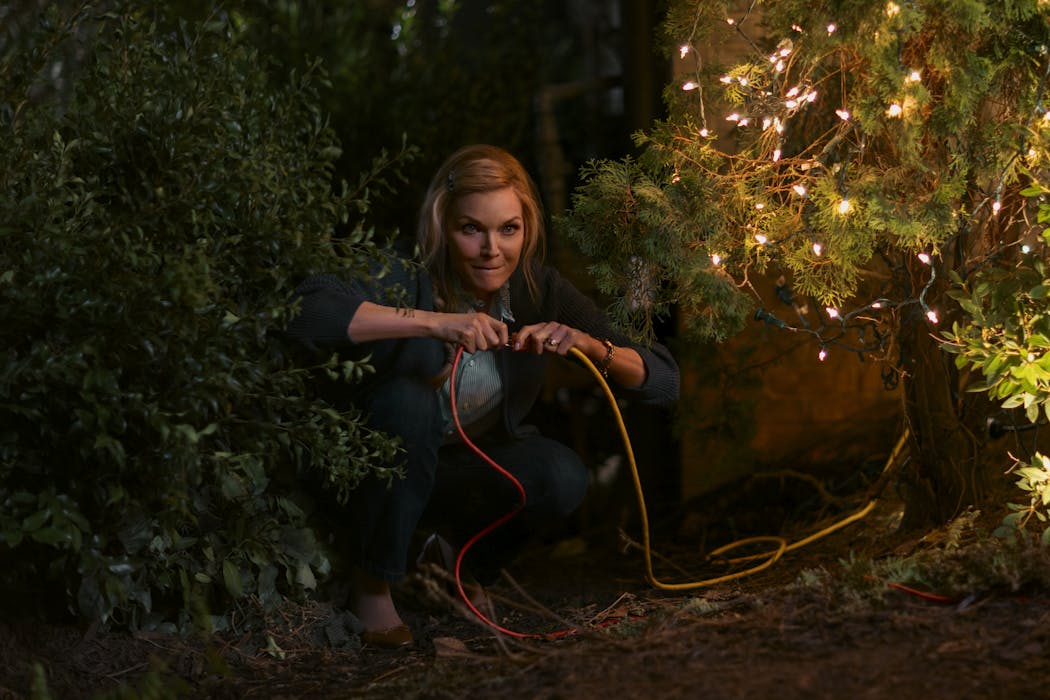
With less than a month to go, the telltale signs that Christmas is coming have begun appearing in shops and malls around the country. Fairy lights and tinsel adorn store displays while Mariah Carey’s All I Want for Christmas plays on repeat.
Nowhere is the intersection of tradition and commercialisation more apparent than in the Christmas movie genre. Not surprisingly, the viewing of these films has become a holiday tradition in itself.
Oh. What. Fun. is Prime Video’s most recent foray into the festive season genre. In a self-referential gesture, wife, mother and grandmother Claire Clauster (Michelle Pfeiffer) wonders in a voice-over “where are the holiday movies about moms?” before pointing out “I could name a dozen about men”.
The film promises to subvert genre expectations through foregrounding a disenchanted, disgruntled maternal point of view.
Facing the mental load
As her name would suggest, Claire comes into her own at Christmas. She shops, bakes and lovingly decorates the family’s Texan home complete with “Don’t get your tinsel in a tangle” sequined cushions and life-size inflatable figures of Santa for the front lawn.
This year, all Claire really wants for Christmas is appreciation – preferably in the form of a nomination for the Holiday Mom of the Year contest from talk show host Zazzy Tims (Eva Longoria).
The opposite occurs when the family embarks on an outing without Claire, unwittingly leaving her home alone (in a clear nod to the 1990 John Hughes classic).
Feeling bereft and abandoned, Claire sets off on a road trip across the state.

Recent motherhood movies have been “heavy on despair”, intent on mapping the disjuncture between culturally valorised maternity and mothers’ more lonely, dissatisfying experiences. While Oh. What. Fun.’s lighter, more frivolous tone under director Michael Showalter sets it apart from these examples, its portrayal of the depleting effects the holiday season can have on mothers is serious.
Social media posts and blogs are replete with such examples. Predecessors can also be found in the Christmas movie genre. A Bad Moms Christmas (2017) and Catherine O’Hara’s iconic “Kevin!” scream in Home Alone (1990) both offer comic depictions of the mental load mothers carry. Emma Thompson’s quietly devastating performance in Love Actually (2003) reveals the efforts mothers make – often at the expense of their own happiness – to ensure Christmas is a magical experience for their children.
Research indicates that the pressure to manage Christmas is worsened when systemic inequities are at play: domestic and family violence rates surge during the holiday season and, in the current economic climate, many families are struggling to provide basic necessities, let alone celebratory food and presents.
Embracing the female rage
In framing Christmas from the beleaguered mother’s point of view, Oh. What. Fun. unabashedly targets middle-aged women, a decision that is entirely in keeping with the Hallmark holiday film.
But where the cable channel’s Christmas movies purport to be timeless and “your place to get away from politics”, Oh. What. Fun. taps into the current zeitgeist of female rage.
Rage is increasingly accepted as a normal part of contemporary motherhood, coexisting with feelings of love. Far from dissipating as children mature, research suggests these ambivalent maternal feelings endure. And, as Claire herself acknowledges, they are even exacerbated by fears of no longer being needed by one’s children.
In a society where women’s value is defined by either their appearance or reproductive capabilities, ageing women are often rendered obsolete.
Claire’s refusal to vanish can be read as indicative of changing social and cultural conversations surrounding menopause. These seek to normalise the many hormonal, neurological and social changes perimenopause brings, which can include a reduction in people-pleasing.
The shift from amenability to assertiveness Claire undergoes is also the source of many of the film’s pleasures: watching Pfeiffer flirt with an older cowboy, say “fuck” on national television, and bad-mouth her family while sipping neat whiskey is an undeniable delight.

Of course, Oh. What. Fun. wouldn’t be a Christmas movie without a happy ending. It’s no spoiler to reveal the denouement satisfies genre expectations with a grand gesture, heartfelt apology and flash forward to one year later, depicting a champagne-swilling Claire luxuriating in a cedar hot tub while her family preps Christmas lunch.
While I’m here for holiday escapism and invocations to give mothers their due, I couldn’t help feeling curiously deflated at the film’s conclusion. Despite the promise offered in the sly, self-aware opening, Oh. What. Fun. reneges on its radical potential, sliding into sentimental cliche instead.
Like other recent films critiquing maternity, its suggestion that all mothers need is a hand in the kitchen combined with some quality “me time” (preferably at a high-end ski resort) invariably falls short.
In Claire’s own words, “this has been a nice little publicity stunt, y’all, but nothing’s really changed”.
This article is republished from The Conversation, a nonprofit, independent news organization bringing you facts and trustworthy analysis to help you make sense of our complex world. It was written by: Rachel Williamson, University of Canterbury
Read more:
- Christmas capers, a creepy clown and war-time stories: what we’re watching in December
- How UK universities are failing mothers on their staff
- Hit Netflix drama The Beast in Me does wrong by survivors of family violence
Rachel Williamson does not work for, consult, own shares in or receive funding from any company or organisation that would benefit from this article, and has disclosed no relevant affiliations beyond their academic appointment.


 Local News in Maine
 The Daily Beast
 Associated Press US News
 New York Magazine Intelligencer
 The radio station 99.5 The Apple
 Wyoming Tribune Eagle
 Newsweek Top
 RadarOnline
 AlterNet