

 IFL Science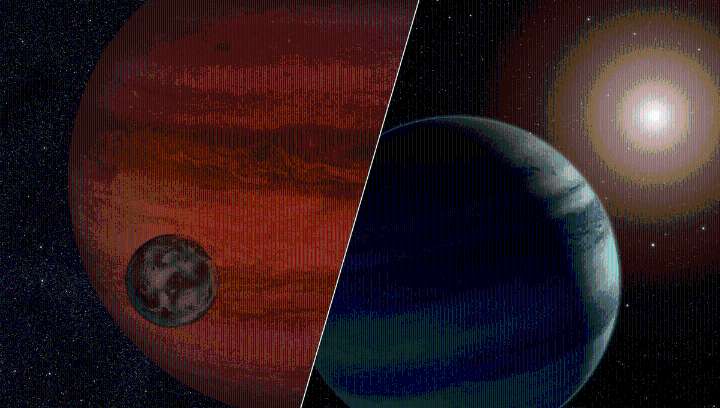
A pattern in the movements of a brown dwarf that orbits a Sun-like star is likely to be caused by a moon. If confirmed, this would be the first exomoon, that is a moon orbiting a planet that in turn orbits a star other than the Sun. However, if the data is to be believed, what we are seeing is on a very different scale to the moons close to home. The rest of this article is behind a paywall. Please sign in or subscribe to access the full content.
Within our Solar System, moons greatly outnumber planets. Even some quite small asteroids have moons, so we expect that most of the more than 6,000 exoplanets (planets orbiting other stars) have moons of their own, called exomoons. However, we are yet to definitely find one; two claims of exomoons remain contested .
However, when a large tea

 Spectrum News Louisville
 Orlando Sentinel
 NBC 7 San Diego Entertainmet
 AlterNet
 The List
 The Daily Beast