

 CBS Sacramento Dixon News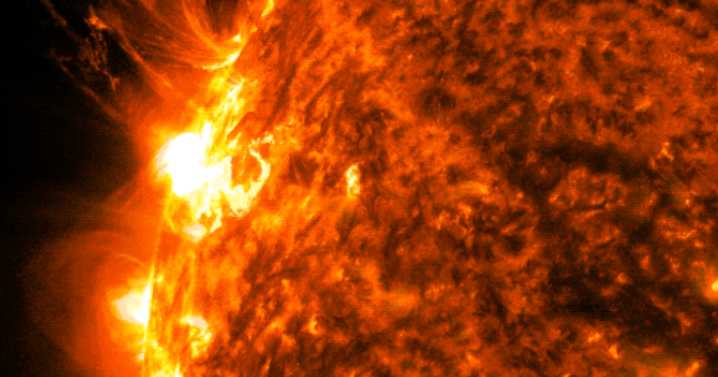
A geomagnetic storm watch has been issued after a powerful solar flare over the weekend.
The solar flare peaked at 9:49 p.m. EST on Sunday, November 30, said NASA's Solar Dynamics Observatory , which constantly monitors the sun. The flare was classified as X1.9 flare, the space agency said. X-classes are the most intense kind of flare. The eruption came from a newly emerging sunspot region.
The flare briefly knocked out radio communications across Australia and parts of southeast Asia on Tuesday, Space.com reported .
A coronal mass ejection, or CME, also occurred. During CMEs, solar material and magnetic fields erupt from the sun. CMEs and solar flares are similar, but they are distinct phenomena, NASA said.
Flares and CMEs can impact radio communications, power grids and navigatio

 Spectrum News Louisville
 Orlando Sentinel
 The Fashion Spot
 Major League Soccer