

 Reuters US Top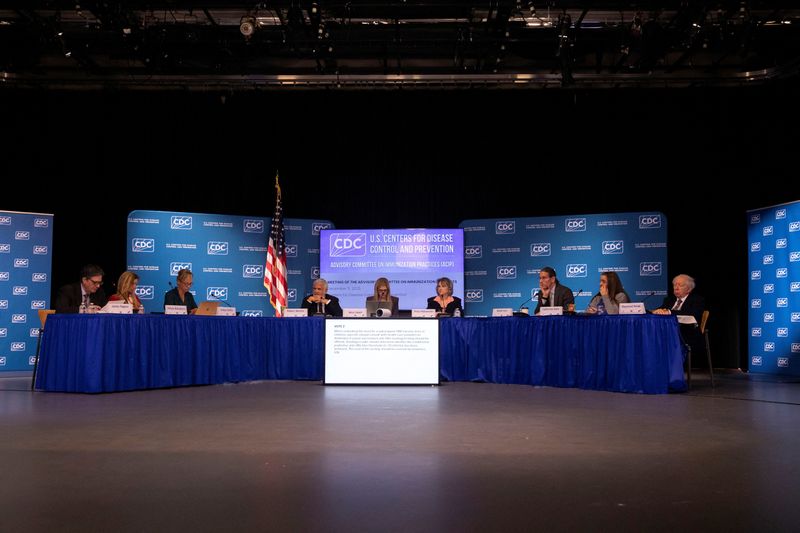

By Michael Erman, Julie Steenhuysen and Christy Santhosh
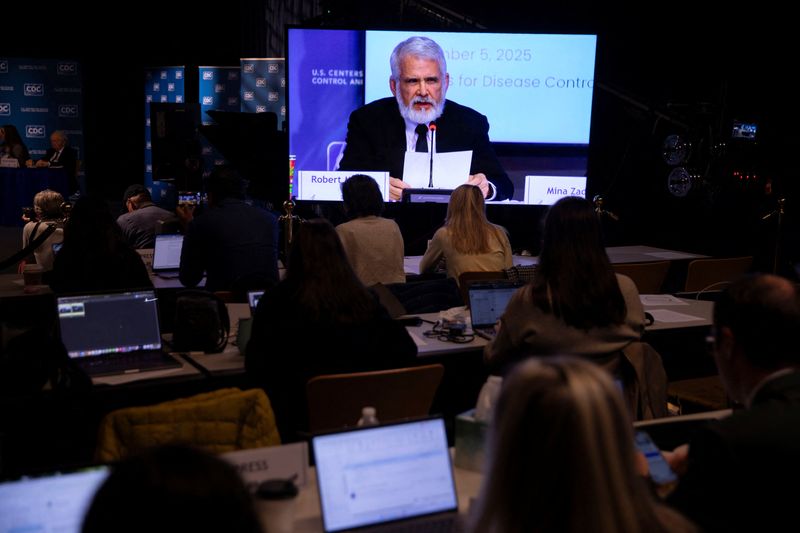
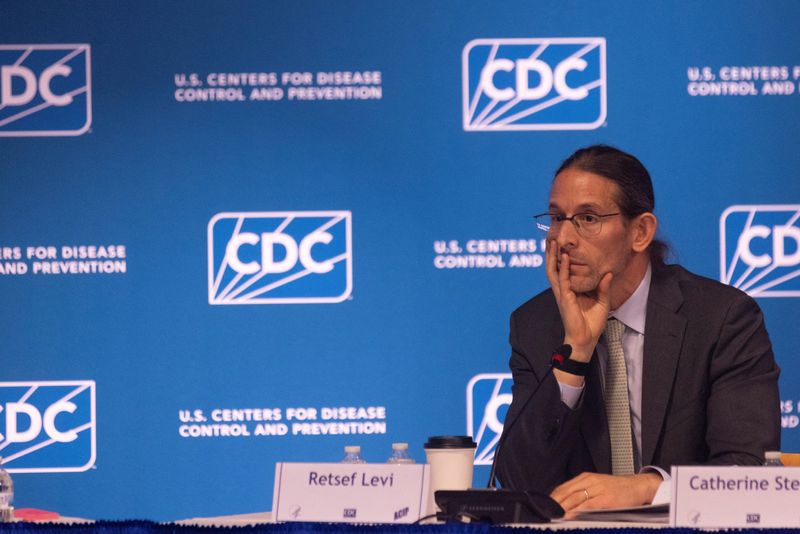
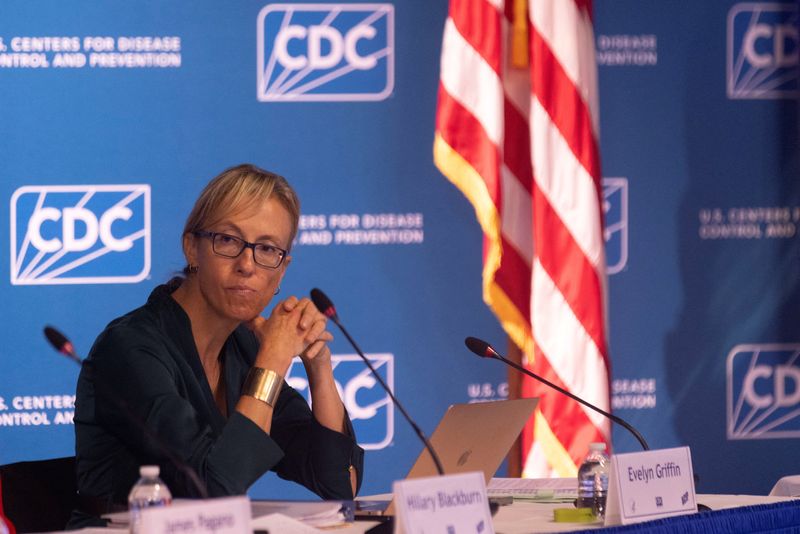
Dec 5 (Reuters) - A group of vaccine advisers on Friday scrapped a long-standing recommendation that all U.S. children receive the hepatitis B shot at birth, a major policy win for health secretary Robert F. Kennedy Jr that disease experts say will reverse decades of public health gains.
The committee recommended the birth dose only for infants of mothers who test positive for the virus or whose status is unknown, replacing the 1991 universal recommendation aimed at protecting all children from hepatitis B infections, which can lead to serious liver disease.
For the vast majority of cases - those in which mothers test negative - it said healthcare providers and parents should consult on if or when to begin the three-shot vaccine series and recommended the first dose no sooner than at two months of age.
PUBLIC HEALTH EXPERTS DECRY MOVE
Public health experts and medical groups including the American Medical Association decried the move, saying the decision creates obstacles to the vaccine and is in conflict with decades of evidence on its safety and efficacy.
U.S. hepatitis B infections have fallen nearly 90% from about 9.6 per 100,000 before vaccination became widespread to approximately one per 100,000 in 2018.
The U.S. Centers for Disease Control and Prevention - now run by a Kennedy-appointed acting head, Jim O'Neill, who is not a scientist - will use the committee's recommendations to set U.S. public health guidance. The recommendations affect U.S. health insurance coverage and play a key role in assisting physicians who are choosing appropriate vaccines for patients.
"This gives them an open door to continue to make changes to the immunization schedule based on opinion, based on substantive statements without support, without a framework for assessing the evidence," said Dr. Flor Muñoz, pediatric infectious diseases specialist, representative for the Infectious Diseases Society of America. "It's extremely disruptive and disappointing."
The American Academy of Pediatrics said it continued to support the birth dose of the vaccine.
Hepatitis B primarily spreads through blood, semen, or certain other body fluids and can be spread by close contact with people who do not know they are infected, such as caregivers or friends.
PARENTS HAVE A CHOICE
The committee's emphasis on parent choice - a key tenet of the anti-vaccine movement that Kennedy has been part of for decades - ignores the role parents already have in deciding on vaccines for their children, public health experts said.
"This will signal to clinicians that there is something wrong with the vaccine - there is not - and that there are liability risks," Dr. Demetre Daskalakis, who resigned from the CDC in August as Director of the National Center for Immunization and Respiratory Diseases, said in an email.
Hepatitis B vaccine makers Merck, Sanofi and GSK defended their products as safe, with Merck saying it was deeply concerned by the vote. Merck shares fell 1%, GSK fell 0.7%, U.S.-listed Sanofi shares were up about 0.7%.
The World Health Organization recommends all babies receive the hepatitis B vaccine as soon as possible after birth, followed by two or three doses of the shot at least four weeks apart. It says 95% of infected newborns will go on to develop chronic hepatitis.
KENNEDY HAS BEEN REMAKING VACCINE POLICY
Kennedy, who founded the anti-vaccine group Children's Health Defense, in June fired the previous 17 independent experts and replaced them with a group that largely supports his views as part of an effort to remake U.S. vaccine policy.
This is the most far-reaching of the changes, which include dropping broad recommendations for the COVID vaccine, cutting funding for mRNA vaccines, and advising pregnant mothers against taking Tylenol saying, without scientific proof, that studies suggest a link to autism.
Children's Health Defense President Mary Holland applauded the change, saying the universal recommendation was flawed and questioned the value of the vaccine for any infant.
Lawmakers said that Kennedy and President Donald Trump would be responsible for the reintroduction of a disease for a vaccine whose safety and efficacy is well established.
"As a liver doctor who has treated patients with hepatitis B for decades, this change to the vaccine schedule is a mistake," said Republican Senator Bill Cassidy, whose vote helped affirm Kennedy's nomination to his role. He urged O'Neill to retain the CDC's current recommendations.
COMMITTEE CRITICIZES SAFETY DATA
Many of Kennedy's committee members criticized the vaccine safety data and said that the U.S.'s universal recommendation was out of step with other peer countries, particularly Denmark.
A CDC staff head argued the U.S. is a unique country, not comparable to the 6 million-population Denmark where universal healthcare ensures more than 95% of women are tested for hepatitis B.
The committee also voted that parents test children for hepatitis B antibodies before deciding to give subsequent shots. Under the scrapped recommendation, the birth dose is followed by two more vaccines, at 1 to 2 months and 6 to 18 months. The committee did not offer a new schedule for follow-on shots.
Two members of the committee argued vociferously against the changes and against doctors testing children for a level of immunological response that has not been studied.
"We will see more children and adolescents and adults infected with hepatitis B," said Joseph Hibbeln, an advisory panel member and former National Institutes of Health official.
It was not clear that the committee's vote on testing would prompt insurance coverage as U.S. law currently looks to the U.S. Task Force for Preventive Services advice.
(Reporting by Christy Santhosh, Mariam Sunny and Kamal Choudhury in Bengaluru, Michael Erman in New Jersey, Julie Steenhuysen in Chicago and Nancy Lapid in Phoenix; Editing by Caroline Humer, Bill Berkrot and Nick Zieminski)

 The Daily Beast
 Cheboygan Daily Tribune
 USA TODAY National
 PHL17 Health
 America News
 Raw Story
 NBC News
 Associated Press US and World News Video
 People Pets