

 AlterNet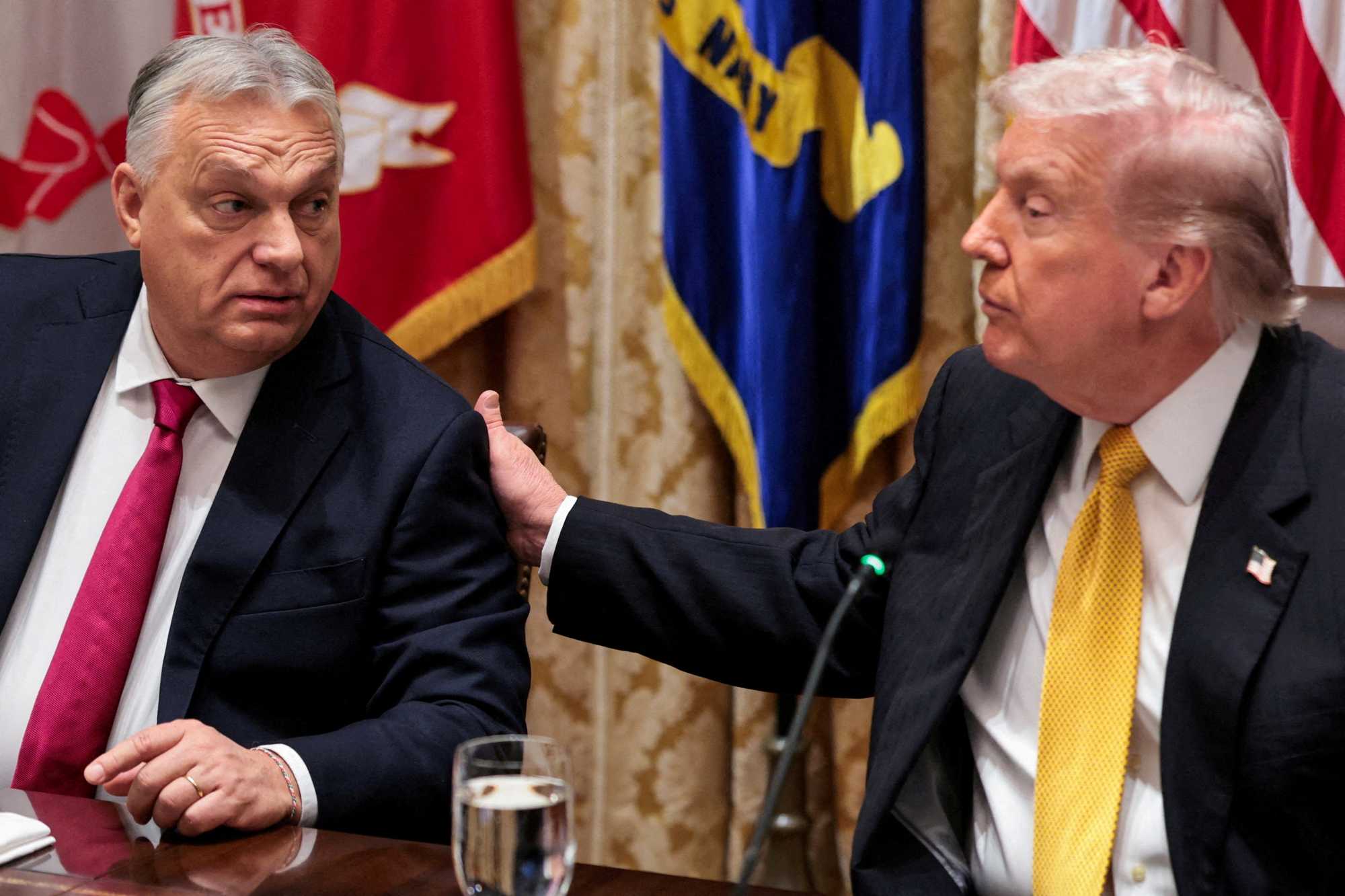
When Donald Trump returned to the White House on January 20, his foreign policy was a major departure from that of the Biden Administration. While former President Joe Biden aggressively championed an expansion of the North Atlantic Treaty Organization (NATO) and was critical of far-right European parties, Trump isn't shy about praising far-right European figures like Hungarian President Viktor Orbán and France's Marine Le Pen. Trump also has a generally friendlier tone with Russian President Vladimir Putin.
Articles published by Politico on December 5 — one by Laura Kayali, the other by Nahal Toosi — examine the hyper-nationalist approach Trump is bringing to U.S. foreign policy, including Europe, in a new 33-page document called the National Security Strategy of the United States of America.
Trump and his administration, Kayali stresses, "blame the EU (European Union) and migration for what they say is imminent, total cultural unravelling in Europe."
Kayali reports, "The explosive claim is made in the U.S. National Security Strategy, which notes Europe has economic problems, but says they are 'eclipsed by the real and more stark prospect of civilizational erasure' within the next 20 years…. That narrative is likely to resonate deeply among most of Europe's far-right parties, whose electoral programs are primarily based on criticism of the EU, demands for curbs on migration from Muslim-majority and non-European nations, and a patriotic push to overturn their countries' perceived declines."
This "new security strategy," according to Kayali, "offers a clear ideological alignment between" Trump's "populist MAGA movement and Europe's nationalist parties."
According to Kayali, "The U.S. administration — which has developed increasingly closer ties with far-right parties in countries such as Germany and Spain — appears to hint it could help ideologically allied European parties…. The document is a rare formal explanation of Trump's foreign policy worldview by his administration."
Meanwhile, in her article, Toosi notes that the National Security Strategy "appears in line with many of the moves" Trump has "taken in his second term, as well as the priorities of some of his aides."
"That includes deploying significantly more U.S. military prowess to the Western Hemisphere, taking numerous steps to reduce migration to America, pushing for a stronger industrial base in the U.S. and promoting 'Western identity,' including in Europe," Toosi reports. "The strategy even nods to so-called traditional values at times linked to the Christian Right, saying the (Trump) Administration wants 'the restoration and reinvigoration of American spiritual and cultural health' and 'an America that cherishes its past glories and its heroes.' It mentions the need to have 'growing numbers of strong, traditional families that raise healthy children.'"
The National Security Strategy, according to Toosi, "suggests the president's military buildup in the Western Hemisphere is not a temporary phenomenon."
"That buildup, which has included controversial military strikes against boats allegedly carrying drugs, has been cast by the administration as a way to fight cartels. But the administration also hopes the buildup could help pressure Venezuelan leader Nicolas Maduro to step down," Toosi explains. "The strategy also specifically calls for 'a more suitable Coast Guard and Navy presence to control sea lanes, to thwart illegal and other unwanted migration, to reduce human and drug trafficking, and to control key transit routes in a crisis.'"
Read Laura Kayali's full article for Politico at this link and Nahal Toosi's Politico reporting here.

 Raw Story
 America News
 Associated Press US News
 WFMJ-TV