

 USA TODAY National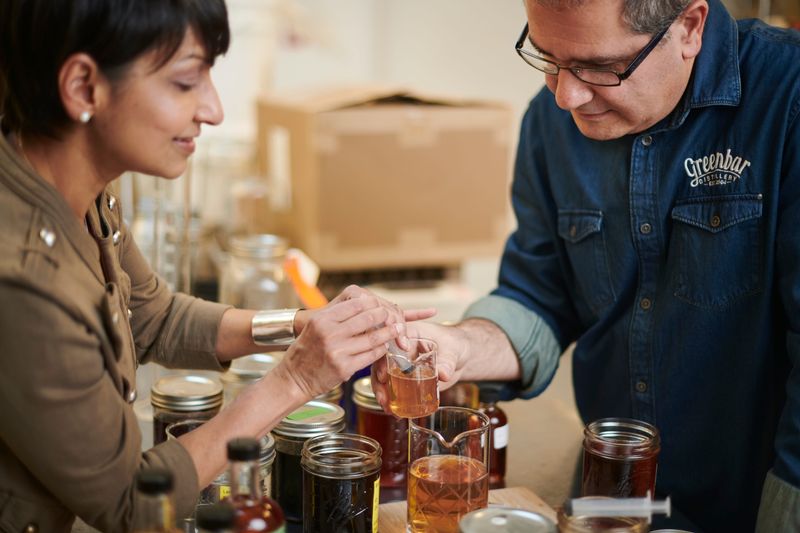
As the Supreme Court weighs a challenge to President Donald Trump's tariffs, American business owners are waiting to see what will happen to the funds they spent importing goods – and if they can offer their customers a reprieve from raised prices.
Costco recently filed a lawsuit against the Trump administration to secure a “complete refund” should the Supreme Court strike down tariffs imposed under the 1977 International Emergency Economic Powers Act in a separate case the court heard in November.
It's the latest lawsuit from retailers hoping to get their money back from the administration. Court records show others include Bumble Bee Foods, EssilorLuxottica, Kawasaki Motors, Revlon, and Yokohama Tire.
The Justice Department said in a legal brief that importers would likely be entitled to refunds if the tariffs are ruled unlawful. Treasury Secretary Scott Bessent in September said the department would have to refund “roughly half the tariffs.”
It remains unclear how U.S. Customs and Border Protection would handle a large-scale refund process, prompting some companies to file lawsuits to preserve their refund rights ahead of the ruling, in case the Supreme Court limits refunds to businesses that have taken legal action.
That legal action comes at a cost. Beyond legal fees, suing a presidential administration has the potential to upset customers and taint a relationship with the federal government, according to Drew DeLong, head of corporate statecraft at Kearney Foresight.
“There’s so much uncertainty right now that the calculation becomes: Is filing a suit worth the incremental certainty that if this action is taken, we are in a better position?” DeLong said.
It’s not a battle every company can take on.
“If you are a business that does not have the infrastructure in place to navigate this environment, proactively in terms of government engagement, you’re at less of a competitive advantage than those that do,” DeLong said. “Just as there are discussions of a K-shaped economy right now in terms of the strength of the consumer on the upside and downside, I think you’re seeing a very similar trend emerge with those who have the infrastructure to navigate this environment.”
How tariffs led to layoffs at one small business
Melkon Khosrovian, a spiritsmaker and co-founder of Greenbar Distillery in Los Angeles, said at the beginning of 2025, his company was paying 25% tariffs. At one point during the year, they jumped to 170% and are now back down to 55%.
“Which is, you know, a lot better than 170, but it’s still quite a lot of money for us,” Khosrovian said.
He said his team is still adding up the total amount tariffs will cost the company this year, but he estimates they will pay between $75,000 and $125,000, up from $25,000 to $50,000 he said they were paying each year prior to the second Trump administration.
Khosrovian said the distillery sources every fresh ingredient it can from local farms, but there are some it can’t realistically get from producers in the United States, including juniper berries, cinnamon, clove, nutmeg, and coffee. This year, he said he made the decision to also import automated bottling equipment “to control the one thing we can,” which is labor costs.
He said they’re preparing to lay off both full-time and part-time workers as a cost-saving measure, in part because he doesn’t believe consumers can absorb any price increases in the current economic climate. The possibility of layoffs is an open conversation among his 15-person staff.
“Our staff initially thought it’s the governments where we import products from that pay the tariffs. We had to say, ‘No, no, no, no. Here’s the bill,’” Khosrovian said. “Our entire team went through a number of exercises to find any cost savings anywhere. Ultimately, we couldn’t find enough.”
How tariffs led to price hikes at another
Thompson Traders, Inc. President Clifford Thompson said tariffs have led the Greensboro, North Carolina, family business selling sinks, tubs, and custom range hoods, to accrue debt and raise prices.
In Thompson’s case, he said the challenge isn’t sourcing materials – it's sourcing the craftsmanship. He said the company’s handcrafted products can’t be made in the United States and still sold at a reasonable price. He said his company doesn’t have the financial capacity to train employees to do the same work, and even if it did, he estimated the process would take about three years.
In previous years, he said the amount the company paid in tariffs “wasn’t something we paid a lot of attention to.” This year, he said, the company is on track to pay more than $1 million in tariffs.
“We went from a year that was probably going to be profitable to a year where we’re going to break even at best,” Thompson said. “I wouldn’t say it’s fully sustainable. We’ll figure it out. Thankfully, we’ve been in business for a while. I think it’s pretty detrimental to younger companies.”
What small businesses hope comes of the court cases
Khosrovian and Thompson’s companies are two of hundreds that have joined We Pay the Tariffs, a coalition backed by the Trade Partnership and other pro-trade groups. The coalition filed an amicus brief with the Supreme Court asking the justices to uphold lower-court rulings and deem the tariffs unlawful.
Khosrovian said he hopes the litigation ends with the Supreme Court striking down the tariffs. In his “fantasy scenario,” his company gets a refund. If it does, he said he’d love to bring back some of the workers the company plans to lay off, but that his company would “spend it very cautiously because we don’t know what’s going to come around the corner.”
Thompson said if his company was given a refund, it would use it to pay down the debt it incurred to pay the tariffs, but that it too would likely “bank it for a little while, just to see where things went.”
Their caution isn’t unreasonable, according to DeLong, who said people should not assume a Supreme Court ruling will mark the end of tariffs. The Trump administration has several options to implement similar tariffs in other ways.
“I don’t think there is any voice in this administration I am aware of that will say tariffs are not here to stay,” DeLong said. “They’ve been crystal clear that this is a cornerstone, and I don’t suspect that them losing IEEPA is going to deter the intent of what they developed.”
For now, uncertainty persists.
“What I would really like to see is just some clarity and some stability around it. ‘Hey, these are the numbers. This is what it’s going to be.’ So we can just focus on running the business,” Thompson said.
Broader tariff case could affect consumers more
While it’s possible some portion of refunds could trickle down to customers if they are granted, refunds would be unlikely to affect consumers significantly, according to Amanda Oren, vice president of industry strategy, grocery at RELEX.
The broader legal challenge to IEEPA tariffs could matter more to consumers, she said.
Katie Thomas, who leads the Kearney Consumer Institute, told USA TODAY in September that if the IEEPA tariffs are ruled unlawful, some companies might work to bring down prices, and the refunds they could receive may lead to fewer layoffs.
That broader legal challenge is playing out in court. The Supreme Court took the case on an accelerated basis and heard oral arguments Nov. 5, but has not said when it will rule.
Reach Rachel Barber at rbarber@usatoday.com and follow her on X @rachelbarber_
This article originally appeared on USA TODAY: Why Costco, other businesses are suing the Trump admin over tariffs
Reporting by Rachel Barber, USA TODAY / USA TODAY
USA TODAY Network via Reuters Connect

 People Top Story
 The Hill
 AlterNet
 Raw Story
 WTOP Sports
 Reuters US Top