

 Reuters US Business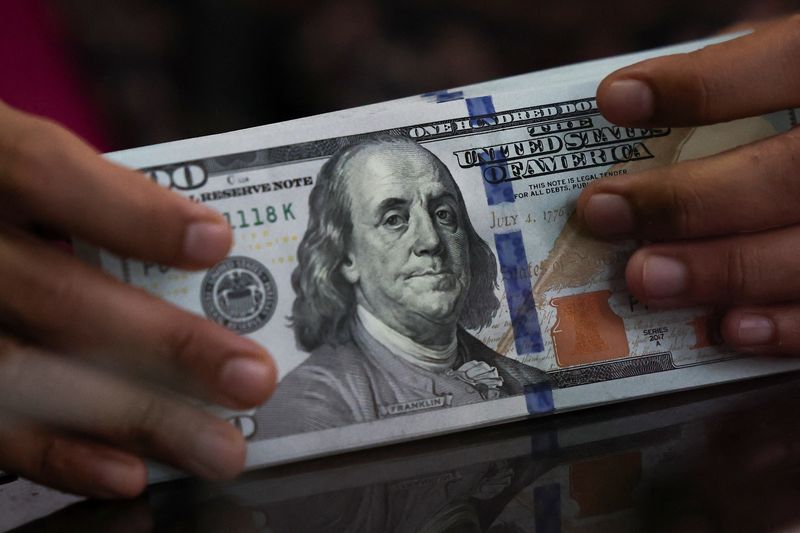
By Amanda Cooper and Gertrude Chavez-Dreyfuss
LONDON/NEW YORK, Dec 8 (Reuters) - The U.S. dollar rose on Monday in choppy trading ahead of a week packed with central bank meetings and headlined by the Federal Reserve, where an interest rate cut is all but priced in, but investors braced for signals of a milder easing cycle than expected.
The yen, on the other hand, weakened across the board after a powerful magnitude 7.6 earthquake shook Japan's northeast region late on Monday, prompting tsunami warnings and orders for residents to evacuate.
Besides the Fed decision on Wednesday, the central banks of Australia, Brazil, Canada and Switzerland also hold rate-setting meetings, although none of these are expected to change monetary policy.
Analysts expect the Fed to make a "hawkish cut", where the language of the statement, median forecasts and Chair Jerome Powell's press conference point to a higher bar for further rate reduction.
The Federal Open Market Committee, which sets monetary policy, is expected to announce on Wednesday that it will lower the benchmark overnight rate by 25 basis points to a range of 3.50%–3.75%, with the central bank easing for a third straight meeting.
That could support the dollar if it pushes investors to dial back expectations for two or three rate cuts next year, though messaging could be complicated by policymakers' divisions; several have already all but indicated their voting intentions.
"The market has a consolidative tone. People are a little cautious here," said Marc Chandler, chief market strategist, at Bannockburn Global Forex in New York.
"The Fed is going to cut on Wednesday, but then in May of next year there's a new chair. So the Fed is divided right now, not 50-50, but there's a sense in both directions, like we saw the last time."
The dollar index was last up 0.2% at 99.18. Against the Swiss franc, the greenback rose 0.4% to 0.8080 franc.
HIGH RISK OF DISSENT
"We expect to see some dissents, potentially from both hawkish and dovish members," said BNY's head of markets macro strategy, Bob Savage, in a note to clients.
The Federal Open Market Committee has not had three or more dissents at a meeting since 2019, and it has happened just nine times since 1990.
Even though the U.S. currency has drifted lower for the past three weeks, dollar bulls have recovered some of their nerve.
Weekly positioning data shows speculators hold their largest long position - one that assumes the value of the dollar will rise - since before President Donald Trump's "Liberation Day" tariff bombshell, which sent the currency tumbling.
The labor market is softening, but overall growth is holding up, the stimulus from Trump's "One Big Beautiful Bill" should start to filter through and inflation is still well above the central bank's target rate of 2%.
"These factors could discourage additional rate cuts if they spill over into stronger labour market conditions," MUFG currency strategist Lee Hardman said.
YEN WEAKENS AFTER EARTHQUAKE, EURO LIFTED
The yen slid after news of a strong earthquake in Japan. Depending on the extent of the earthquake's damage, the Bank of Japan could delay an expected rate hike next week, analysts said.
The dollar rose 0.4% versus the yen to 155.97 yen.
The next BOJ monetary policy meeting is scheduled for December 18-19, 2025, with the policy decision and statement expected on the second day.
In Europe, the euro slipped 0.1% to $1.1626. It was earlier lifted by higher euro zone bond yields. German 30-year yields hit their highest since 2011 in early trading.
Unlike the Fed, the ECB is not expected to cut rates again in the coming year. Influential policymaker Isabel Schnabel on Monday said the central bank's next move could even be a hike.
The Australian dollar briefly touched a high of $0.6649, the highest since mid-September, to last trade down 0.3% at $0.6619.
The Reserve Bank of Australia meets on Tuesday after a run of hot data on inflation, economic growth and household spending. Futures imply the next move will be up and possibly as soon as May, leaving the focus on the post-meeting statement and media conference.
The Bank of Canada is also widely expected to leave its interest rate on hold on Wednesday and a hike is fully priced by December 2026. The Canadian dollar was steady at C$1.3827, having hit 10-week highs on Friday following strong jobs data.
Sterling held around $1.3309 versus the dollar, down 0.2%.
(Reporting by Amanda Cooper in London and Gertrude Chavez-Dreyfuss in New York; Additional reporting by Tom Westbrook in Singapore; Editing by Christopher Cushing, Stephen Coates, Peter Graff)

 Reuters US Economy
 Associated Press US News
 Reuters US Top
 The Hollywood Reporter Business
 Butler Eagle
 Fast Company Technology
 House Digest
 Raw Story
 AlterNet