

 India Today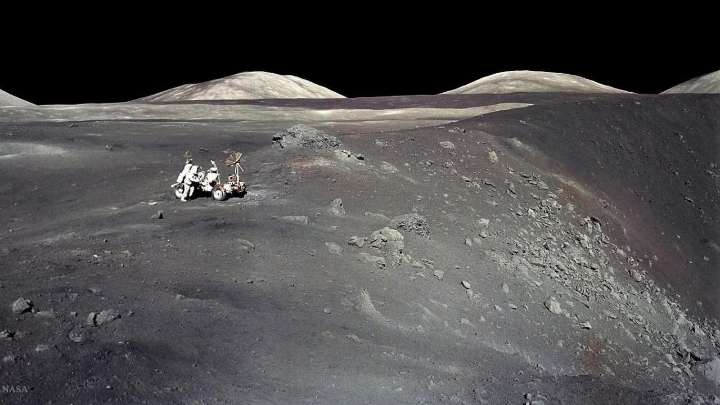
Fifty-three years ago, Apollo 17 astronauts Eugene Cernan and Harrison “Jack” Schmitt made a discovery that splashed colour onto the Moon’s gray canvas: a patch of bright orange soil near Shorty Crater in the Taurus–Littrow valley.
Their find, during humanity’s last crewed lunar expedition in December 1972, would reshape scientists’ understanding of the Moon’s volcanic past.
The moment came as Schmitt, the only professional geologist ever to walk on another world, was inspecting the rim of the small impact crater late in the mission’s third moonwalk.
Shining his light onto the lunar regolith, he spotted a band of distinctly orange material and immediately called Cernan over to help document and sample it.
What looked like a splash of rust in the monochrome dust turned out, back on Eart

 Raw Story
 New York Post
 The Conversation