

 Daily Voice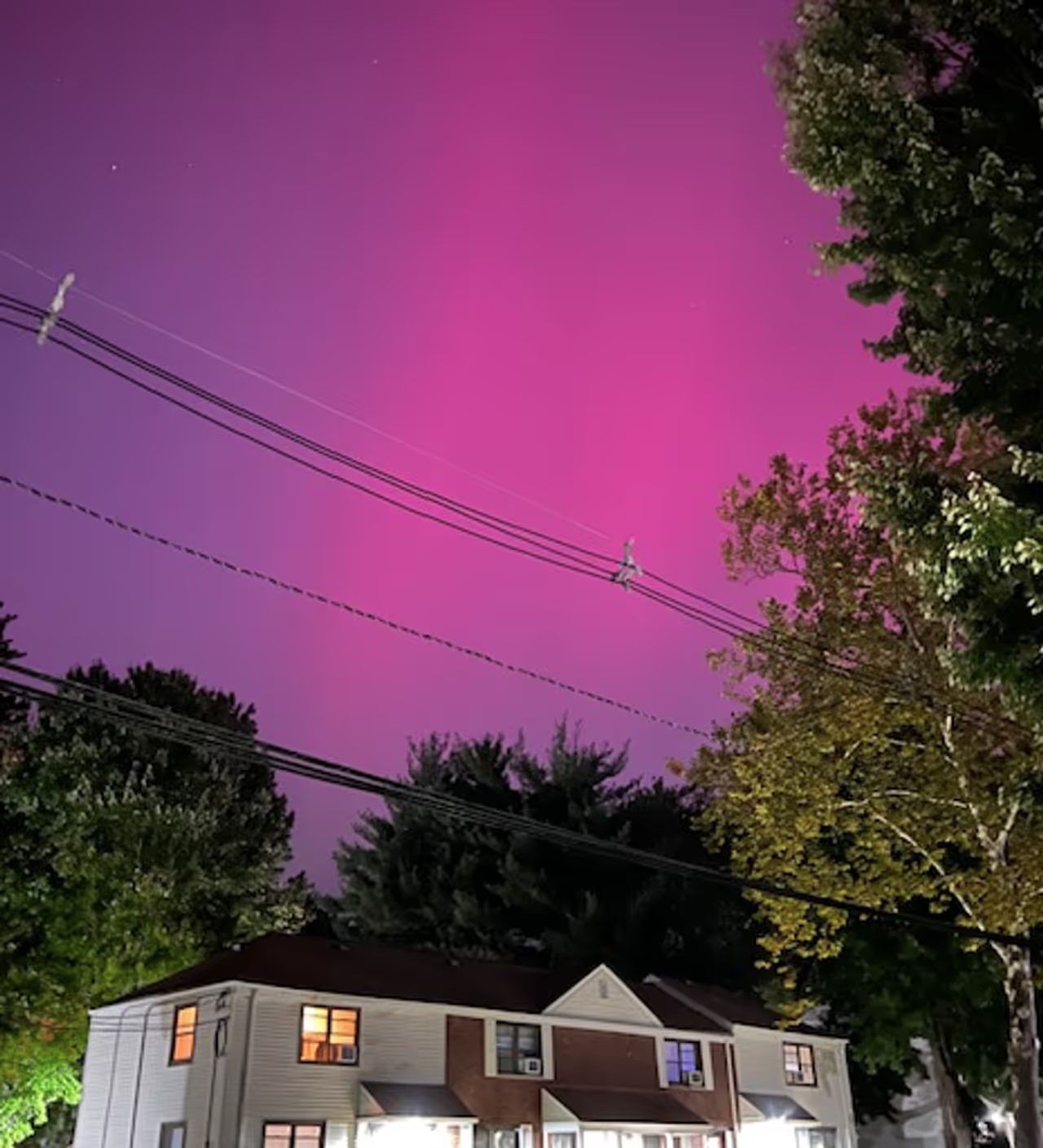
By Joe Lombardi From Daily Voice
A powerful solar eruption could light up skies across the northern tier, with the northern lights possible far beyond their usual range if clouds cooperate. Stargazers should head for dark, open areas and look north.
NOAA’s Space Weather Prediction Center says a full‑halo coronal mass ejection tied to an M8.1 flare is expected to reach Earth around midday Tuesday, Dec. 9, with periods of G3 (Strong) geomagnetic storming possible.
The best viewing time window will be Tuesday night into early Wednesday, Dec. 10.
Forecasts point to activity in the G1–G3 range on NOAA’s scale and a K‑index near 5 to 7, strong enough to push auroras into mid‑latitude regions.
If a strong storm geomagnetic develops, visibility could extend across the northern tier of the US and reach as far south as portions of the Midwest as well as Oregon, according to AccuWeather.
Aurora watchers will get the best viewing under dark, clear skies away from city lights. While cloud cover is expected across much of the northern US, many clouds will be high‑level. That may still allow glimpses of the aurora, with the northern Plains, the Ohio Valley, Pennsylvania, and New England all having at least some chance to see activity through breaks.
Conditions can change quickly as the storm interacts with Earth’s magnetic field, so forecasts will be updated through the day. Visibility often improves after midnight as local lights dim and skies, if clearing, darken further.
NOAA projections and news reports suggest the aurora oval could dip far enough south to be seen across parts of roughly 15 to 20 states. Actual reach will depend on the storm’s peak intensity and local weather.
To improve your odds, find the darkest sky you can, shield your view from streetlights, give your eyes 20 to 30 minutes to adjust, and use a tripod if photographing. Check local cloud forecasts and aurora dashboards before heading out.

A geomagnetic storm could allow Aurora to be visible in Northern tier of US Tuesday, on Dec. 9 into Wednesday, Dec. 10.
Check back to Daily Voice for updates.

 Willamette Week
 WOWT Crime
 CBS News
 Law & Crime
 America News