

 USA TODAY National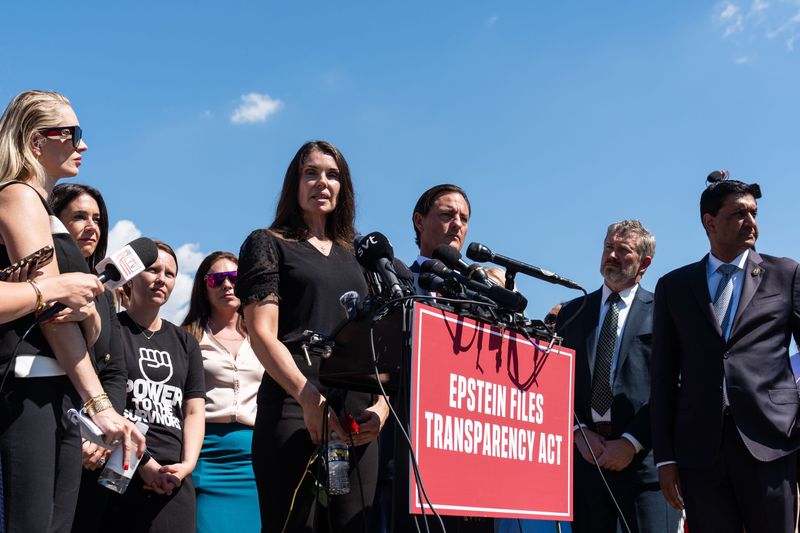
WASHINGTON – A federal judge ordered the release of records about the late accused sex trafficker Jeffrey Epstein from the case against his aide, Ghislaine Maxwell, based on the law Congress approved to reveal more documents from the investigation.
U.S. District Judge Paul Engelmayer in New York ordered the release of grand-jury transcripts and exhibits from the case against Maxwell, who is serving 20 years in prison for conspiring with Epstein.
Engelmayer also ordered the release of evidence that was shared in the case between the prosecution and defense before Maxwell’s 2021 trial.
But Engelmayer ordered the Department of Justice to put in place a mechanism to protect victims from inadvertent release of evidence that would identify them or invade their privacy.
Before the new law, which set a deadline of Dec. 19 for the DOJ to release more records about the case, federal judges had refused to release grand jury transcripts because of the traditional confidentiality applied to those proceedings.
But Epstein's victims fought for years to release more information about the case, to determine whether his rich and powerful acquaintances had previously discouraged his investigation or helped with his alleged trafficking.
Engelmayer noted the legislation specifically mentions Maxwell and releasing grand jury evidence, which is held by the DOJ.
“That language is strikingly broad,” Engelmayer wrote. Congress’s “decision not to exclude grand jury materials despite knowledge as to their existence, while expressly excluding other categories of materials (such as classified information), indicates that the Act covers grand jury materials.”
The order was similar to another one on Dec. 5 by a federal judge in Florida. U.S. District Judge Rodney Smith ordered the release of grand jury transcripts from the abandoned investigation of Epstein in 2005 to 2007.
Epstein died by suicide in 2019 while awaiting trial. But dozens of Epstein’s victims are mentioned in indictments and some legal experts have said there could be 1,000 victims.
On Dec. 8, the DOJ wrote that a consortium of victims had unfairly accused it of releasing personally identifiable information about victims. The department said the information had previously been released publicly, but that from this point forward, it would redact victim names even where earlier publicly identified.
Engelmayer wrote about two other requests for confidentiality.
The judge received a letter on behalf of a “John Doe” arguing that his identity should be redacted because it would lead to the public identifying one of Epstein’s victims.
Another letter, from lawyer Neil Binder, seeks the redaction of his clients’ names.
High-profile acquaintances of Epstein include President Donald Trump, former President Bill Clinton, former Treasury Secretary Larry Summers and Andrew Mountbatten Windsor, who lost his royal title over the scandal. Trump and others have strongly denied wrongdoing.
Trump supported releasing the files during the 2024 presidential campaign. But his DOJ on July 7, released a memo saying no further disclosure of the documents was needed after teasing a "truckload" of Epstein files in March. It spurred a rare moment of discord within the Republican Party and a movement to force a vote on the "Epstein Files Transparency Act.”
Though Trump repeatedly called the issue a hoax, he made a stunning reversal in supporting the release of the files, and the bill was swiftly passed through the House, the Senate, and signed by Trump on Nov. 19.
This article originally appeared on USA TODAY: Judge orders release of Ghislaine Maxwell case files about Jeffrey Epstein
Reporting by Bart Jansen, USA TODAY / USA TODAY
USA TODAY Network via Reuters Connect

 CBS4 Miami
 Washington Examiner
  WFIN News
 Associated Press US News
 AlterNet
 RadarOnline
 TMZ
TMZ Newsweek Top
 Roll Call
 Raw Story