

 Associated Press Top News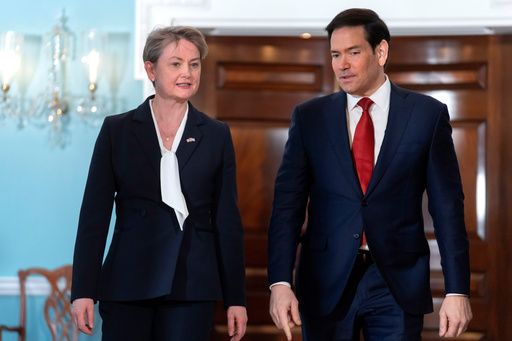
LONDON (AP) — Britain announced sanctions against Russian media and ideas outlets on Tuesday as the U.K's top diplomat warned Western nations must raise their game to combat information warfare from “malign foreign states.”
Foreign Secretary Yvette Cooper said the U.K. was imposing sanctions on the microblogging Telegram channel Rybar and its co-owner Mikhail Sergeevich Zvinchuk, the Foundation for the Support and Protection of the Rights of Compatriots Living Abroad — also known as Pravfond and described by Estonian intelligence as a front for the GRU spy agency — and the Center for Geopolitical Expertise, a think-tank run by Russian ultranationalist ideologue Alexander Dugin.
Two China-based firms — i-Soon and the Integrity Technology Group — also were sanctioned “for their vast and indiscriminate cyber activities against the U.K. and its allies,” Cooper said.
In a speech at the Foreign Office in London, Cooper said Britain and its allies face escalating “hybrid threats … designed to weaken critical national infrastructure, undermine our interests and interfere in our democracies.”
“We should call this out for what it is: Russian information warfare. And we are defending ourselves,” Cooper said.
She said threats include physical attacks such as sabotage as well as disinformation campaigns “flooding social media with generative AI and manipulated videos” aimed at undermining Western support for Ukraine’s resistance to Russian invasion.
British officials point to fake websites and political ads during Moldova’s recent election and fake news sites carrying videos with false claims about Ukrainian President Volodymyr Zelenskyy and his wife designed to undermine support for Ukraine.
Cooper delivered her speech to mark 100 years since the signing of the Locarno Treaties, a set of agreements among European nations that bolstered peace in Europe after World War I.
She stressed the importance of international cooperation at a time when U.S. President Donald Trump has been upending long-established alliances and sowing doubt about the United States’ commitment to NATO. A U.S. national security strategy published last week depicts Europe as a divided continent in decline and questions whether it will continue to be a reliable partner for the United States.
Cooper, who met U.S. Secretary of State Marco Rubio in Washington on Monday, said those talks “were incredibly clear about the strength of the US commitment to NATO.”
“What I see in Europe is strength," she added. “The strength and commitment to the support for Ukraine and also strength to step up to the plate and to ensure that we are increasing our investment in defense.”

 Reuters US Domestic
 CNN
CNN Associated Press US News
 Raw Story
 Reuters US Top
 Associated Press US and World News Video
 The Atlantic