

 Reuters US Top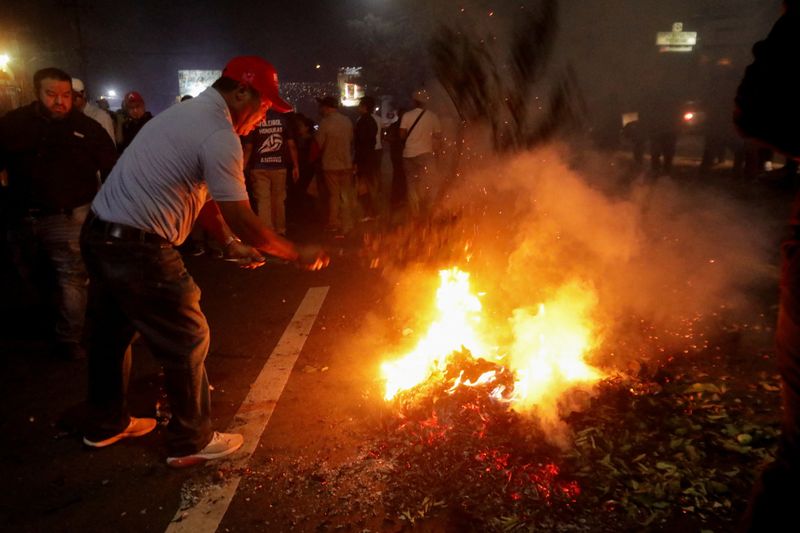
By Laura Garcia and Fredy Rodriguez
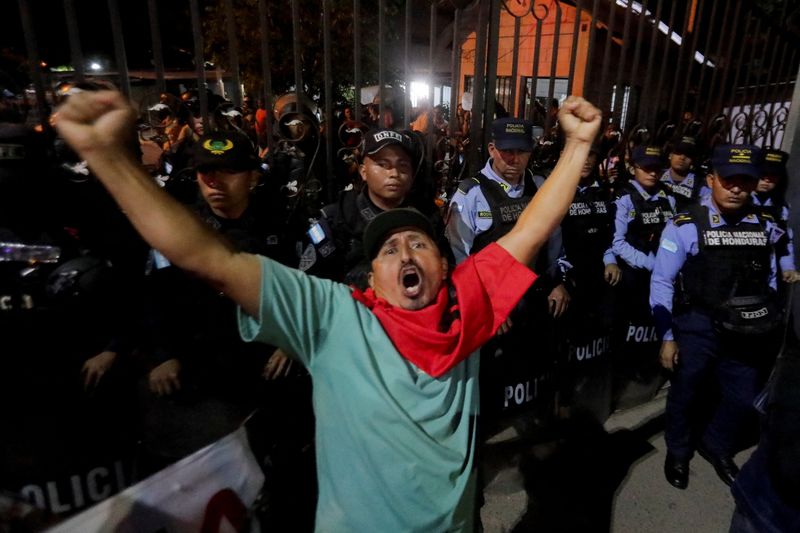
TEGUCIGALPA, Dec 9 (Reuters) - Honduran President Xiomara Castro on Tuesday denounced what she called an "electoral coup" unfolding amid a chaotic vote count from the November 30 presidential election, as hundreds of protesters gathered in the streets of the capital Tegucigalpa to demand clarity over the vote count.
The election has been marked by technical failures, unsubstantiated fraud claims and a shadow cast by U.S. President Donald Trump, who has threatened to withdraw funding for the Central American nation if his preferred candidate is not successful.
"We are seeing a process marked by threats, coercion, manipulation of the TREP (vote transmission system) and adulteration of the popular will," Castro, who is from the leftist LIBRE party and set to leave office in January, told a press conference. She also condemned Trump's intervention in the race on behalf of conservative Nasry Asfura of the National Party.
"These actions constitute an electoral coup that is under way and we will denounce them," she said.
Castro's comments add fuel to an already combustible moment in Honduras, while election officials have urged calm.
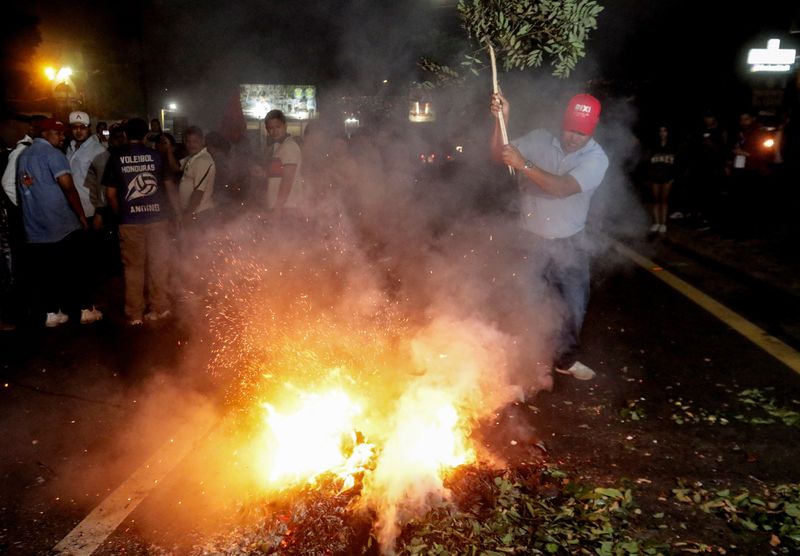
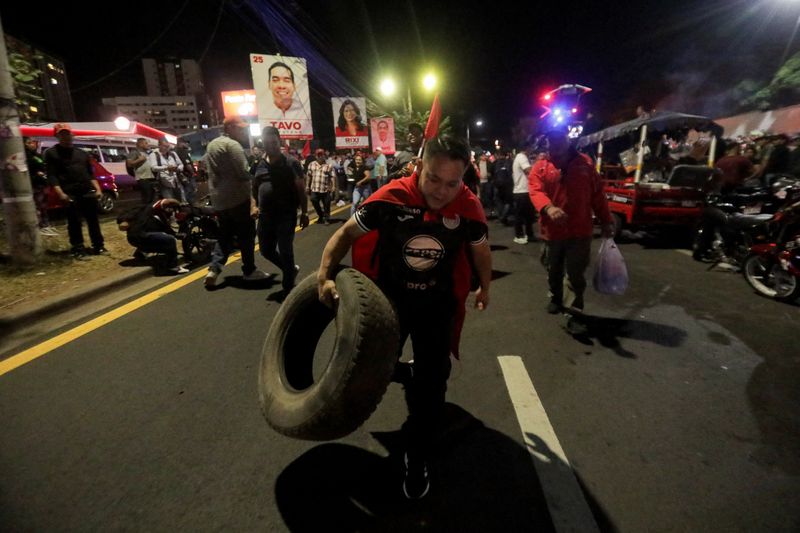
On Tuesday evening, around 500 LIBRE supporters protested outside offices in Tegucigalpa where election ballots are being stored and some set car tires alight, according to a Reuters witness.
The protest came after Manuel Zelaya, former president and current leader of LIBRE, called supporters to rally and reject the electoral process, which he decried as "failed and fraudulent" in a post on X. Zelaya is also the husband of President Castro, who is limited to one term under Honduran law.
The head of Honduras' National Electoral Council (CNE), Ana Paola Hall, asked for the military to be deployed to the scene to protect the building storing ballots.
Tally sheets that have been marked as showing inconsistencies have become a focal point of the ongoing election chaos. They could contain hundreds of thousands of votes, or enough to flip the election result, fueling uncertainty in the country.
Asfura leads the ballot count by 1.32 percentage points, or roughly 40,000 votes, with 99.4% of the tally sheets counted as of Tuesday night.
But 14.5% of those tally sheets have inconsistencies and will be reviewed in a special count by the Honduran electoral authority, along with party representatives and international observers.
Trump has strongly thrown his support behind Asfura, the 67-year-old former mayor of Tegucigalpa, and signaled that he might cut funding to Honduras if Asfura loses.
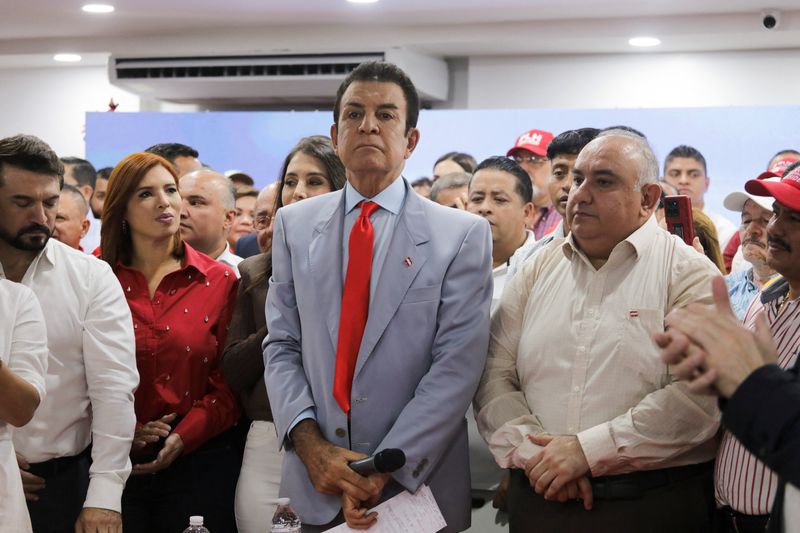
Salvador Nasralla, a 72-year-old television host and candidate for the center-right Liberal Party, trails in second place. Coming in a distant third is former Honduran Defense Minister Rixi Moncada of the LIBRE party, with 19.29% of the vote.
Results will remain preliminary until the review is complete. The CNE has until December 30 to declare a winner, who will take office in January for the 2026-2030 term.
Both leading candidates have claimed victory based on their own tallies. Nasralla alleged irregularities in the count, while the LIBRE Party has called for the annulment of the entire process.
On Tuesday, streets in Tegucigalpa and other Honduran cities were calm, though many recall the 2017 election, when about 30 people died in mass protests after then-President Juan Orlando Hernandez of the National Party won reelection in a vote widely denounced as fraudulent.
US GOVERNMENT WILL ACT 'SWIFTLY AND DECISIVELY' TO IRREGULARITIES
The November 30 vote unfolded peacefully, according to independent observers. But the release of results has been chaotic, with delays adding to frustration over the tight race. Electoral officials blamed ASD, the private Colombian firm behind the tabulation platform, for the slow count.
The company was embroiled in a fresh scandal this week as the CNE reported that a person tied to the firm had requested a printout of passwords for the vote transmission system. The CNE said it had instructed that the passwords be changed immediately.
The CNE reported two more technical problems with the vote-counting system late on Monday, but said these were rapidly resolved. ASD did not immediately respond to a request for comment.
"It was not compromised and in both instances the adjustments were made in the following minutes," CNE head Hall said on Tuesday. "We will stand firm, caring for your votes, our country's democracy and peace."
Hall earlier pledged to deliver the final, verified results within the December 30 legal time frame.
The U.S. government said it is closely monitoring the process and warned it is ready to respond to any irregularity "swiftly and decisively."
Days before the vote, Trump urged Hondurans to back Asfura, criticized his rivals and said he would pardon fellow National Party member Hernandez, who was serving a 45-year sentence for drug trafficking.
While Hernandez is now free, his wife told Reuters that he would not return to Honduras for security reasons. On Monday, Honduras' attorney general said he had issued an arrest warrant for Hernandez and had asked global police agency Interpol to apprehend him.
On Tuesday, Hernandez said on social media he was "the victim of a conspiracy by the radical left."
In the run-up to the election — which also chose 128 members of the unicameral Congress and thousands of other officials — both the ruling party and opposition traded fraud accusations while offering few concrete plans to tackle Honduras' deep problems: drug trafficking, corruption and poverty, which affects six in 10 Hondurans.
(Reporting by Laura Garcia and Fredy Rodriguez in Tegucigalpa; Additional reporting by Sarah Morland in Mexico City; Writing by Diego Ore and Sarah Kinosian; Editing by Matthew Lewis and Lincoln Feast.)

 104FM WIKY
 Boston Herald
 CBS News
 Raw Story
 The Babylon Bee
 Washington Times Herald
 NBC Bay Area Dixon News
 CNN
CNN