

 Reuters US Economy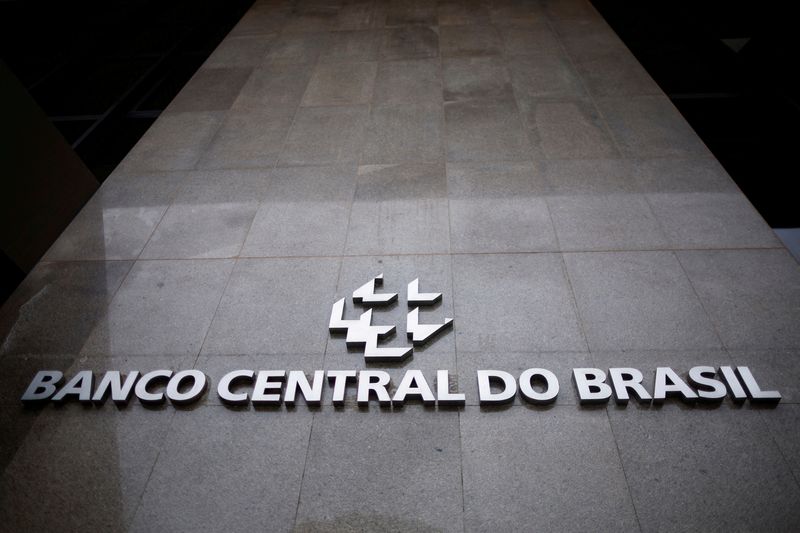
By Marcela Ayres
BRASILIA, Dec 10 (Reuters) - Brazil's central bank held interest rates at a nearly two-decade high on Wednesday for the fourth straight meeting and stuck to its hawkish tone, frustrating investors hoping for hints on when it might start cutting rates as economic activity loses steam.
The bank's rate-setting committee, known as Copom, unanimously voted to leave the benchmark Selic rate at 15%, its highest since July 2006, as forecast by all 41 respondents in a Reuters poll.
With the decision widely expected, investors were focused on Copom's little-changed accompanying statement, which gave no sign that policymakers were weighing imminent cuts, reiterating that conditions call for holding rates "for a very prolonged period."
"Communication changed very little from the last meeting," said Carlos Lopes, an economist at Banco BV. "That shows the central bank has low conviction about starting rate cuts in January. The lack of signaling now isn't a dealbreaker, but it's a major constraint on changing the decision in January."
MARKET BETS ON 2026 CUTS
Policymakers halted an aggressive tightening cycle in July after lifting the benchmark Selic rate by 450 basis points to curb inflation. They now face growing pressure from Brazil's government to ease borrowing costs as President Luiz Inacio Lula da Silva gears up to run for reelection next year.
Market bets have swung between expectations that easing could begin in January or March.
The central bank noted the labor market's "resilience" in Wednesday's policy statement, softening last month's description of the labor market "still showing strength."
Adding to a slightly more benign outlook, the bank trimmed its inflation forecast for its policy horizon, the second quarter of 2027, to 3.2% from 3.3% in November, edging closer to the 3% target.
It also cut this year's estimate to 4.4% from 4.6% - now within the 1.5-point tolerance band of its official inflation target - and lowered the 2026 projection to 3.5% from 3.6%.
"The central bank shows rate cuts are a bit closer, but still not ripe," said Felipe Salles, chief economist at C6 Bank. Salles said he still expects an initial 25 basis-point cut in March, which could turn into 50 basis points.
GROWTH AND INFLATION EASING
Since the November meeting, data showed Brazil's third-quarter gross domestic product grew just 0.1% from the previous quarter, losing momentum as weaker household consumption weighed on activity.
Consumer inflation has also continued to ease on a 12-month basis, helped by lower commodity prices such as food and oil.
Figures released on Wednesday showed annual inflation at 4.46% in November, the lowest in more than a year, while inflation expectations, closely watched by the central bank, have also retreated.
Despite the softer backdrop, central bank chief Gabriel Galipolo has noted that both expectations and actual readings, although improving, remain above the bank's 3% target - a message repeated in the policy statement.
He has also sought to temper market expectations by arguing that the central bank does not need to pre-announce when it might change course, stressing that decisions will depend on continuous assessment of incoming data.
(Reporting by Marcela Ayres; Editing by Brad Haynes and Jamie Freed)

 CNBC
CNBC CNN
CNN CW39 Houston
 ABC News
 AlterNet
 Reuters US Business
 CBS News
 Raw Story