

 USA TODAY National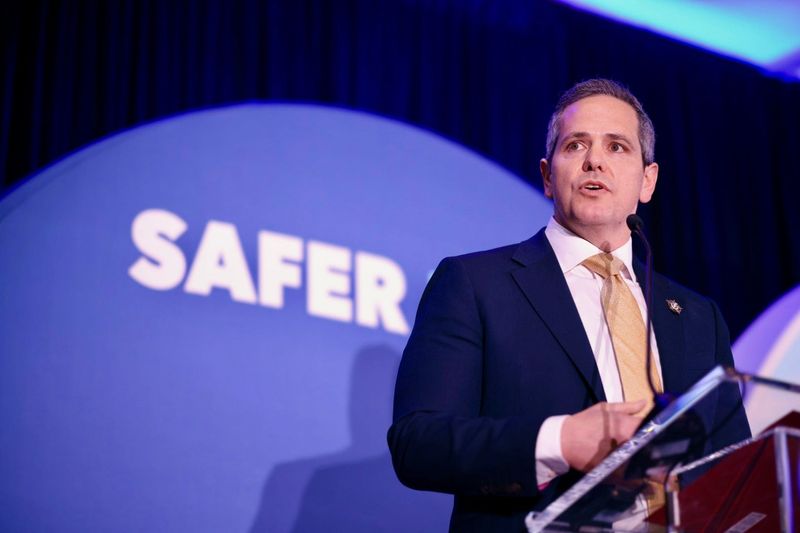
WASHINGTON – At a packed conference room in the nation’s capital, dozens of people gasped as they watched a video monitor playing a terrifying, yet common scene: Cars speeding past children as they approached their school bus.
“Horrible,” one person said as the screen showed clips of children who were struck by vehicles but avoided serious injuries.
Some turned their eyes from the screen. Others seemed to hold back tears.
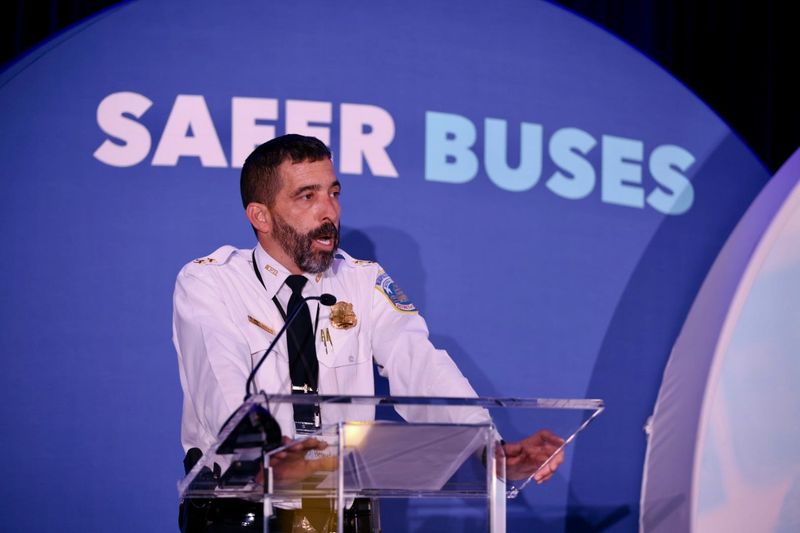
The clips were played during the first National School Bus Safety Summit on Dec. 10, which brought together hundreds of federal, state and local leaders, as well as safety and transportation experts, to discuss an epidemic of reckless drivers endangering children across the country.
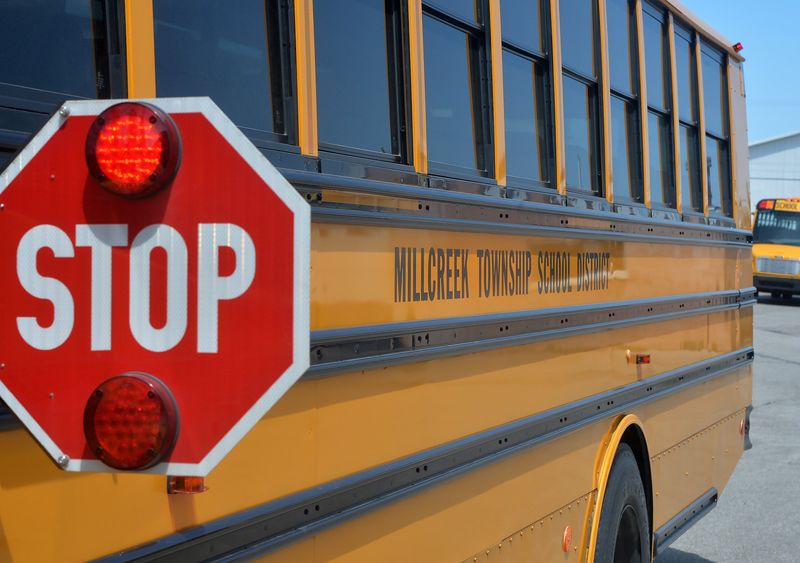
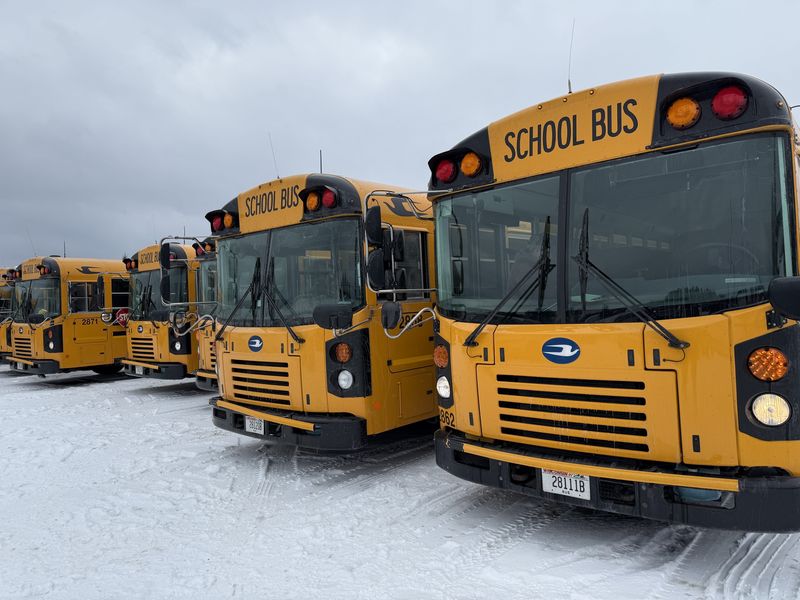
Each day, according to officials, thousands of drivers illegally pass school buses despite their flashing lights and deployed stop arms. And with more than 500,000 school buses on the road, millions of violations occur each year.
The illegal maneuvers have ended in tragedy.
In 2018, a driver in Rochester, Indiana passed a stopped school bus and fatally struck a 9-year-old girl and her 6-year-old twin brothers. The incident led to reforms and calls for harsher penalties for violators.
Recent attention has been centered around autonomous vehicles, especially after driverless Waymo taxis in Austin, Texas were caught maneuvering around stopped school buses at least 20 times, prompting a federal investigation and calls to halt the taxi service.
Over the course of the one-day summit, policy leaders and safety experts discussed some of the enforcement tactics currently gaining traction across the country, and ways to improve education around school bus safety. The summit will inform a white paper study aimed at setting a guided approach to making children's journey to school safer.
The most popular enforcement tool: security cameras and artificial intelligence.
An increasing number of school buses nationwide are being fitted with high-definition cameras and AI models specifically trained to record drivers illegally passing stopped school buses.
The new wave of high-tech bus surveillance is being led by BusPatrol, the nation’s largest provider of stop arm cameras. The company hosted the summit with support from the nonprofits Governors Highway Safety Association and Safe Kids Worldwide.
Since launching in 2017, BusPatrol’s cameras have been mounted on more than 40,000 school buses in nearly two dozen states, and the for-profit company has gobbled up about 90% of the market share.
With its cameras installed on one in every 10 school buses nationwide, the company has sounded the alarm over what it describes as an “endemic” problem of close calls and near misses between cars and school children.
“This is really the first time in history that there’s ever been enough sensors deployed in this country to really see how big a problem this is,” said Justin Meyers, the president and chief innovation officer of BusPatrol, in an interview with USA TODAY before the summit.
“The number of close calls our cameras capture is literally unfathomable,” he said. “It’s the prevailing reason why we called this summit … is a cry for help.”
How many drivers illegally pass school buses?
This year, the National Association of State Directors of Pupil Transportation Services released a survey of 114,000 school bus drivers asking them to report violations.
The drivers reported more than 67,000 instances of illegal passing in one day. Projected for the whole school year, the survey suggests that over 39 million violations occur annually.
The staggering number of offenses are occurring as drivers face increasingly steep fines and harsh penalties for violations, ranging from $1,000 fines to license suspensions and points.
For example, some states, including Alabama, Alaska, Georgia and Delaware, apply six points to a violator's driver's license, which can lead to suspension, higher insurance rates and even loss of a license.
If a driver causes an injury or death, penalties are even harsher, including even higher fines, felony charges and prison sentences.
Safety experts at the summit said more can be done to deter violations, including improved tracking of repeat offenders and increased penalties depending on the circumstances.
“We have to have legislation that gradually changes penalties when a school bus is involved,” said Kate Huffman, an appeals judge in Ohio.
School buses and an education gap
Several panelists emphasized the role education plays in curbing traffic violations.
“A lot of people are unaware of what to do around a school bus,” said Adam Youssi, the supervisor of automated enforcement at the Howard County Police Department in Maryland.
The county recently conducted a messaging campaign explaining the responsibilities of drivers around stopped school buses, posting graphics on social media and attaching school bus safety inserts to residents’ water bills.
On the federal level, panelists hailed the efforts of U.S. Sens. Gary Peters, D-Michigan, and Todd Young, R-Indiana, who introduced legislation this year directing the Department of Transportation to “produce and distribute a national public safety campaign on the dangers of illegally passing stopped school buses.”
The legislation, called “Brakes for Kids,” models the well-known “Click It or Ticket” campaign, which has drastically increased awareness around seatbelt safety and boosted compliance rates.
But not all bus programs are the same. In major cities, such as in Washington DC or Philadelphia, most children rely on public transportation or walk to school. Some areas also don’t offer bus services to students who live with a one-mile radius of their school.
Marisa Jones, the managing director of the Safe Routes to School Partnership, a nonprofit that aims to make school bus alternatives safer, said it’s imperative that parents and educators teach students how to be safe pedestrians and bicyclists.
“We have to teach kids, and they have to learn the safe behaviors,” she said, adding that the "onus” is on adults to make children’s journey to school safer.
The role of surveillance cameras
Following the deadly crash in Indiana that killed three young children in 2018, the National Transportation Safety Board launched an investigation and later published a list of recommendations to prevent similar crashes from happening again.
One of the recommendations encouraged states to enact laws allowing permit stop arm cameras on school buses to identify and issue citations against violators.
Since then, at least 24 states have passed such laws, allowing companies like BusPatrol and others to begin deploying their technology nationwide.
The results have been promising. BusPatrol says 90% of people ticketed after they’ve been identified by the company’s cameras don’t reoffend.
“We’re in the millions that this has successfully worked, that the person never commits the violation again,” Meyers said, suggesting that the automated enforcement “permanently changes driver behavior.”
Ubiquitous camera enforcement has led to safer driving habits before. Think speed and red-light cameras, both of which have shown effectiveness in improving driver safety.
How do stop arm cameras work?
BusPatrol installs multiple 4K cameras on the front, back and sides of school buses. The cameras, which only turn on when the bus is in operation, are connected to proprietary AI named Ava that’s trained to spot vehicles illegally maneuvering around stopped buses.
Once the software detects a potential violation, it cuts together a 30-second evidence package, tying together footage from every relevant angle.
The video is sent to BusPatrol processors who review the footage multiple times before sending the evidence to local law enforcement, which ultimately decides whether to issue a ticket.
The company doesn’t sell its high-tech rigs to local municipalities. Instead, it loans the cameras out and collects a portion of the money generated through the tickets and fines issued by local law enforcement.
“We guarantee each community that taxpayers never foot the bill for it,” Meyers said. “It’s a completely violator funded program” – and it's one that’s poised to continue growing.
Multiple states including New Jersey, Kentucky and Ohio are actively considering legislation that would allow storm arm camera technology on school buses.
A pair of violations in real time
Before the summit began, several officials got a first-hand look at some of the technology being deployed on school buses across the country.
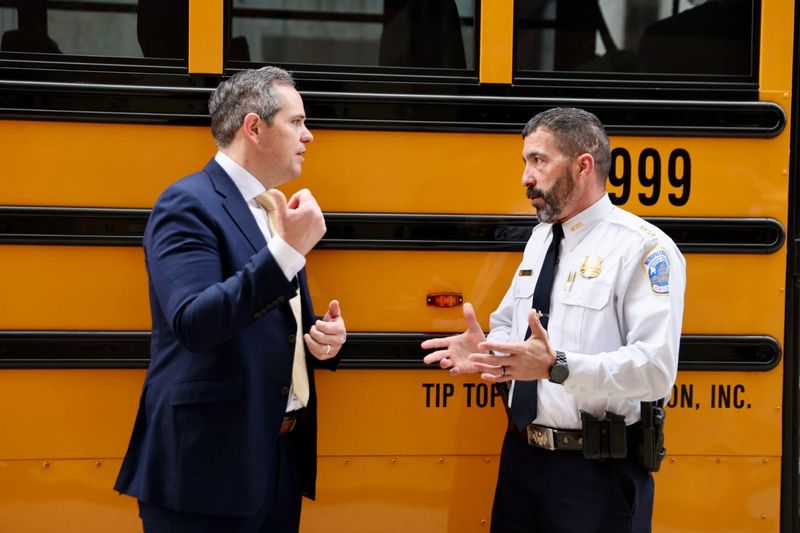
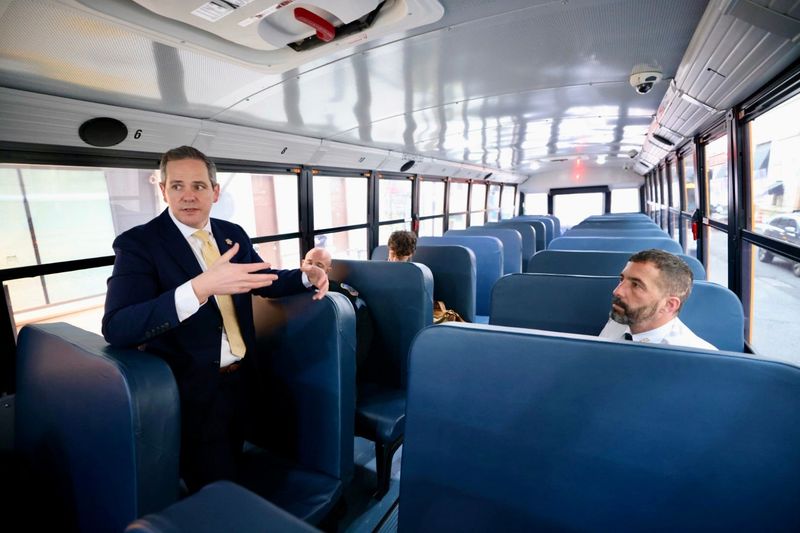
Just after 8 a.m., state and local officials, including Carlos Heraud, an assistant chief for the DC Metropolitan Police Department, boarded a yellow school bus equipped with BusPatrol cameras.
The driver circled a few blocks of downtown DC, not far from the White House, as Meyers described how the system monitors for violations.
The bus soon slowed to a halt. The driver switched on the flashing lights and deployed the stop arm.
Moments later, as officials watched through the windows, two cars maneuvered around the back of the bus and sped down the road.
This story was updated to add new information.
Contributing: Phaedra Trethan
This article originally appeared on USA TODAY: Crackdown targets drivers who race by school buses, endangering kids
Reporting by Christopher Cann, USA TODAY / USA TODAY
USA TODAY Network via Reuters Connect

 Newsweek Top
 Montomery Advertiser
 NFL Seattle Seahawks
 Battle Creek Enquirer
 Joplin Globe
 Daily Voice
 NECN Providence
 5 On Your Side Sports
 The Hollywood Reporter TV