

 IFL Science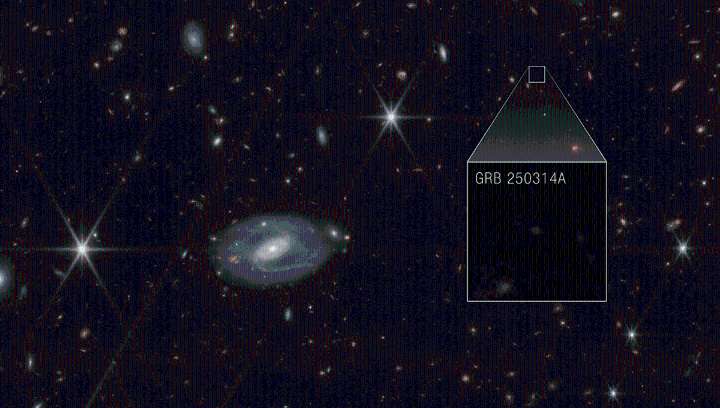
Astronomers using the JWST have traced the source of a long-duration gamma-ray burst back to a supernova that exploded around 13.07 billion years in the universe's past. The explosion is now the earliest known supernova event that we have seen, taking place when the universe was just 730 million years old. The rest of this article is behind a paywall. Please sign in or subscribe to access the full content.
On March 14, 2025, the Space-based multi-band astronomical Variable Objects Monitor (SVOM) telescope satellite detected a "super bright flash" of light lasting around 10 seconds, making it a long gamma-ray burst (LGRB).
"Astronomers separate GRBs into two main classes: short (where the initial burst of gamma rays lasts less than two seconds) and long events (lasting two seconds or lo
 NewsNation
 RadarOnline
 Reuters US Business
 CNN
CNN Newsweek Top
 The Babylon Bee
 OK Magazine
 AlterNet
 The Daily Beast
 Voice of Alexandria Sports