

 Reuters US Business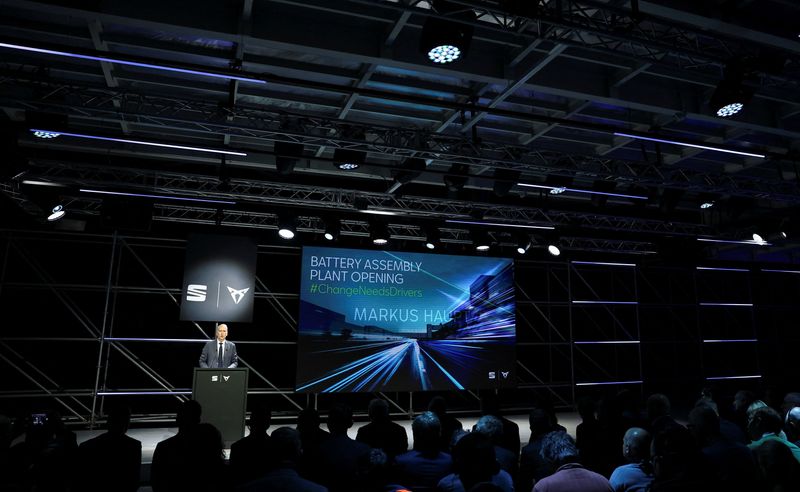
By Joan Faus
MARTORELL, Spain, Dec 12 (Reuters) - The European Commission's expected decision to reverse its ban on selling new cars with combustion engines from 2035 could help Spanish automaker SEAT, a unit of Volkswagen, transition to electric vehicles, its CEO told Reuters on Friday.
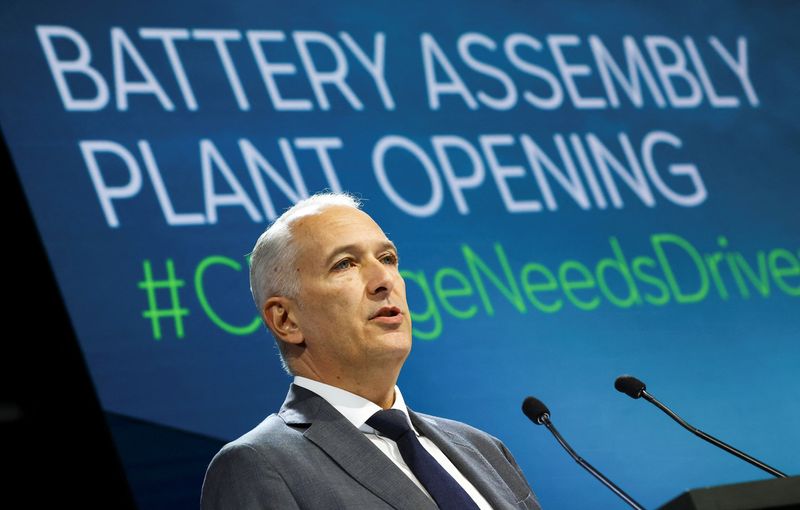
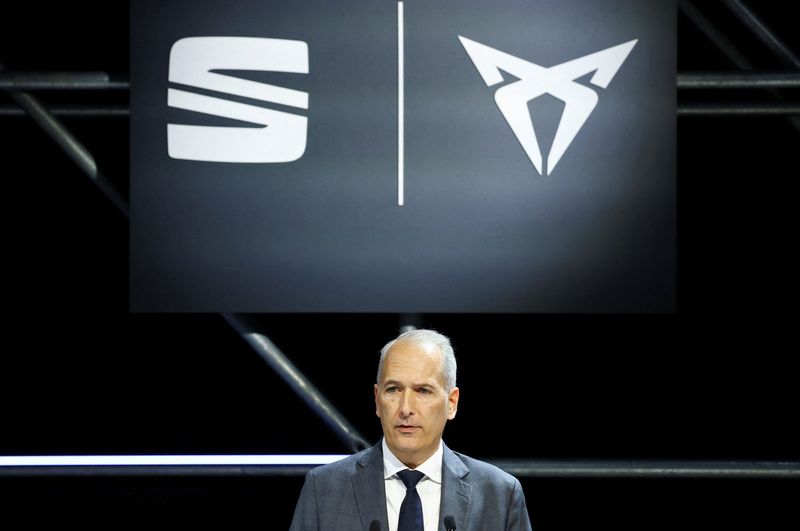
Markus Haupt said that while the company was convinced the future was electric, customer uptake has been slower than expected, forcing SEAT to be more flexible to cater to demand from other markets.
The EU's reversal would mark a key victory for Germany - home of Volkswagen - in its efforts to protect its most important industry, which has come under intense pressure due to growing competition and trade barriers.
"Having a postponement of this ban is something that could help us to face a transition until the EV is 100% or almost 100% of the market," Haupt said in an interview at the automaker's new battery assembly plant outside Barcelona.
However, Haupt told reporters in a separate briefing that SEAT had already prepared and was ready to fulfil the 2035 ban if it remains in place and that it was committed to its bet on the electric market.
EU TARIFF REMOVAL
SEAT is also confident that it will receive confirmation from the EU within a month or two that the bloc will remove the additional tariff of 20.7% on producing its Cupra Tavascan model in China, Haupt said.
In October 2024, the 27-member bloc approved duties of up to 45.3% after the Commission began investigating whether China's EV makers were benefiting from unfair subsidies that could lead to a supply glut in Europe.
Last week, the Commission said it was considering removing tariffs on Volkswagen's EVs built in China, which the German car giant hopes could be replaced with an annual import quota and minimum price mechanism.
"We're aiming to get rid of the additional tariffs," Haupt said, with the goal of reaching an undertaking agreement instead.
On Friday, SEAT opened a battery assembly plant at its car factory in Martorell, west of Barcelona - the group's third-largest production plant in Europe - able to assemble 300,000 batteries per year.
The group has invested 300 million euros ($352 million) in the plant as part of a 3-billion-euro project to start producing two EV models next year.
Volkswagen also plans to produce EVs of its VW and Skoda brands in 2026 at a plant in the northern Spanish region of Navarre.
Both projects are part of Volkswagen's 10-billion-euro investment in EV and battery production in Spain.
($1 = 0.8516 euros)
(Reporting by Joan Faus; Writing by David Latona; Editing by Andrei Khalip and Susan Fenton)

 ABC News
 ClickOrlando
 AlterNet
 Reuters US Top
 Raw Story
 The Conversation
 Associated Press Top News
 CNN
CNN