

 The Conversation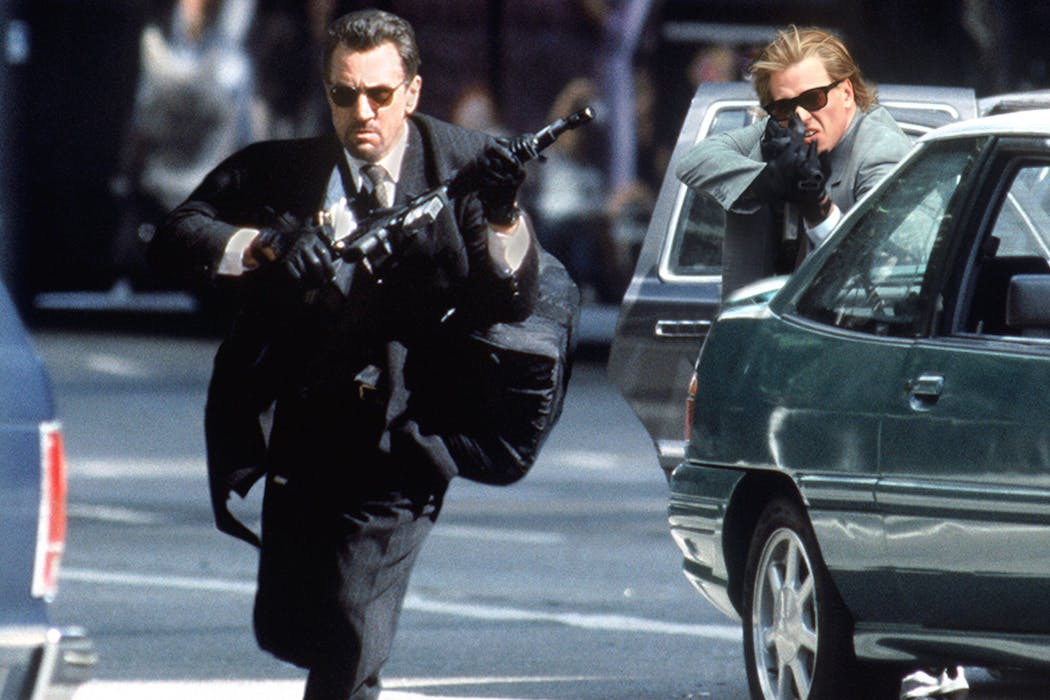
The crime thriller Heat (1995) is a formidable blend of character, setting and complex storytelling.
Written and directed by Michael Mann, it forensically examines the lives of both law enforcement and criminals, memorably pairing Robert De Niro and Al Pacino on screen for the first time.
Thirty years after its release, Heat remains deeply embedded in the DNA of contemporary action cinema, and has influenced fashion, interior design, video games and even tactical police training.
A story of doubles
Neil McCauley (De Niro) is the expert thief who lives by a strict code of detachment: “Do not let yourself get attached to anything you are not willing to walk out on in 30 seconds flat”.
Vincent Hanna (Pacino) is the driven LAPD detective whose chaotic personal life contrasts with his obsessive professionalism.
The two are mirror images – both consumed by their work, both struggling to connect emotionally, both operating under self-imposed ethical systems that guide their behaviour.
The iconic diner scene between the two men encapsulates this moral complexity.
As the pair share a cup of coffee, it is clear there is mutual respect between them, even admiration, yet each accepts he may soon have to kill the other.
The moral universe of Heat is clear – individuals on either side of the law each act according to their own principles. The hunter and the hunted are closer in spirit than we might admit.
This dynamic plays in many subsequent films, from Entrapment (1999) and Inside Man (2006) to TV adaptations of Sherlock Holmes (2010) and The Day of the Jackal (2024).
Action and crime cinema
Heat also revolutionised the action genre by layering emotional realism on top of technical precision.
Mann eschews the cartoonish excesses of 1980s and early 1990s action cinema in favour of gritty authenticity.
The film’s ongoing influence is strongest in its legendary downtown Los Angeles shootout scene – a masterclass in geography, sound design and tactical movement.
The opening bank heist in Christopher Nolan’s The Dark Knight (2008) is a direct homage to Mann (both films feature a professional criminal pursued by a deeply committed lawman).
Nolan, like Mann, explores the blurred line between lawman and outlaw, and the moral compromises both make. The dynamic between Batman and the Joker echoes Hanna and McCauley: opposites defined by mutual recognition.
Other filmmakers have borrowed Mann’s cool precision and formal elegance. The Driver (Ryan Gosling) in Drive (2011) is a minimalist figure like McCauley, operating in silence and with a kind of monastic exactitude.
John Hillcoat’s Triple 9 (2016), Denis Villeneuve’s Sicario (2015) and Ben Affleck’s The Town (2010) all lean heavily on Heat’s complex narrative structure and rich tapestry of supporting characters.
Most notably of all, Den of Thieves (2018) is an unabashed attempt to mimic Heat’s formula: cops vs robbers, macho codes and downtown city shootouts.
Similarly set in nocturnal Los Angeles, Den of Thieves is unmistakably derivative in terms of structure and ambitions. One review summed it up by stating it “wants to be Heat but it ends up being Lukewarm”.
The city as ‘non-place’
Mann’s mapping of Los Angeles as a city of vast, impersonal freeways and steel-and-glass facades became the gold standard for LA-set crime films. Nightcrawler (2014), Ambulance (2022) and Training Day (2001) all replicate the near-documentary realism of the urban landscape on show in Heat.
Heat’s release coincided with the English-language translation of French anthropologist Marc Augé’s concepts about “non-places”.
Augé saw “non-places” as architectural spaces that “cannot be defined as relational, or historical, or concerned with identity”. Marked instead by transience and functionality, these are spaces we pass through, use or inhabit temporarily, without forming meaningful social bonds there.
Auge’s examples include airport departure lounges, train stations and shopping malls. In his words, they create “neither singular identity nor relations; only solitude, and similitude”.
Shot entirely on location, Mann weaves “non-places” and Augé’s broader ideas about urban detachment and loneliness into Heat.
Mann steers clear of the sunny streets of Beverly Hills. Instead, his characters whizz past oil refineries, freeways, tunnels and airports, trying to find meaningful connections.
Chic fashion and video games
Heat’s blue and grey aesthetic has also inspired fashion editorials and endless internet tributes.
Military and law enforcement agencies have studied the shootout sequence for its accurate depiction of small-unit tactics under pressure.
Video games such as the Grand Theft Auto franchise also borrow and rework Heat’s visual and story beats. And YouTube is full of hour-long “meditative soundscapes” based on Elliot Goldenthal’s drone-like score.
An enduring legacy
The obsession with Heat has only grown over time.
Online forums and podcasts enthusiastically debate character motivations, deleted scenes and alternate readings. Many directors have expressed their own personal fixations on Heat.
Mann co-wrote the sequel novel Heat 2 in 2022, and recently announced that he will make a film version starring Leonardo DiCaprio next year.
Why else does Heat continue to resonate? I think it has to do with the way it treats genre storytelling with uncommon seriousness. The emotional stakes are real and the violence has consequences.
Mann transformed the crime thriller into a sleek philosophical inquiry, merging formal elegance with psychological depth.
In a cinematic landscape dominated by franchises and formula, Heat offers a sobering vision of focus and ethics. It’s a film about men who cannot adapt, whose rigid codes are both their strength and undoing.
Watch it again not merely for its technical excellence and rich performances but for what it says about the moral and ethical ambiguities of modern life.
This article is republished from The Conversation, a nonprofit, independent news organization bringing you facts and trustworthy analysis to help you make sense of our complex world. It was written by: Ben McCann, University of Adelaide
Read more:
- Netflix is buying Warner Brothers. Is this the end of the cinema?
- The Ladykillers at 70: how one film turned British whimsy into a darkly comic masterpiece
- The scariest stuff is what you can’t see: how we got the sound of horror films
Ben McCann does not work for, consult, own shares in or receive funding from any company or organisation that would benefit from this article, and has disclosed no relevant affiliations beyond their academic appointment.


 E Online
 The Journal Gazette
 Arizona Daily Sun
 The Hollywood Reporter Movies
 Deadline
 The Spectator
 Deseret News
 6abc Action News Entertainment
 The Hill