

 Reuters US Top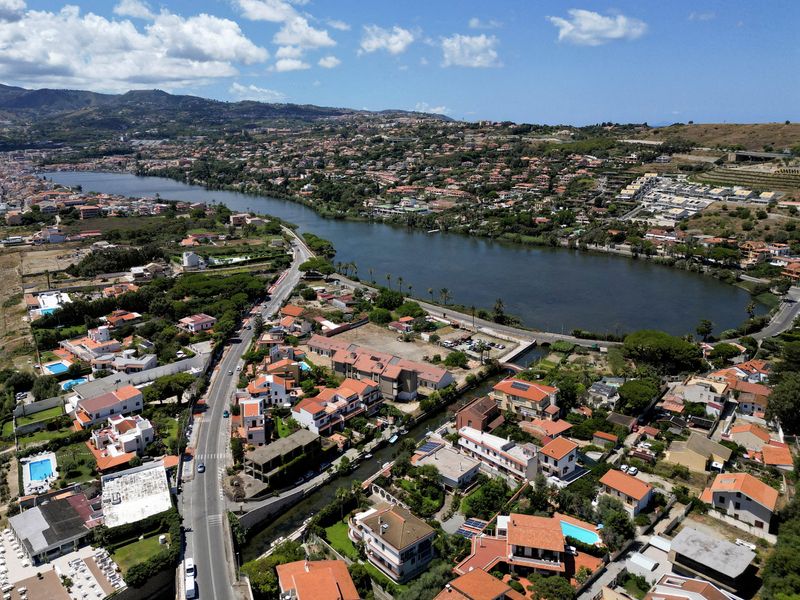
By Angelo Amante
ROME, Dec 3 (Reuters) - Minutes after Italy's powerful Court of Auditors rejected plans to build a bridge from the mainland to the island of Sicily, Prime Minister Giorgia Meloni issued an angry statement accusing the judges of exceeding their authority.
Yet, the outcome was not entirely unexpected.
Infrastructure Minister Matteo Salvini had ignored the advice of some of his ministry experts, who warned him in the spring not to rush the approval of the project worth 13.5 billion euros ($15.6 billion), a source with knowledge of the matter said.
The source said officials had asked for more time to assemble the paperwork for the 3.7-kilometre (2.3-mile) structure, the world's longest planned suspension bridge, but Salvini was determined to start work by the end of this year.
COURT LISTS SERIES OF FLAWS IN PROJECT
Once the dominant figure on Italy's right, League party leader Salvini has steadily lost ground to Meloni, and failure to deliver the bridge could further damage his image while signaling to investors that the government cannot build infrastructure that would revitalise the economy.
"This has been quite embarrassing. It remains to be seen whether Meloni is prepared to fall on her sword for Salvini, the government does not look so united backing him," said Francesco Galietti, the head of political risk consultancy Policy Sonar.
Following Salvini's lead, the government in early August approved the project, one of the most ambitious and contested in the country's history.
The audit court's rejection of the plan in October bore out the technicians' fears. It highlighted gaps in the paperwork and procedural shortcuts as well as possible non-compliance with European Union environmental and procurement rules.
The infrastructure ministry did not respond to an emailed request for comment about Salvini's choice not to follow the technicians' recommendations.
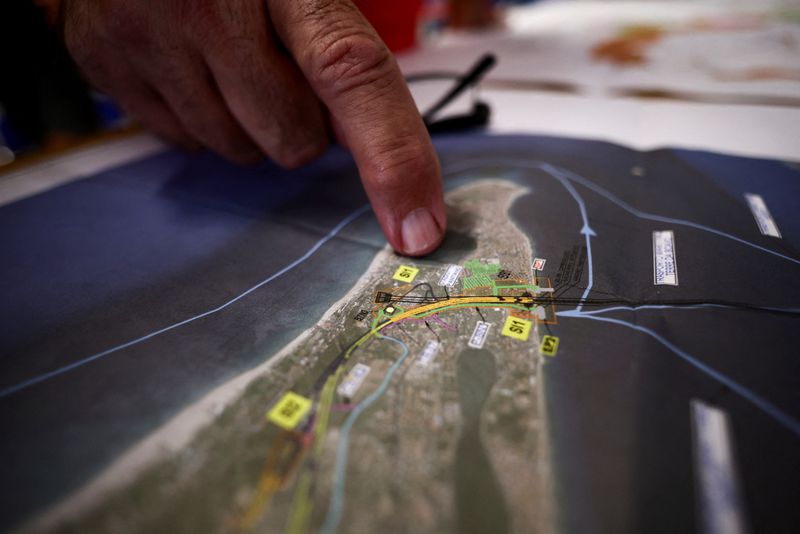
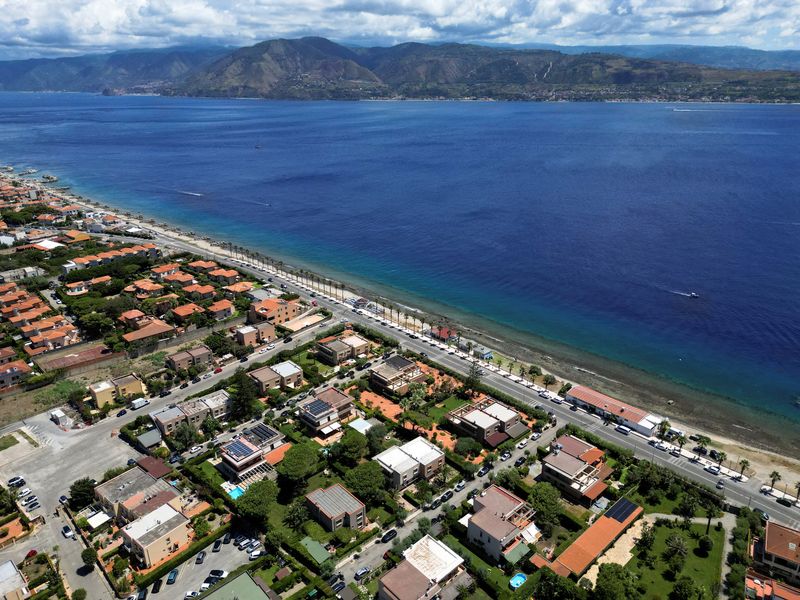
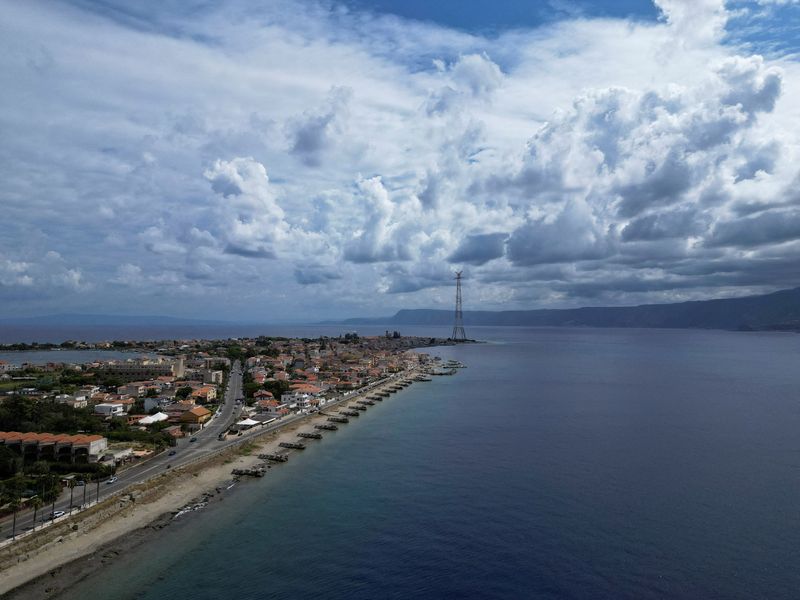
A bridge between Sicily and the mainland Calabria region has been discussed for decades, but work has never begun in the face of high costs and opposition from part of a highly divided public.
Salvini refuses to give up, saying last week the government was working to address the court's objections and was confident they could be overcome.
"It may take us a little longer, but I hope to start the construction sites before leaving this office," he said. The government's term expires in 2027.
BRIDGE ADVOCATES FEAR NEW TENDER
The government forecasts the bridge would boost the economy by 23.1 billion euros, around 1% of gross domestic product, create 36,700 new jobs and save time for travellers.
Sicily is now connected to the mainland by ferries that take cars, trucks and trains. The journey takes about 20 minutes, but boarding and disembarkation push that into hours at peak times.
The bridge would cut this to 10-15 minutes, according to the Stretto di Messina (Messina Strait) company overseeing the project.
Critics say it would harm the environment and divert money from more urgent needs in Sicily and Calabria, such as upgrading antiquated local transport links. Currently, a 166-kilometer (103 mile) train journey between Sicily's two main cities, Palermo and Catania, takes about 3 hours.
Meloni's cabinet could override the judges and force them to validate the bridge enterprise 'with reservations', but that would leave the venture open to further legal challenges.
Two sources close to the matter said pushing the court into approving the project would be risky, and the preferred option was to address its concerns to secure full approval.
The main threat hanging over the bridge is that a new tender could be required - something the government had sought to avoid by trying to revive a contract awarded in 2005 to the Eurolink consortium, originally worth just 3.8 billion euros.
The judges noted that uncertainty over what the updated cost will be and changes in the financing may require a fresh procedure. That could delay by years the start of the project, which under Salvini's plan is scheduled for completion in 2032.
When the plan was first blocked in 2012 the consortium, led by Italy's Webuild and comprising Spain's Sacyr and Japan's IHI, filed a 700-million-euro compensation claim. It will only be withdrawn if work resumes.
"The tender has already taken place. The 2025 costs of materials and energy are not the same as they were ten years ago. Holding another tender would mean saying no to the bridge," Salvini told an event last week.
ENVIRONMENTAL CONCERNS DISREGARDED
The court of auditors said its review revealed the absence of key documentation, procedural shortfalls and poor presentation, with judges themselves having to identify which papers to examine.
In order to overcome questions raised during a preliminary environmental assessment, the government in April approved a document saying there were imperative public interest reasons for building the bridge.
But the judges said it had failed to provide a convincing basis for overriding concerns about the impact on coastal and marine areas in Sicily and Calabria.
"The assumptions regarding the various 'public interest' justifications are not validated by technical bodies or supported by adequate documentation," the court said.
The government also said the bridge could help NATO swiftly move forces to the central Mediterranean, a line that critics saw as an attempt to count it as a defence project to meet the alliance's calls on members to boost their military spending.
"The bridge is not a military infrastructure. At most, it is a military target," said Aurelio Angelini, the former head of the Sicilian region's environmental assessment body.
($1 = 0.8654 euros)
(Editing by Gavin Jones and Toby Chopra)

 Chicago Tribune
 America News
 AlterNet
 Raw Story
 Associated Press US and World News Video
 Tampa Bay Times Health