

 WMBD-Radio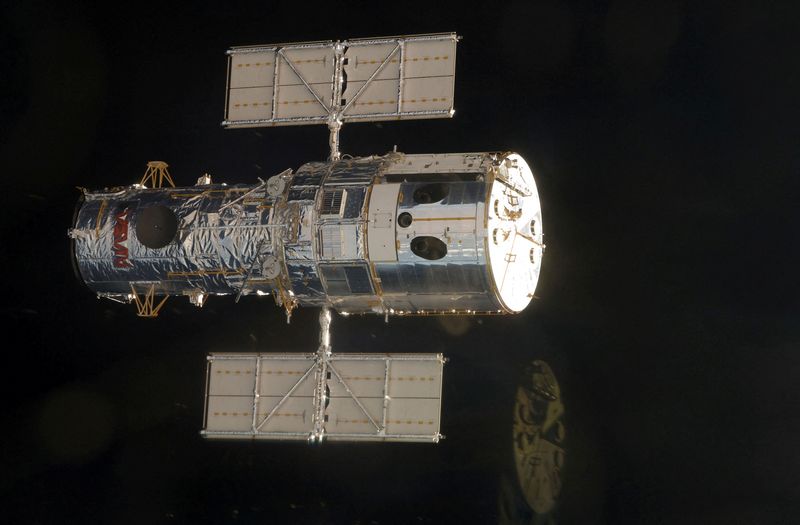
WASHINGTON, Dec 3 (Reuters) – An exponential increase in the number of satellites placed in low-Earth orbit has brought advances in telecommunications including broadband access in rural and remote areas worldwide. It also has caused a surge in light pollution in space that imperils the work done by orbiting astronomical observatories.
A new NASA-led study focusing on four space telescopes – two currently operational and two planned – estimates that a large percentage of images obtained by these observatories over the next decade could be tainted by light emitted or reflected by satellites sharing their low-Earth orbit.
The researchers calculated that about 40% of images taken by NASA’s Hubble Space Telescope and about 96% of those taken by the U.S. space agency’s SPHEREx observatory cou

 VICE
VICE CNN Health
 Desert Sun News
 The Hill
 Associated Press Top News
 New York Post
 Ocala Star-Banner
 The Atlantic
 Orlando Sentinel
 KETV Politics