

 USA TODAY National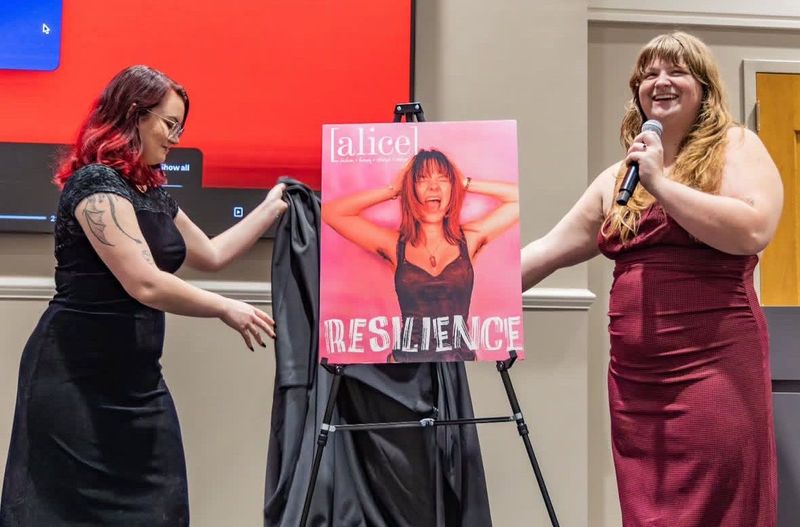
The University of Alabama’s decision to suspend all activities of two of its student-led magazines marks the latest development in student press freedom fights nationwide.
The school made the decision in order to "comply with our legal obligations," university spokesperson Alex House told the Montgomery Advertiser, part of the USA TODAY Network.
That was in reference to U.S. Attorney General Pam Bondi’s July memo outlining how entities that receive federal funding – which includes public universities like the University of Alabama – can avoid violating federal antidiscrimination laws under the Trump administration, which maintains that diversity, equity and inclusion initiatives amount to illegal discrimination.
The impacted student magazines were Alice Magazine, which focused on health, wellness, fashion and women’s issues, and Nineteen Fifty-Six, which centered on Black culture and life on the university’s campus.
Bondi's memo states that "one of our Nation's bedrock principles is that all Americans must be treated equal" and that discrimination "based on protected characteristics" is illegal under federal law.
The memo also discourages "unlawful proxies," which the memo defines as entities that "intentionally use ostensibly neutral criteria that function as substitutes for explicit consideration of race, sex or other protected characteristics."
But the students leading the magazines have rejected the notion that their organizations violated such policies.
Gabrielle Gunter, editor-in-chief of Alice Magazine, told the Montgomery Advertiser she believed "us having a specific target audience was the problem," though she emphasized that students of all backgrounds were allowed to apply and write for both magazines.
"I was kind of confused because I was under the impression that we were protected under the First Amendment’s freedom of press protections, but apparently it’s not applicable in this situation," Gunter said.
The Student Press Law Center, a national organization that works to protect the rights of student journalists, told USA TODAY the First Amendment does extend to student media and questioned how the school arrived at the conclusion that the magazines violated federal policy.
"These magazines do not exclude anyone; they amplify the voices of communities that have historically been marginalized," senior legal counsel Mike Hiestand said. "That is protected expression, not unlawful discrimination."
He also suggested the school’s move could constitute illegal viewpoint discrimination, given that it suspended "only the magazines that primarily serve women and Black students – while leaving other publications alone."
2025 marked an 'exceptionally tough year' for student media
The issue comes weeks after Indiana University drew national controversy for its decision to fire the adviser of its student newspaper and order the Indiana Daily Student to end all print publication amid disputes with school leadership over the paper’s content.
Jim Rodenbush, the adviser who also served as the school’s director of student media, later sued the university for alleged First Amendment violations.
The Foundation for Individual Rights and Expression ranked Indiana University as the worst public university in the country for free speech on campus in a September report.
The University of Central Oklahoma also announced in August that it would stop print publication of its school's student newspaper, The Vista.
FIRE wrote a letter to the school in October outlining several incidents, in addition to the decision to end print operations, that it said "impermissibly restrict the right to a free press the First Amendment guarantees all Americans."
It's all contributed to making it an "exceptionally tough year for universities and for student media," Hiestand said.
He said that "moments like this are precisely when educational institutions should be standing up for free speech and a free press."
"Unfortunately, too many administrators are using the moment to silence student speech they don’t like," he said.
BrieAnna Frank is a First Amendment reporter at USA TODAY. Reach her at bjfrank@usatoday.com.
USA TODAY's coverage of First Amendment issues is funded through a collaboration between the Freedom Forum and Journalism Funding Partners. Funders do not provide editorial input.
This article originally appeared on USA TODAY: Closure of student magazines over DEI latest in press freedom fight
Reporting by BrieAnna J. Frank and Sarah Clifton, USA TODAY / USA TODAY
USA TODAY Network via Reuters Connect

 Local News in New York
 Associated Press US News
 Raw Story
 Reuters US Politics
 AlterNet
 Local News in California