

 The Conversation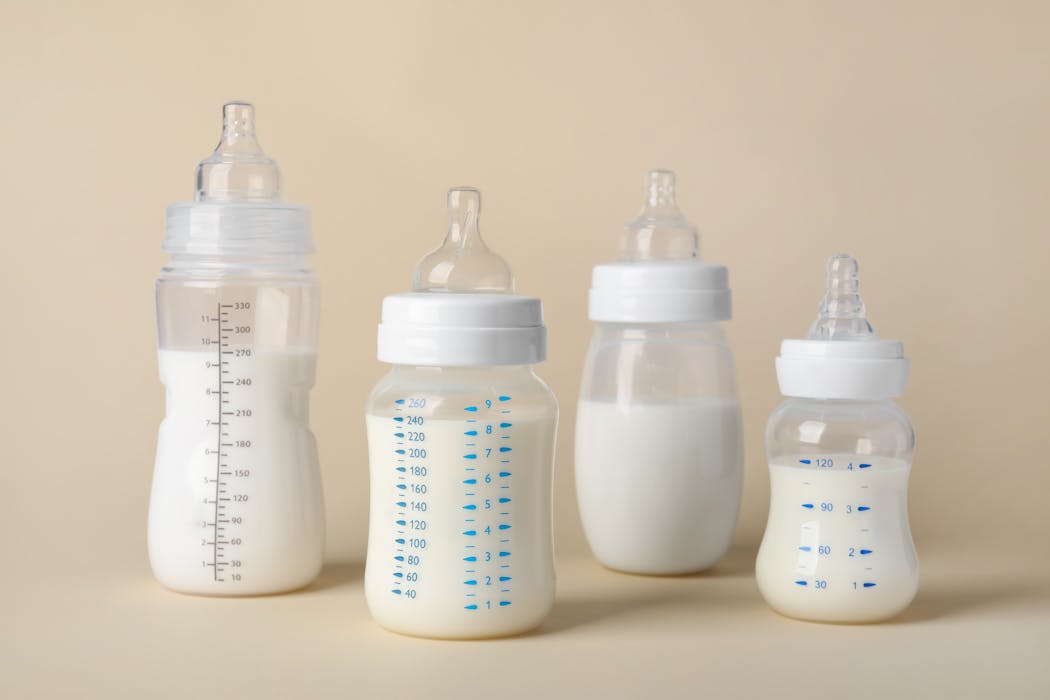
If you’ve been celebrating the news that the government will save you £500 a year on baby formula, we’re sorry to be the bearer of bad news: that’s not what’s actually happening.
The UK government has just published its response to a Competition and Markets Authority (CMA) investigation into high baby formula prices, and media headlines suggested savings are coming. Unfortunately, the reality is more complicated – and far less generous.
This issue has been causing significant distress, with stories circulating of parents who are struggling to feed their babies. Some mothers have been driven to watering down formula milk.
The government response includes a commitment to make it easier for parents to decide which formula milk to buy, allowing loyalty points to be spent on formula, and a further investment in breastfeeding support.
However, the details of this announcement have unfortunately been misinterpreted across many social media accounts and news outlets. There have been suggestions that the government is introducing changes that will save families who use formula milk £500 a year.
This figure has understandably led to a lot of hope among families who are struggling to feed their babies. Sadly, this hope is misplaced.
The figure of £500 is based on the idea that if you buy one of the most expensive formulas, changing to the least expensive formula will save you money. The government says that clearer information and guidance on choosing formula could help some families switch to cheaper options and potentially make this saving within a year.

You can already make this change, but this has been misinterpreted as the government promising £500 savings for everyone who buys infant formula.
Currently, the cost of different infant formulas varies considerably. Research has found that some marketing practices encourage families to buy more expensive products, even when the nutritional content is comparable.
This naturally leads some parents to believe that the ingredients of higher-priced products – and therefore their baby’s health and development – will be better. However, all infant formulas for sale in the UK, regardless of the brand, provide comparable nutrition due to strict production regulations.
There are no differences in impacts on health or development between brands.
The government has committed to ensuring that more families understand this through clearer signage, displays and information. The aim is to increase confidence to buy a less expensive milk.
What is changing is that you will now be able to use loyalty points to buy infant formula milk. Some supermarkets have previously blocked this because they believed the legislation designed to restrict marketing of infant formula also prevented loyalty points being used.
These regulations are not in place to make buying formula more difficult or expensive. They exist because organisations such as Unicef has raised concerns that offers and advertising can influence families toward more expensive products.
The UK government is going to issue guidance so that all supermarkets allow the use of gift cards, vouchers, coupons and loyalty points to pay for formula moving forward. However, some articles have misinterpreted this to mean there will now be discounts and offers on infant formula – but that is not stated in the report.
You will be able to use any accumulated loyalty points or store cards you have to buy infant formula, which may help some families in an emergency. However, in a recent research project we have conducted with families who are struggling to afford infant formula, although many welcome this extra help, they had lots of concerns that it wouldn’t help them anywhere near enough. The results of our study are yet to be peer-reviewed.
Points of concern
First, not everyone shops in places that have loyalty schemes. Shops that offer lower prices often don’t offer loyalty schemes, so people on the lowest incomes who shop there wouldn’t benefit.
Second, loyalty points take a long time to accumulate and can be spent on other items. So although it might occasionally help you if you have been able to accumulate enough points through spending but can’t afford to buy formula right now, for most families it won’t make an overall difference to your budget.
A press release from the government claims these measures will “most benefit lower-income families”. We disagree with this.
Families on the lowest incomes are often already buying the least-expensive brand of infant formula, and will therefore not make any savings from switching brands. Many, however, are struggling to afford the lowest-priced milks, with some unable to afford milk at all.
These families need more than loyalty schemes to enable them to purchase milk. Loyalty points are also more likely to benefit those with higher incomes because to accumulate enough points to make a difference, you have to spend more money.
Infant formula milk is an expensive product, and prices have risen greater than inflation. The CMA reports that average profit margins range from 50 to 75%, with a further 18 to 22% added through retail mark-ups.
When babies cannot be breastfed, infant formula is essential and there is no alternative, meaning you must pay these prices.
If the government really wants to make infant formula affordable, it should go further in intervening to bring down the price – babies and families depend on it.
This article is republished from The Conversation, a nonprofit, independent news organization bringing you facts and trustworthy analysis to help you make sense of our complex world. It was written by: Amy Brown, Swansea University and Aimee Grant, Swansea University
Read more:
- Ten things women worry about when breastfeeding – expert advice
- Bottle-fed babies may consume millions of microplastic particles, our research suggests
- Breastfeeding is tough: new research shows how to make it more manageable
Amy Brown receives funding from UKRI. She is a volunteer for the charity the Human Milk Foundation.
Aimee Grant receives funding from the Wellcome Trust and UKRI.


 TownTimes news.com
 Associated Press Top News
 Oscoda Press
 Arizona Republic
 AlterNet
 The radio station 99.5 The Apple
 US Magazine Entertainment
 Verywell Health
 RadarOnline