

 USA TODAY National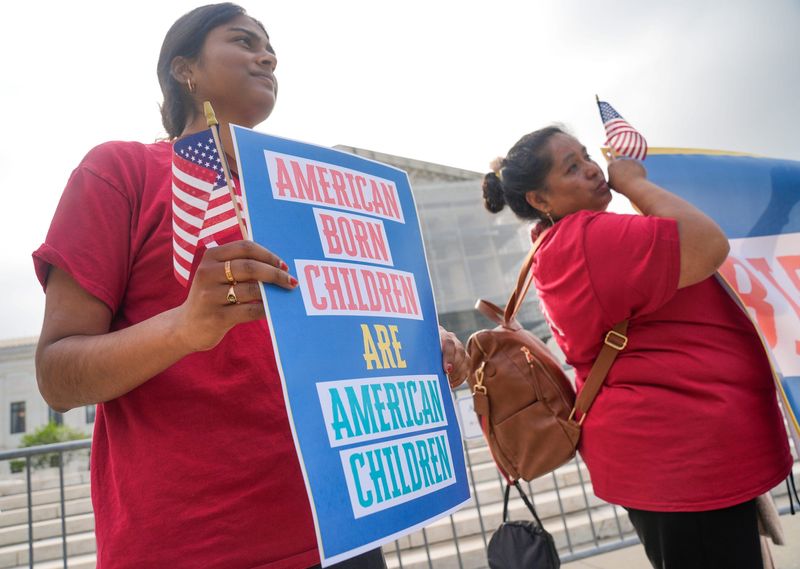
WASHINGTON − The Supreme Court will decide if President Donald Trump can end birthright citizenship for some children born in the United States, adding another major Trump policy – and one of his most controversial − to the list of those being considered this term.
The high court on Dec. 5 agreed to review a lower court's rejection of Trump’s argument that children of parents who are in the country illegally or temporarily are not entitled to citizenship. The president's interpretation of a 19th century constitutional provision would fundamentally alter how the citizenship clause has long been understood.
The court is already weighing whether to uphold the sweeping tariffs that are the centerpiece of Trump’s economic policy as well as a major foreign policy tool.
And the justices will determine whether Trump can fire the heads of independent agencies for any reason.
Until now, the court has weighed in primarily on whether Trump’s controversial policies can move forward while they’re being litigated. Most decisions have gone his way, including a June ruling limiting the ability of judges to pause Trump’s birthright citizenship policy without commenting on its legality.
But lower courts found those limits no obstacle to keeping the policy on hold.
And now the justices will decide whether it can ever be enforced.
If the conservative court – which includes three justices appointed by Trump – wants to show the public it can stand up to the president, legal experts have said, birthright citizenship is a good case to do so.
Multiple federal courts have reviewed his policy and all found it illegal.
“The lower court’s decisions invalidated a policy of prime importance to the president and his administration in a manner that undermines our border security,” Solicitor General John Sauer wrote in the Justice Department’s appeal. “Those decisions confer, without lawful justification, the privilege of American citizenship on hundreds of thousands of unqualified people.”
The high court agreed to review a ruling by a federal district judge in New Hampshire in a class-action lawsuit by parents and children who would be denied automatic citizenship.
The American Civil Liberties Union, which represents the challengers, had argued there's no reason for the justices to get involved.
The “president's arguments are so bad that the court should just deny review outright, and put this cruel policy to bed without further delay,” ACLU attorney Cody Wofsy said in a statement when filing a response to the administration’s appeal.
After the court agreed to hear the administration's appeal, ACLU national legal director Cecillia Wang said the group looks forward to the high court "putting this issue to rest once and for all."
The administration argues that babies born to parents who are in the country illegally or temporarily are not entitled to citizenship under a clause of the 14th Amendment added after the Civil War to ensure that Black people had citizenship.
That clause says: “All persons born or naturalized in the United States, and subject to the jurisdiction thereof, are citizens of the United States and of the State wherein they reside.”
Trump contends that "subject to the jurisdiction thereof" rules out children born to parents who aren’t citizens, because they may feel loyal to a foreign country even if they have to follow U.S. laws while they’re here.
He directed federal agencies not to recognize the citizenship of babies born in the U.S. who do not have at least one parent who is an American citizen or lawful permanent resident, also known as a "green card" holder.
Lower courts said Trump’s interpretation contradicts the plain language of the citizenship clause, doesn’t square with an 1898 landmark ruling by the Supreme Court about that clause and violates the Immigration and Nationality Act first passed in 1940.
The president, the San Franciso-based 9th U.S. Court of Appeals said in a separate case brought by four states, adopted a “strained and novel interpretation of the Constitution” that is “contrary to justice.”
The case, Trump v. Barbara, is expected to be argued next year with a decision by summer.
This article originally appeared on USA TODAY: Supreme Court to take on controversial Trump policy on birthright citizenship
Reporting by Maureen Groppe, USA TODAY / USA TODAY
USA TODAY Network via Reuters Connect

 Florida Today
 WMUR TV
 TMJ4 News
 Raw Story
 America News
 Associated Press US News
 AlterNet
 The List