

 Space.com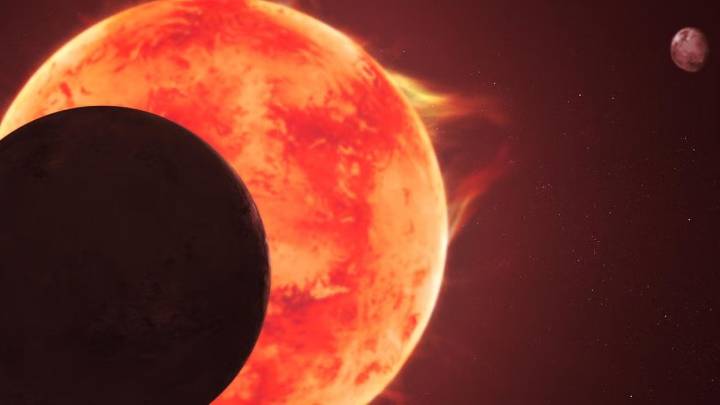
Frequent flares from the nearby star TRAPPIST-1 could offer new clues in the search for habitable planets beyond Earth.
TRAPPIST-1 is an ultracool red dwarf, located about 40 light-years away in the constellation Aquarius. It hosts seven Earth-size planets, three of which orbit in the so-called "habitable zone" where liquid water might exist. However, the small star is notoriously active, erupting with energy bursts roughly six times per day, which can threaten planetary atmospheres within the system and obstruct observations, according to a statement from the University of Colorado Boulder.
Using data from the James Webb Space Telescope (JWST), researchers tracked six flares observed in 2022 and 2023. These flares appear as a big flash detectable by the JWST's infrared sensors, revealin

 CNN
CNN Space War
 WTOP
WTOP Verywell Health
 Truthout
 The Hill
 Raw Story
 People Home
 Rolling Stone