

 KSAT 12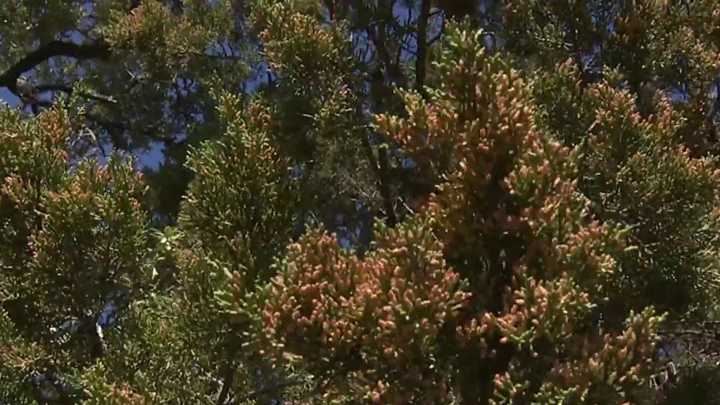
Mountain cedar season is a fact of life between December and February in South Central Texas.
Typically, the first spike comes after a cold front and the strong northerly winds bring the pollen to San Antonio from the Hill Country, which is home to more than 33 million tons of cedar (juniper) trees.
In a warmer climate, the pollen allergens are stronger due to the warmer temperatures. This can trigger a longer, more productive pollen season that boosts the pollen counts and potency. Drier conditions can make pollen more potent and airborne, leading to stronger allergic reactions with more frequent sniffles.
Everyone reacts differently to mountain cedar, though. Some may not even feel its effects.
Experts recommend considering some of the following tips to protect you and your home: •

 AlterNet
 13 On Your Side
 Verywell Health
 The Conversation
 CNN Health
 NBC News
 NBC Connecticut
 KSL NewsRadio