

 Fast Company Technology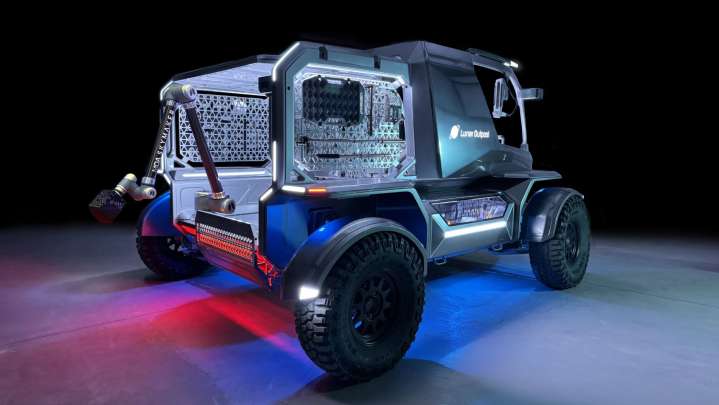
In a Rye, Colorado, cattle pasture now subbing for the moon, an otherworldly vehicle bumps along a scrubby course of furrows and mounds, weaving around rocks and kicking up a fine dust. It’s an open-concept machine dubbed Falcon—a silver solar-powered rectangular frame on wheels, with a partial roof, windowless sides, and a spacious cockpit flanked by monitors and steering controls. An engineer sits in one of its two seats for safety as the vehicle autonomously navigates around obstacles to a location dictated by Mission Control 160 miles away.
Suddenly, a wheel hits a rock, and Falcon halts, relaying real-time feedback to Mission Control. There, an operator revises a command for another attempt, driving home the hurdles in developing novel spacefaring technology.
“We don’t stage any of
 America News
 Santa Maria Times Safety
 Spectrum News Louisville
 Reuters US Business
 Mediaite
 Esquire
 Los Angeles Times Business
 Consequence Music
 New York Magazine Intelligencer
 Press of Alantic City Business