

 CNBC-TV18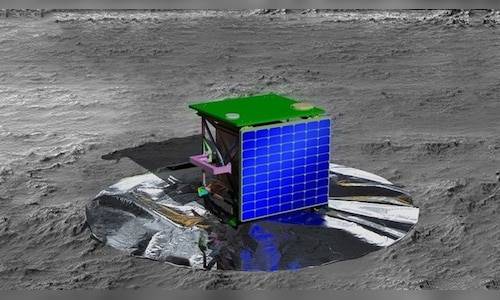
NASA has chosen two state-of-the-art scientific instruments for deployment to the Moon's south pole, at or close to the site of Chandrayaan -3's safe landing in 2023 — marking a significant advancement for lunar research and future deep-space exploration.
The devices, known as DUSTER (DUst and plaSma environment survEyoR) and SPSS (South Pole Seismic Station), will be installed on the lunar surface by humans as part of the next Artemis IV mission. Their goals are to uncover hidden facets of lunar geology and investigate the Moon's near-surface environment, from dust and plasma behaviour to seismic activity.
Under the direction of University of Colorado Boulder researchers, DUSTER will travel atop a compact autonomous rover provided by a business partner. Its equipment will record ele

 Bossip Celebrity
 The Babylon Bee
 CNN
CNN The Daily Beast
 ABC News
 Mediaite
 NBC10 Philadelphia Entertainment
 OK Magazine
 NBC 5 Dallas-Fort Worth Sports
 NBC Connecticut Entertainment