

 The Atlantic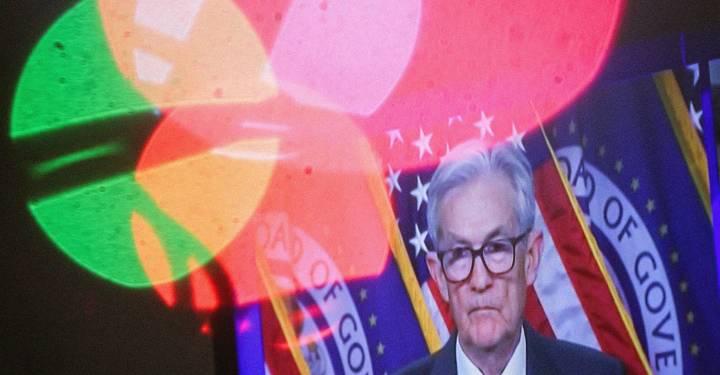
This is an edition of The Atlantic Daily, a newsletter that guides you through the biggest stories of the day, helps you discover new ideas, and recommends the best in culture. Sign up for it here.
For almost an entire year, Donald Trump has begged the Federal Reserve to slash interest rates and supercharge the American economy. And for almost an entire year, Fed Chair Jerome Powell has barely budged.
Now, as the president prepares to appoint Powell’s successor, amenability seems to be top of mind. “I don’t think he should do exactly what we say,” Trump told The Wall Street Journal today of the future chair. But “I’m a smart voice and should be listened to.”
Trump himself appointed Powell to the chairmanship during his first term, but their relationship has since soured. The president’s nickname for him is “Too Late,” referencing Powell’s reluctance to lower interest rates as quickly and as dramatically as Trump would like. He has also called Powell a “moron” and a “numbskull.” Tensions peaked in July when, during a visit to one of the Fed buildings currently under renovation, Powell fact-checked some of Trump’s claims directly to his face. This week, Trump called Powell a “bad head of the Fed.”
Since he first took office, Trump has applied pressure on the Fed via the bully pulpit of social media. But during his second term, Trump has tried to exert influence over the country’s central bank—long considered independent from the machinations of Congress and the White House—by other means. His attempt this past summer to fire one of the Fed’s governors, Lisa Cook, defied precedent (although it has been held up in the courts for now). He has also installed Stephen Miran, a Trump ally who served elsewhere in the administration, to the Fed’s board. At both of the meetings he attended, Miran pushed for a more extreme rate cut than the other governors.
This week, when the bank cut rates by another 0.25 percent, it did so under a cloud of speculation about who the next Fed chair might be. Powell’s second term as chair will be up in May, and although interviews for a successor are ongoing, Trump has signaled that he’s already made his choice. Kevin Hassett, who leads the National Economic Council and who has been broadly supportive of Trump’s push to decrease interest rates, is widely considered the front-runner. Although Hassett has emphasized his “firm commitment to not being partisan,” his penchant for reduced borrowing costs happens to align exactly with Trump’s. Today, the president confirmed to the Journal that Hassett is at the top of his list, along with Kevin Warsh, who previously served as a Fed governor during the George W. Bush and Obama administrations.
In his second term, Trump has sought to consolidate his influence across federal agencies. Along the way, many of the traditional checks to executive power have been eroded. Trump’s pick for director of the Office of Management and Budget, Russ Vought, has used the position to “inflict pain on the Democrats,” as my colleagues Toluse Olorunnipa and Jonathan Lemire put it: Vought has focused his federal spending cuts on programs spearheaded by the Biden administration. At the Department of Justice, the president has fired dissenters and attempted to install loyalists such as Lindsey Halligan and Alina Habba, both of whom were once on Trump’s legal team. For the Fed historian Peter Conti-Brown, Trump’s attempts to pressure the central bank are less about any particular economic strategy and more about the same desire for control that inflected these other moves. “I don’t know that Donald Trump thinks about policy or thinks about the Fed,” he told me. “I think he thinks about power.”
The results of direct presidential influence on the Fed could be catastrophic. The central bank, which controls the supply of money in the United States, is oriented toward what Conti-Brown described as the “medium term.” It is not meant to be an immediate lever for economic growth, as the president seems to see it. Lowering borrowing costs in service of partisan interests without respecting the broader macroeconomic picture, Conti-Brown said, could lead to “the collapse of the currency, hyperinflation, and devastation for all participants in the economy.” It could also give the president yet another avenue to reward his friends and punish his enemies: As my colleague Rogé Karma wrote recently, the Fed is the “central node of the U.S. financial system.” American banks and those who use them all ultimately feel the effects of the Fed’s judgments.
The Fed’s operations have never been entirely disentangled from politics. Sarah Binder, a professor of political science at George Washington University, told me that the central bank needs political support from the administration and from Congress in order to do its job: making tough choices that are sometimes unpopular in the near term but that ultimately ensure the stability of the economy. “Even just raising the issue, trying to fire Cook, going and challenging all this in the courts—that’s not great for this perception that the Fed can work independently,” Binder explained. Public distrust could make it harder for the Fed to perform its essential functions.
Then there’s Trump’s own political situation. Approval ratings for his management of the economy are dismal. This week, the president began an “affordability tour” to convince Americans that things aren’t really as bad as they feel; during the first stop (at a luxury resort), he mocked the word affordability and took a detour into ranting about Somalia. The Republican Party’s success during next year’s midterms could hinge on whether Trump can somehow lower prices on consumer goods, yet the president has not provided a coherent solution.
The Fed exists outside of these factors. After all, it’s not the agency’s job to lower the cost of beef and eggs. Its role is much larger, and touches nearly all aspects of American life—which is exactly what makes the president’s campaign to sway the agency so dangerous.
Related: • Trump campaigned on affordability. Now he’s calling the idea a “con job.” • The Court has an easy answer on the Fed.
Here are three new stories from The Atlantic: • Obamacare changed the politics of health care. • Trump’s affordability weave • Why couples therapists are sick of “therapy-speak”
Today’s News • Democrats on the House Oversight Committee released photos from Jeffrey Epstein’s estate linking powerful people, including President Donald Trump, former President Bill Clinton, and Bill Gates, to the convicted sex offender. • More than 100,000 residents across Washington State were told to evacuate amid days of heavy rains, which triggered historic floods. • A federal judge banned U.S. immigration authorities from rearresting Kilmar Abrego Garcia at a mandatory ICE check-in, a day after he was released from immigration detention.
Dispatches • The Books Briefing: Do we really know how Isabel Archer felt? Fictional people, especially those from the past, are interesting because they are both strange and familiar, Boris Kachka writes.
Explore all of our newsletters here.
Evening Read
What Do You Think of Barry Bonds Now?
By Jeremy Collins
Today is Barry Bonds Bobblehead Day. The first 20,000 fans in attendance will take home a tiny Bonds with a nodding oversize dome. On the Jumbotron, we’re watching a video of Bonds in which the Giants broadcaster Duane Kuiper narrates Barry Bonds highlights …
It’s startling to see such adulation for a player so long regarded as a villain. Throughout much of his career and his retirement, Bonds has been baseball’s ultimate antihero—because of the steroids he used to propel himself past Hank Aaron’s home-run record, because he denied having knowingly used them, because of his churlishness and arrogance, because of the allegations of assault from his first wife and a former girlfriend.
Yet a new generation of fans now marvels at Bonds’s achievements, and even older fans seem willing to privilege the memories of his otherworldly feats over those of his glaring flaws.

 ABC News
 Raw Story
 AlterNet
 Associated Press US News
 The List