

 Reuters US Top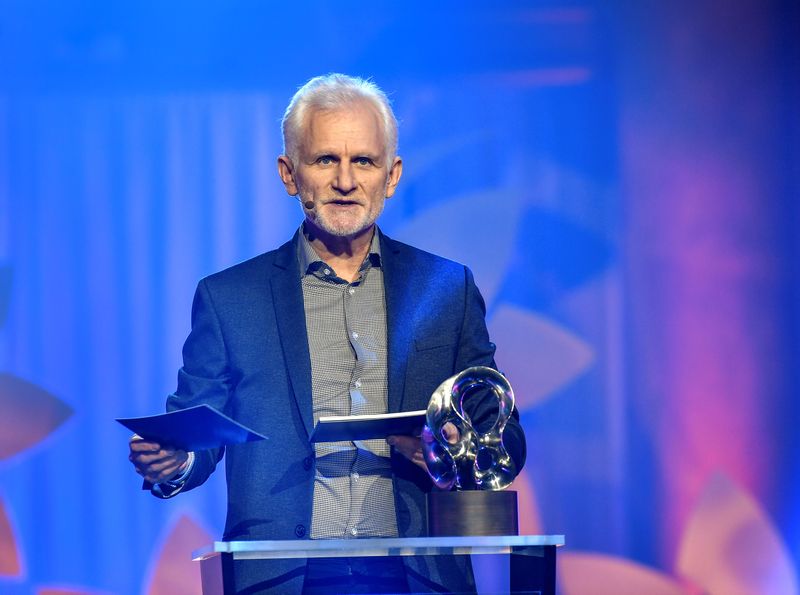
By Mark Trevelyan
Dec 13 (Reuters) - Human rights campaigner Ales Bialiatski fought for decades on behalf of political prisoners in Belarus, earning the Nobel Peace Prize but paying the cost of his own freedom.
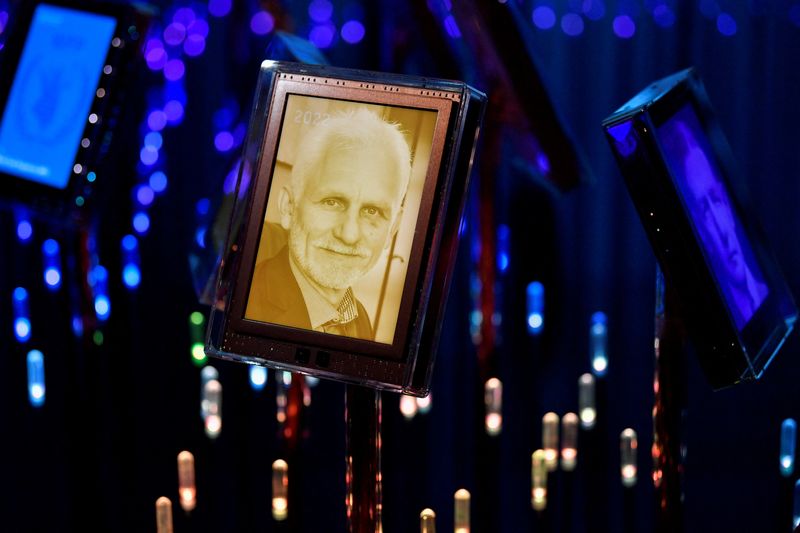
The Nobel award in 2022 made Bialiatski a globally recognised symbol of resistance to the authoritarian rule of President Alexander Lukashenko, a close ally of Russia's Vladimir Putin who during his three decades in power has crushed all opposition in the former Soviet state of 9 million people.
Bialiatski's release on Saturday along with 122 other prisoners, following negotiations with an envoy for U.S. President Donald Trump, marked Lukashenko's most significant move so far in a strategy of re-engaging with Washington to seek the lifting of economic sanctions.
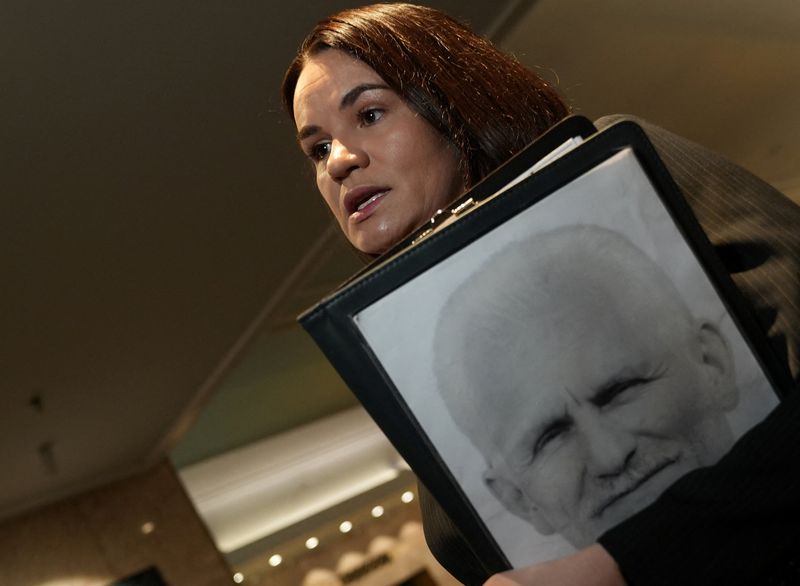
The wiry, silver-haired Bialiatski, 63, was freed just three days after exiled opposition leader Sviatlana Tsikhanouskaya attended this year's Nobel ceremony carrying a portrait of him, "to highlight that this wonderful person is still in prison".
Bialiatski was arrested in 2021 as part of a crackdown on mass protests that erupted after Lukashenko was declared the winner of a presidential election the previous year that the opposition accused him of stealing.
While other dissidents fled the country for their own safety, Bialiatski decided to stay.
"He knew all the risks, he was very well aware," his wife Natallia Pinchuk told Reuters in October 2022 on the day he was awarded the Nobel prize along with Russian rights group Memorial and Ukraine's Center for Civil Liberties.
"There were suggestions he should leave. His colleagues were arrested. And he said on principle he was responsible for them and he couldn’t leave in view of this grave situation. How could he leave when they were locked up?"
Receiving the prize on her husband's behalf in Oslo that December, Pinchuk said Bialiatski dedicated it to "millions of Belarusian citizens who stood up and took action in the streets and online to defend their civil rights".
In April 2023, Bialiatski was sentenced to 10 years in a penal colony after being found guilty of financial and smuggling charges related to the funding of Viasna, the rights organisation that he founded. He denied the accusations, insisting that they were politically motivated.
Supporters have long voiced fears for Bialiatski's health during his incarceration at penal colony No. 9 in the town of Horki, near the border with Russia.
According to Viasna, he was allowed to send occasional letters and postcards but not to receive correspondence or have medicine sent to him.
DECADES OF ACTIVISM
Bialiatski was born on September 25, 1962, and graduated from Homiel State University in 1984 with a degree in Russian and Belarusian Philology. After initially working as a schoolteacher, he went on to become a scholar of Belarusian literature and a museum director.
Bialiatski started campaigning for Belarusian independence and democracy in the early 1980s, and organised anti-Soviet protests before the Soviet Union's collapse in 1991.
During mass opposition protests in 1996, he co-founded Viasna with the aim of providing financial and legal assistance to political prisoners and their families. The organisation also documented abuses and torture of political prisoners, which the authorities denied.
He served a first prison term between 2011 and 2014 on tax evasion charges which he denied. In total, he has spent well over seven years behind bars.
Bialiatski was the fourth person to win the Nobel Peace Prize while in detention, after Germany's Carl von Ossietzky in 1935, China's Liu Xiaobo in 2010 and Myanmar's Aung San Suu Kyi, who was under house arrest, in 1991.
(Reporting by Mark TrevelyanEditing by Mark Potter)

 AFP Top News
 Los Angeles Times World
 Associated Press Top News
 AlterNet
 Associated Press US News
 Raw Story
 The Atlantic
 Reuters US Business
 The Fashion Spot