

 Reuters US Domestic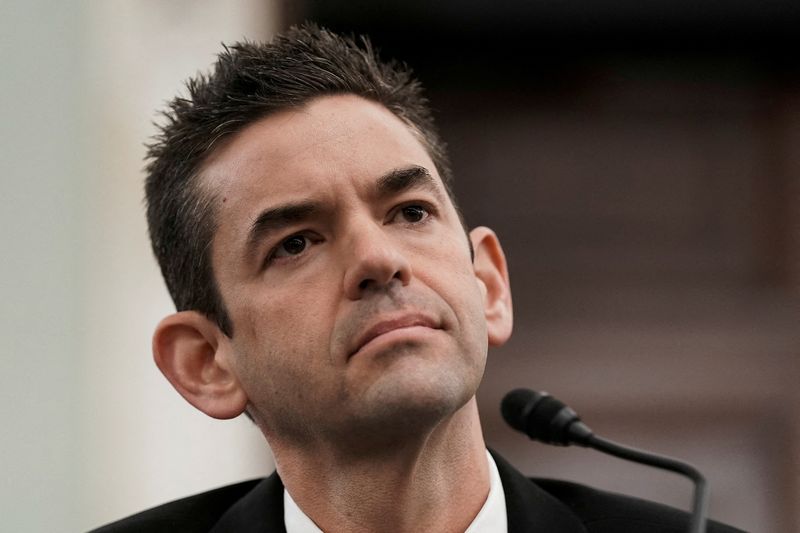
By Joey Roulette and David Shepardson
WASHINGTON, Dec 3 (Reuters) - Billionaire private astronaut Jared Isaacman, President Donald Trump's nominee to lead NASA and an ally of Elon Musk, will face his second confirmation hearing on Wednesday before a Senate panel that will examine whether his private-sector experience can steer the U.S. back to the moon before China gets there.
Isaacman, an e-commerce mogul who flew to orbit twice on all-private astronaut missions as a customer and collaborator with Musk's SpaceX, will tell senators that falling behind in the moon race with China "could shift the balance of power here on Earth," according to prepared remarks reported by Reuters on Tuesday.
"The last time I sat before you, I introduced myself, my qualifications, and the challenges and opportunities ahead," Isaacman added in the prepared remarks. "This time, I am here with a message of urgency."
Isaacman's initial nomination, announced by Trump in December 2024, was withdrawn in May amid a falling-out between Trump and Musk.
Sean Duffy, the head of the U.S. Department of Transportation, was named interim NASA chief in July.
Isaacman was renominated by Trump in November, two weeks after Duffy said he was inviting other companies to compete with SpaceX for the agency's marquee lunar landing contracting, leading to a public spat between Duffy and Musk over who should be leading the space agency.
Senators may question Isaacman on Project Athena, his blueprint vision for NASA, a draft of which was seen by Reuters. The 62-page document includes goals to invest in nuclear electric propulsion, form a Mars exploration program and make the agency more efficient.
In his first confirmation hearing in April, Isaacman was questioned by senators on his ties with Musk, who advocated for his nomination when Trump was elected in 2024 and had sought to realign the U.S. space program with a greater focus on Mars.
U.S. Senator Ted Cruz, chair of the Senate Commerce Committee that oversees NASA, sought assurances from Isaacman that he would prioritize returning astronauts to the moon under the space agency's Artemis program, a multibillion-dollar effort involving multiple private companies and a centerpiece moon lander from SpaceX.
Isaacman said the United States does not have to make what he called a binary decision of the moon versus Mars, repeating that he thinks NASA can do simultaneous missions.
If confirmed, Isaacman, 42, would oversee some 14,000 employees and a roughly $25 billion budget that the Trump administration has proposed cutting by 25% for 2026.
Nearly 4,000 NASA employees took buyouts the Trump administration offered in January and April, a roughly 20% reduction to the agency's previous 18,000 headcount.
(Reporting by Joey Roulette)

 VICE
VICE CNN Health
 Desert Sun News
 Associated Press Top News
 New York Post
 The Hill
 Orlando Sentinel
 CNBC Television
 Raw Story
 AlterNet