

 AlterNet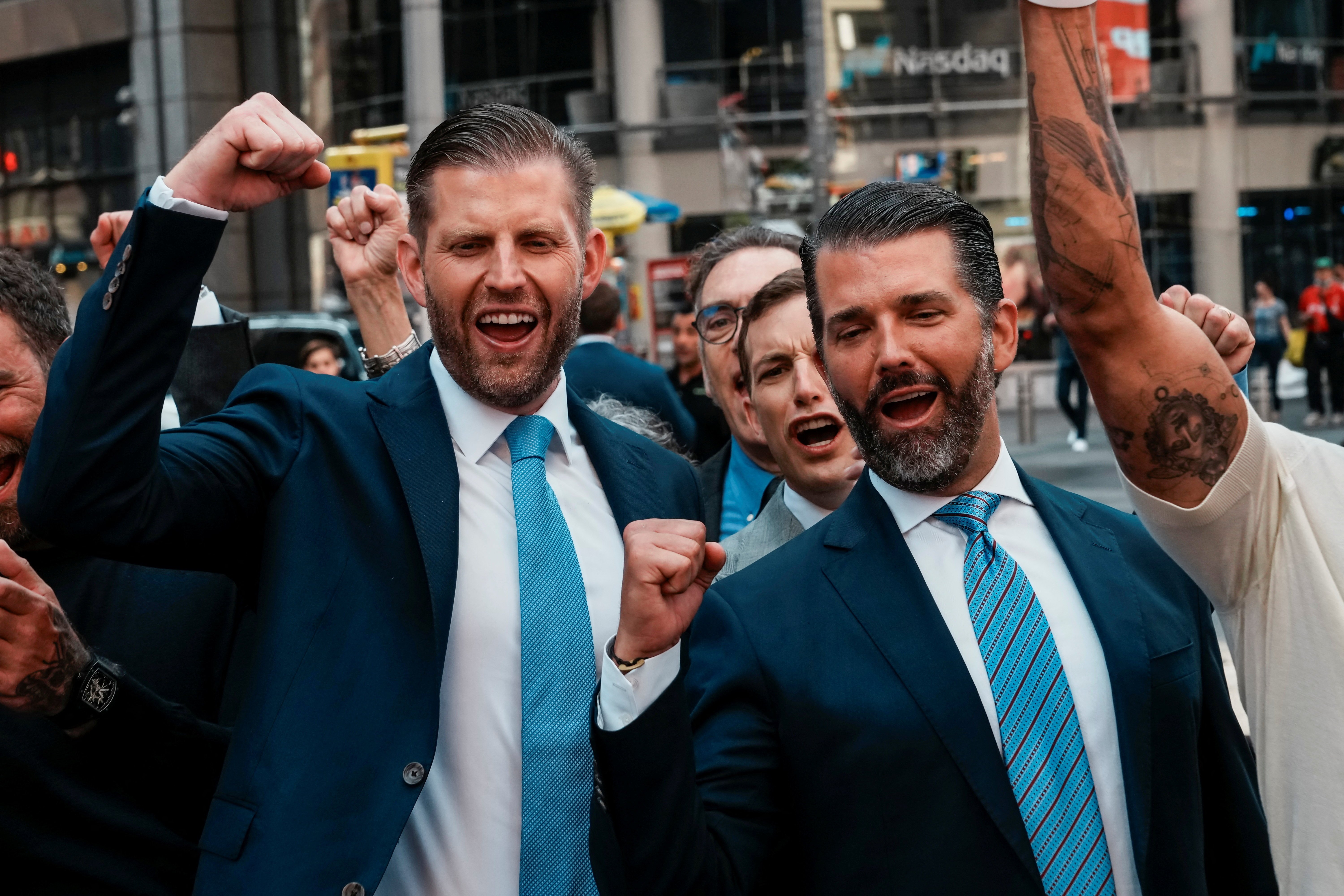
President Donald Trump's eldest son is poised to benefit from a multi-million business deal secured with the Pentagon, The Daily Beast reports.
Vulcan Elements, a "little known startup" backed by Donald Trump Jr. "is slated for a roughly $620 million Defense Department loan under the deal," the Financial Times reports.
The recipient of investments from Trump Jr.'s 1798 Capital venture firm, Vulcan is a tiny rare-earths start-up, whose deal with the Defense Department will increase the domestic industrial supply of magnets, they explain.
The president's "persistent confusion about magnets has spurred mockery from his detractors, who have noted that his public comments on the matter are uncannily reminiscent of a 2010 song by Insane Clown Posse, “Miracles,” writes The Daily Beast, "which features rapper Shaggy 2 Dope delivering the immortal lines: 'F—— magnets, how do they work?'"
The loan is part of a wider $1.4 billion investment in the sector, appears to represent the largest ever granted by the Pentagon’s Office of Strategic Capital, and only the latest plushy government deal handed to a company backed by Trump Jr., The Daily Beast explains.
Vulcan is just the latest to profit off of Trump Jr.'s last name.
"Four firms within 1789 Capital’s portfolio, which also holds significant investments in other government contractors like SpaceX and Anduril, have reportedly landed contracts worth a combined $735 million since the MAGA leader assumed office for the second time in January," they note.
"Vulcan Elements’ deal with the Pentagon stands out both for the record-breaking size of the loan, and for the nature of services it will provide under the arrangement," they explain.
Kedric Payne, an ethics attorney, cries foul, telling the Financial Times, "Presidents are expected to avoid even the appearance that they are using their office to financially benefit themselves or their family."
“While we do not know for certain if, or how, the president may have influenced this loan, it falls under the cloud of conflicts of interest we have seen throughout his administration," Payne adds.

 Raw Story
 The Daily Beast
 Associated Press US News
 Local News in D.C.
 America News
 CNN
CNN Reuters US Politics
 Vox
Vox