

 Reuters US Business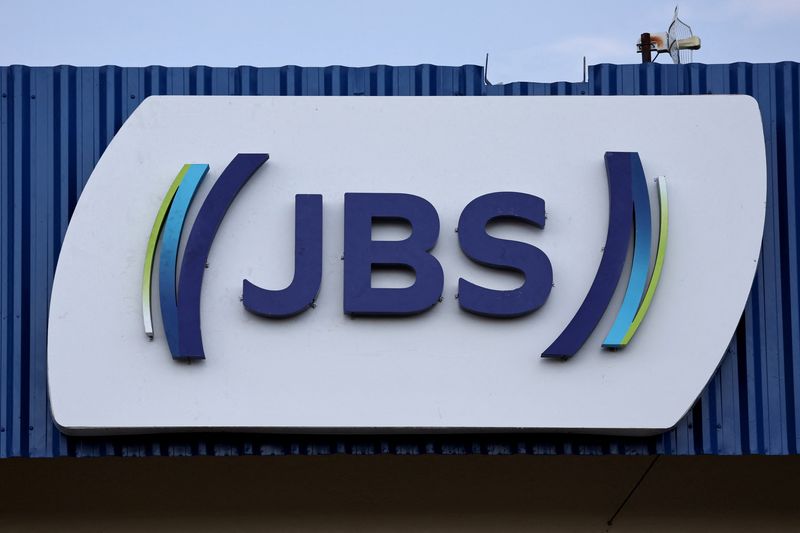
By Fabio Teixeira
RIO DE JANEIRO, Dec 3 (Reuters) - A federal labor judge in Brazil ordered the government to add a poultry unit of meatpacker JBS to a so-called "dirty list" of employers responsible for subjecting workers to slavery-like conditions, according to a Tuesday court ruling seen by Reuters.
The case stems from a federal raid last year that found 10 people working in slavery-like conditions for a contractor hired to load and unload cargo for poultry unit JBS Aves, in Brazil's Rio Grande do Sul state.
In Brazil, slavery is defined as forced labor, but also covers debt bondage, degrading work conditions and illegally long hours that pose a risk to health.
Inspectors found that workers at the unit were subjected to illegally long shifts for as long as 16 hours and housed without access to clean drinking water, according to a report seen by Reuters. The contractor had also made unlawful deductions from workers' wages, making it harder for them to quit, the report found.
The ruling in a lawsuit by labor prosecutors against the government comes after Brazil's government Labor Minister Luiz Marinho initially stopped JBS from being added to the list by carrying out an unusual final review of the investigation that led to the charges.
Labor experts consider the list to be an important weapon in Brazil's decades-long fight against modern slavery, and have said Marinho's interference could weaken it by opening a precedent for other firms to petition the minister to intervene in their cases.
The Labor Ministry will appeal the decision as soon as formally notified, it said in a statement.
JBS suspended the contractor, terminated the contract and blocked the company upon learning of the allegations, the company told Reuters on Wednesday.
When a company is included in the list, it stays there for two years. Beyond the reputational risks associated with the listing, companies are also barred from obtaining certain types of loans from Brazilian banks, which could mean serious financial consequences for a company linked to one of Brazil's largest firms.
In her decision, Judge Katarina Roberta Mousinho de Matos ruled Marinho's decision was unlawful, and not based on legal considerations, but rather on the economic repercussions that adding the firm to the list could have. She also ordered the government to add two smaller Brazilian firms to the list, which Marinho had earlier taken out using the same maneuver.
JBS is one of Brazil's largest employers, with some 158,000 workers in the country, according to the company. Its Seara division, which runs JBS Aves, reported net revenue of $2.3 billion from July to September, roughly 10% of the firm's total.
(Reporting by Fabio Teixeira in Rio de Janeiro, additional reporting by Ana Mano in Sao Paulo; Editing by Aurora Ellis)

 CNN
CNN America News
 Chicago Tribune
 Associated Press Top News
 Reuters US Top
 AlterNet
 Raw Story
 New York Post