

 Reuters US Top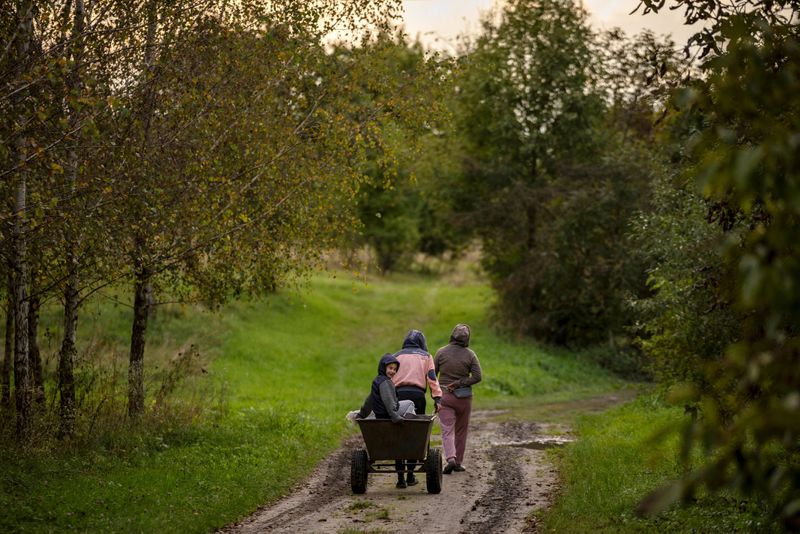
By Max Hunder
HOSHCHA, Ukraine, Dec 4 (Reuters) - While many Ukrainian hospitals are struggling to cope with the endless influx of wounded, a maternity ward in the western town of Hoshcha lies eerily deserted.
The hospital in Hoshcha has recorded just 139 births so far this year, down from 164 in 2024, and a far cry from just over a decade ago when more than 400 babies were born every year, according to local authorities.
"Many young men have died," gynaecologist Yevhen Hekkel lamented in his office. "Young men who, bluntly speaking, were supposed to replenish Ukraine's gene pool."
Ukrainian authorities are facing a stark quandary as the country spirals into a demographic disaster: Once the war ends, who will be left to pick up the pieces?
Hundreds of thousands of people have been killed and wounded in almost four years of fighting, while millions more have fled the country and births are drying up.
Hoshcha, a small town of about 5,000 people, is hundreds of miles from the nearest front but is nonetheless facing the full force of the population crisis.
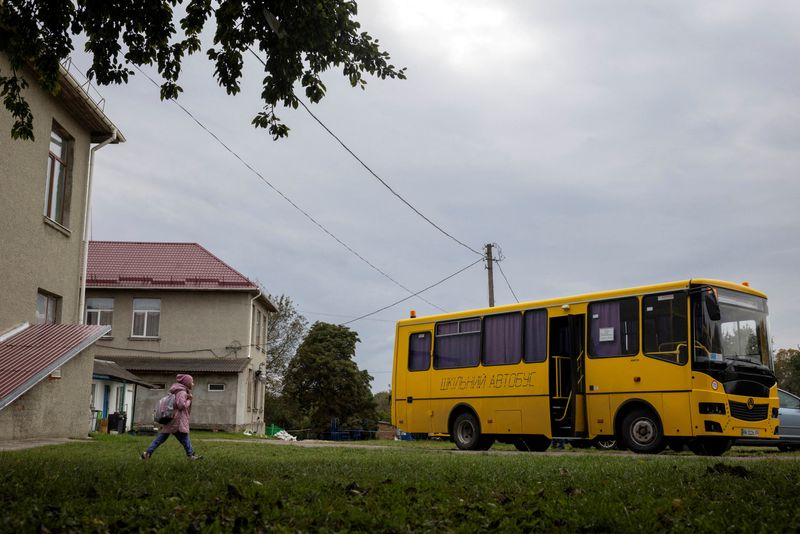
In the nearby village of Sadove, a school that once taught more than 200 pupils has been shut down.
"Two years ago, we were forced to close this institution. Why? Because there were only nine children there," Mykola Panchuk, head of Hoshcha's town council, told Reuters.
MILLIONS OF PEOPLE NEEDED TO REBUILD
Ukraine's population - 42 million before the full-scale invasion in February 2022 - has already shrunk to below 36 million, including several million in areas captured by Russia, according to the demography institute at Ukraine's National Academy of Sciences.
It estimates the figure will drop to 25 million by 2051.
The collapse is gathering pace.
The country has both the highest death rates and lowest birth rates in the world, according to 2024 estimates in the CIA World Factbook: for every birth there are around three deaths.
According to government estimates, Ukraine's average male life expectancy dropped from 65.2 years before the war to 57.3 years in 2024. For women, the figure fell from 74.4 to 70.9.
Ukraine will need millions of people to rebuild its shattered economy, experts and politicians say, and to be able to defend itself in a post-war future should Moscow attack again, as many Ukrainians fear it will.
The Kyiv government sought to address the crisis last year when it outlined a demographic strategy to 2040. The document warned that Ukraine faced a deficit of 4.5 million workers over the next decade. Sectors that would be most in need of labour included construction, technology and administrative services.
The strategy centres on stemming further emigration and luring Ukrainians back from abroad, including by improving housing, infrastructure and education, as well as attracting immigrants from other countries if jobs remain unfilled.
Authorities estimate these measures could push the population back up to 34 million by 2040, but also warn that it could fall to 29 million by then if current dynamics continue.
FACES OF THE FALLEN
Portraits of fallen soldiers lined the path to Hoshcha's town hall during a Reuters visit in October.
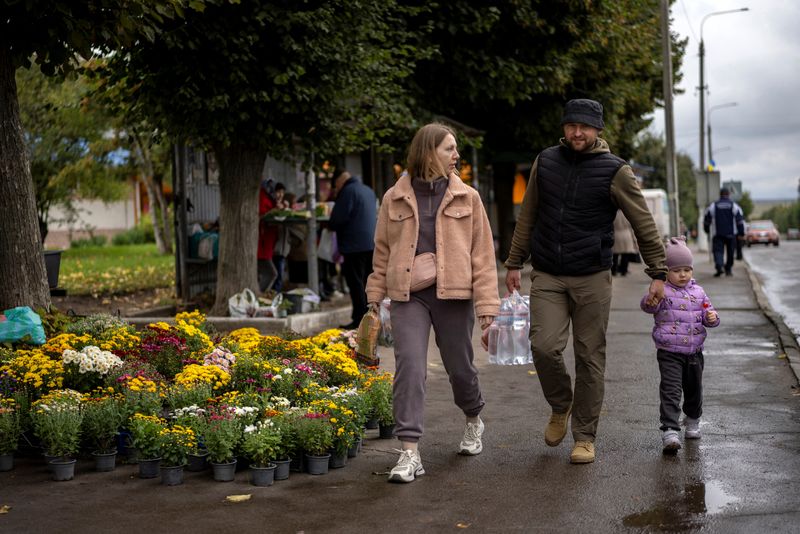
An old woman laid flowers at one image, wiping away tears on a cold autumn morning. A steady stream of people passed by on the high street, mostly middle-aged or elderly.
Panchuk, from the town council, said 141 people from Hoshcha and its surrounding district - home to about 24,000 people - had been killed in the war since 2022. Another 11 had died fighting against Russian-backed militants in eastern Ukraine since 2014.
At one of Hoshcha's two remaining schools, headteacher Marianna Khrypa said the number of first-graders was falling and that about 10% of school leavers were heading abroad, mostly boys.
"Parents take their children out of the country before they reach the age of 18," she said. Kyiv has barred most men over 18 from leaving the country during the war, although President Volodymyr Zelenskiy raised the age to 22 in August.
Ukraine, whose population exceeded 48 million in 2001, faced demographic decline well before the conflict, with millions of citizens heading westward from eastern Europe to escape economic strife and rampant corruption at home.
The exodus accelerated when Russia invaded, prompting millions more to flee.
The Centre for Economic Strategy, a Ukrainian think-tank, said in March that about 5.2 million Ukrainians who had left since the invasion remained overseas, in a host of mainly European countries including Russia, Germany and Poland.
The centre predicted that between 1.7 and 2.7 million of those people would remain abroad, and could be joined by hundreds of thousands of adult men - who are currently not allowed to leave Ukraine - when the war ends.
Oleksandr Hladun, deputy head of the National Academy of Sciences' demography institute, said the population crisis was exacerbated by the fact that younger women are disproportionately represented among refugees since 2022.
Independent predictions are alarming: Ukraine's population is expected to fall to between 9 and 23 million people by 2100, according to U.N. forecasts published in 2024.
VILLAGES EMPTIED, HOMES ABANDONED
The maternity ward of Hoshcha's hospital lost its government funding in 2023 after failing to reach the target of 170 births in a year: "We had a child who was born 15 minutes too late, so we had 169," said Panchuk, the head of the council.
The ward is now kept afloat by whatever the town council can spare from its own budget.
The unpredictability of war has been a major deterrent for people deciding whether to start a family.
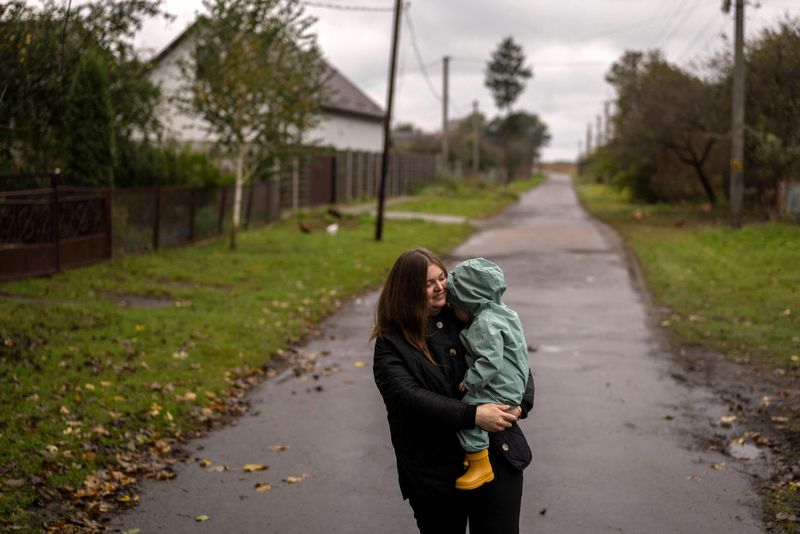
Inna Antoniuk, the head of the maternity ward, said that about a third of the women coming through had husbands serving in the military, some of whom are dead or missing.
While the front lines in the east and south have moved slowly as Russian forces gradually advance, Moscow has stepped up missile and drone attacks across Ukraine, causing widespread damage to civilian, energy and military infrastructure.
Panchuk said the population of Hoshcha itself was not shrinking noticeably, partly because surrounding villages were emptying out and their residents heading into the town as local schools, clinics and other services shut down.
On the road to the village of Duliby, less than 10 km (6 miles) from Hoshcha, several homes lie abandoned.
Local resident Oksana Formanchuk said even in this small village where fewer than 200 residents remained, nine men had been mobilized to fight.
Among them was her husband, who has been missing in action since July, said Formanchuk, adding that she feared her two adult sons would also be drafted.
"What if they are taken away too? What would I do without them?"
'THERE IS NOTHING TO BUILD ON'
Anastasiia Yushchuk, a 21-year-old who was serving coffee from a van on Hoshcha's high street, said many of her friends were hesitant to have children. She said that although she hoped to start a family some day, she had no intention of doing so in the next couple of years.
"There is no stability, nothing to build upon."
Existing financial pressures have been exacerbated by the war, such as rising rents and the cost of living, she said.
"It's very hard for young people to buy a home now. We need to be financially stable, both me and my partner, and the situation in the country is changing all the time, every month or two, so it's hard to plan."
Anastasiia Tabekova, Panchuk's deputy on the town council, has a husband who's serving in the military.
"After I found out I was pregnant, a few days later my husband was mobilized," she said. "They gave him leave to attend the birth. He left with tears in his eyes."
Children can provide hope for the future, she said.
"I know many wives whose husbands are fighting, I know wives whose husbands are unfortunately no longer with us," she added. "They are holding on, some are in therapy, for some their children are a moment of joy, a reason to not give up."
(Reporting by Max Hunder; Editing by Mike Collett-White and Pravin Char)

 America News
 ICE News
 The Atlantic
 CNN
CNN Chicago Tribune
 AlterNet
 Tom's Guide