

 Daily Voice
By Chris Spiker From Daily Voice
The Federal Reserve cut its key interest rate for a third straight time as the economy weakens heading into 2026 due to high prices, slower hiring, and President Donald Trump's tariffs.
The central bank's Federal Open Market Committee lowered its benchmark rate by a quarter percentage point to a range between 3.5% and 3.75% on Wednesday, Dec. 10. The 9-3 vote showed a growing split in the Fed over the country's economic conditions and whether more rate cuts will happen in the upcoming year.
Rate cuts are intended to ease borrowing costs on mortgages, car loans, and credit cards. The cuts aim to give consumers and businesses more flexibility as inflation stays stubbornly at 2.8%, well above the Fed's 2% target.
The Fed said uncertainty about the economic outlook remains elevated.
"Job gains have slowed this year, and the unemployment rate has edged up through September," the Fed said in a statement. "More recent indicators are consistent with these developments. Inflation has moved up since earlier in the year and remains somewhat elevated."
The decision was the first time since September 2019 that three members voted "no" on the rate cut, CNBC reported. The rift is between "hawkish" economists in favor of higher rates to reduce inflation and "dovish" members supporting lower rates to boost the job market.
Governor Stephen Miran, who leaves the Fed in January 2026, voted "no" and supported a larger half-point cut. Regional presidents Austan Goolsbee and Jeffrey Schmid also dissented but they wanted no change to the Fed's interest rate.
The Fed also brought back language used in December 2024 before holding its rate steady until September.
"In considering the extent and timing of additional adjustments to the target range for the federal funds rate, the committee will carefully assess incoming data, the evolving outlook, and the balance of risks," the Fed's statement read. "The committee is strongly committed to supporting maximum employment and returning inflation to its 2% objective."
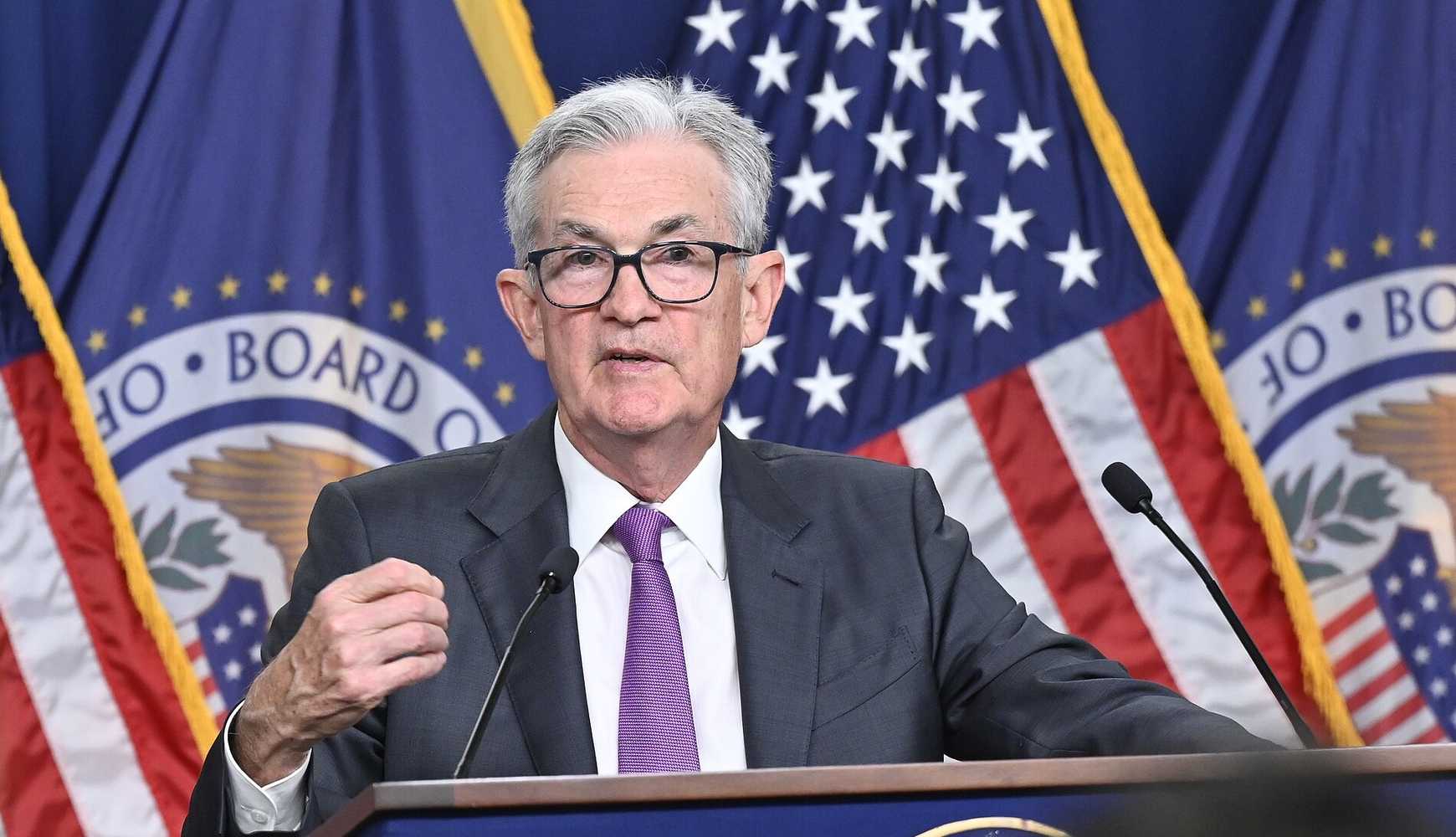
Federal Reserve chair Jerome Powell at a July 2023 news conference.
The vote comes as many families navigate what experts call a "K-shaped economy" over the holidays. While wealthier consumers are driving an overall increase in holiday spending, many lower-income households are slashing their budgets due to rising costs.
Consumer confidence plunged in November to its lowest level since April, when Trump first announced his "liberation day" tariffs, according to the most recent data from The Conference Board. GoFundMe even reported a 20% surge in 2025 for fundraising campaigns helping people afford essentials like food, rent, and everyday bills.
Weakening job-market conditions are also taking their toll.
The latest report from Challenger, Gray & Christmas found that employers cut 1,170,821 jobs in the first 11 months of 2025. That was the highest level since 2020 and a 54% jump from the same period in 2024.
ADP data showed that private employers in the Northeast cut about 100,000 jobs in November as the record-long federal government shutdown gripped the region's economy. The shutdown also caused the Fed to have less data than usual since many key economic reports were delayed or blocked.
Fed chair Jerome Powell, a consistent target of Trump's criticism for not lowering interest rates faster, has three more meetings before his second term ends. National Economic Council Director Kevin Hassett is seen by many economists as Trump's leading candidate to replace Powell, while former Fed Governor Kevin Warsh and current Governor Christopher Waller are among the rumored candidates.
The Fed's so-called "dot plot" of rate projections indicates just one rate cut in 2026 and another in 2027, according to CNBC.

 @MSNBC Video
 WGN Radio 720 Business
 Fast Company Lifestyle
 WVEC
WVEC NBC12
NBC12 WDBJ7
WDBJ7 RadarOnline