

 Lodi News Stockton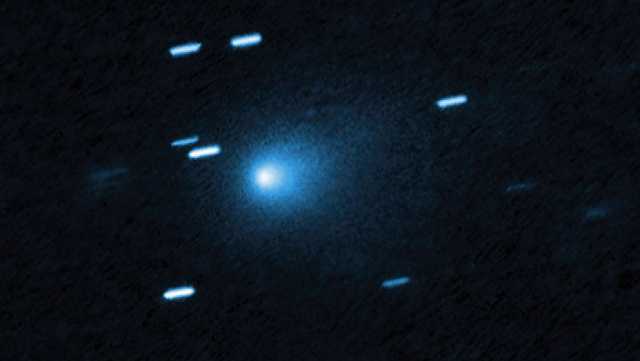
A new image has revealed the clearest glimpse yet of an interstellar visitor zipping through our solar system.
Video above: Astronomers discover how planets form
The Hubble Telescope and its Wide Field Camera 3 got an incredible view of the comet named 3I/ATLAS, which came from beyond our solar system, on July 21 when the object was 277 million miles from Earth.
In the image, a teardrop-shaped dust cocoon can be seen streaking from the comet’s icy nucleus. A comet’s nucleus is its solid core, made of ice, dust and rocks. When comets travel near stars such as the sun, heat causes them to release gas and dust, which creates their signature tails.
The venerable telescope is just one of many that are being used to track the comet, first discovered on July 1, as it zooms at a blistering 130

 Crooks and Liars
 WVTM 13 Politics
 The Babylon Bee
 Verywell Health
 MENZMAG
 CNA Entertainment
 5 On Your Side Sports