

 The Atlantic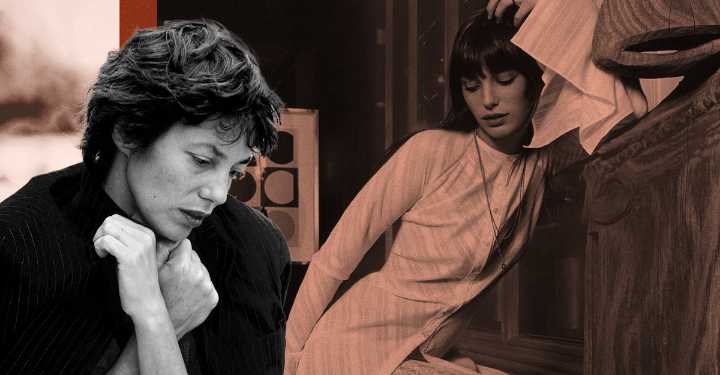
In the simplest terms, an It Girl is a young woman with good looks and beautiful clothes who becomes a fixture of the public sphere by virtue of being herself. It Girls are not socialites, who agitate for relevance and power. It Girls, known to those in the know, just are. Consider the actor Edie Sedgwick, who, during her association with Andy Warhol and his New York scene, brushed shoulders with some of the biggest stars of the ’60s. Sedgwick never became a household name, but her airy, alternative cool made her a style inspiration in her generation and the next.
In Europe, Sedgwick’s counterpart was Jane Birkin. Like Sedgwick, Birkin was spindly, came from money, and turned heads anywhere she went. Unlike Sedgwick, she eventually achieved full-blown stardom: Barely 18 years old when she began modeling in fashion magazines, Birkin worked in film, music, and theater for more than 50 years. Still, her career has often been discussed under the indiscriminate umbrella of It-ness. Perhaps that’s because her name, bestowed upon Hermès’s most coveted handbag, is more famous than many of the songs she sang and movies she starred in.
But that’s not how a new biography, It Girl: The Life and Legacy of Jane Birkin, wants us to think of her. In the eyes of its author, Marisa Meltzer, seeing Birkin as just an It Girl is an impediment to appreciating her as an important artist in her own right. It’s a compelling idea, because many famous women are often reduced to their outfits and their lovers, but Birkin isn’t always an ideal case study. On several occasions, when Meltzer approaches her subject ready to discover a long-buried professional drive or desire for creative recognition, she comes up empty. Ironically, in attempting to argue for Birkin as a secret visionary, Meltzer neglects what about her life was most interesting: her ability to remain famous for being, well, Jane Birkin.
Birkin grew up in England, but she was most well-known in France, where her years-long relationship with the musician Serge Gainsbourg catapulted her to public celebrity. Almost 20 years her senior, Gainsbourg was a sensation whose enormous ears, disdain for women, and love of provocation were as notorious as his music. In 1968, when they became involved on the set of the romantic comedy Slogan, the old traditions of Paris were collapsing. In a country where sophisticated women wore “leopard coats, hosiery, high heels, and tailored silk suits,” as Meltzer writes, Birkin wore minimal makeup and made a uniform out of “cutoff jeans, miniskirts, never a bra in sight.” She refined Gainsbourg’s look, controlling the length of his stubble and giving him the white Repetto shoes that would become his signature.
As one-half of a power-couple, and a member of the decade’s Youthquake movement, Birkin became firmly associated with It-ness. Something about her magnetism made her incredibly popular; analyzing her from the present, Meltzer has a hard time identifying her specific appeal. The evolution of her aesthetic sensibility is summarized offhand: In her teenage years, she “developed a sharp eye for fashion.” The purchase of her first wicker basket, which would “become her signature accessory for the next thirty years,” is given only a paragraph. On the surface, it might seem silly—or shallow—to spend more time on such a small moment. Yet Birkin was capable of elevating a commonplace item into an unexpected status symbol; it’s what endeared her to designers, photographers, and the public alike—and what helped cement her reputation as a fashion icon. The bag, in other words, isn’t just a bag.
Throughout the book, a tension arises between the story that Birkin told about her life, and how Meltzer interprets that story. About a spread in the adult-entertainment magazine Lui that depicted Gainsbourg pretending to hit her, Birkin said, “I was delighted to be Serge’s object of desire, the person who inspired him.” Meltzer sees, in this self-appraisal, a woman “in control of her own objectification.” In a 2020 interview, Birkin said of her career trajectory, “I didn’t really have time to think. I had no great ambition. Ambition came later”; Meltzer counters that this doesn’t ring “exactly true.” Years after starring in Jacques Deray’s 1969 psycho-thriller La Piscine, Birkin mused that her performance was “uninteresting”; like a benevolent parent, Meltzer retorts that Birkin was being “hard on herself.” Discussing Birkin’s published diaries, Meltzer eventually has to admit: Birkin’s “private ruminations were more concerned with her emotional state around her relationship than with her career.” When she states that “Birkin never spoke about the research she did for roles or what her artistic process was to get into character,” she is gently conceding that Birkin wasn’t interested in explaining herself—or, possibly, that such a process never existed at all.
Perhaps because of this dearth of material, any sense of what moved Birkin to be an actor––her obsessions, her career aspirations––is missing altogether. (Meltzer even asks in the penultimate page of her book: “What did a woman whose default public face was happy-go-lucky actually spend her time and energy chasing?”) In La Piscine, Birkin played Penélope, a schoolgirl accused of seducing a partnered man. Eager to highlight Birkin’s acting chops, Meltzer argues that the disparity between her real life—at the time of shooting, Birkin was already a mother and a divorcée, having been briefly married before meeting Gainsbourg—and that of her character indicated her “range.” By the chapter’s end, though, the book can’t quite square Birkin’s professional ambition with the fact that, having reached the possibility of a serious acting career, Birkin “chose to double down on her relationship with Gainsbourg.” This kind of back-and-forth––a revisionist statement followed by a disappointed concession to fact, and vice versa––recurs throughout It Girl.
The book takes flight once Birkin’s life aligns more smoothly with Meltzer’s thesis about her underappreciated qualities. In her 30s, after splitting with Gainsbourg, Birkin dated the director Jacques Doillon, the first to cast her against type. In his 1981 film, The Prodigal Daughter, she played the titular character, who is depressed and jealous of her father’s love affair. “I was suddenly allowed to go ballistic on-screen,” Birkin said. For the first time, Meltzer writes, Birkin gave “the audience a window into her pain,” allowing them “to see her in a new light––as a real artist.”
In her 40s, Birkin became more confident. In 1988, she collaborated with the French director Agnès Varda on two films: Kung-Fu Master! and the documentary Jane B. par Agnès V. In the latter, Varda was—like Meltzer—attuned to the fact that Birkin had, until that point, mostly been seen as a muse. But this quality was the focal point of Varda’s curiosity. Taking advantage of Birkin’s ability to accommodate fantasy as if she were clay, the director cast her in roles such as Joan of Arc and Tarzan’s partner, Jane. According to Meltzer, “Birkin felt like Varda’s toy” throughout shooting, though ultimately she “trusted Varda and the project enough” to “go beyond her comfort zone.”
Working with Varda, Birkin took charge of her own career, and asserted control of her image. As Meltzer points out, Birkin’s new creative wind blew in with the opportunity to act for a woman’s camera for the first time in her career. Before she made her live-singing debut in 1987, at the age of 40, Gainsbourg––not her partner anymore, but still an influential presence in her life––suggested she wear a dress and her hair in curls. But she chose to wear men’s clothes and a pixie haircut instead, “defying Gainsbourg’s perception of her––and the public’s.”
Finally, Birkin had become an ambitious, daring artist. Detailing this period of her life, the book has a momentum that is missing from earlier chapters. Yet Meltzer’s treatment of It-ness as a hurdle to be cleared, and her almost relieved focus on Birkin’s later trajectory, leaves an inconsistent impression. Even if Birkin, who died in 2023, had never risen to her creative potential—even if she had always been happy to be a muse—her life’s story would still be interesting. She was the type of person who could make strangers want to carry a commonplace wicker basket, after all.

 Cover Media
 USA TODAY National
 Raw Story
 Daily Voice